Jardineira, Portuguese Vegetable Stew
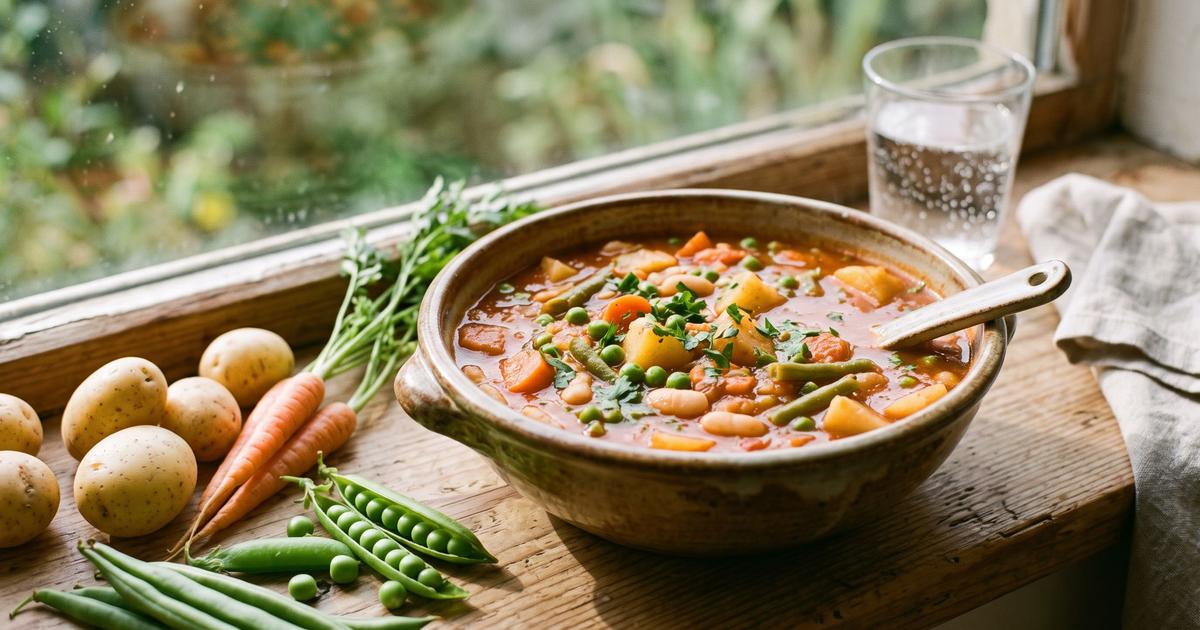
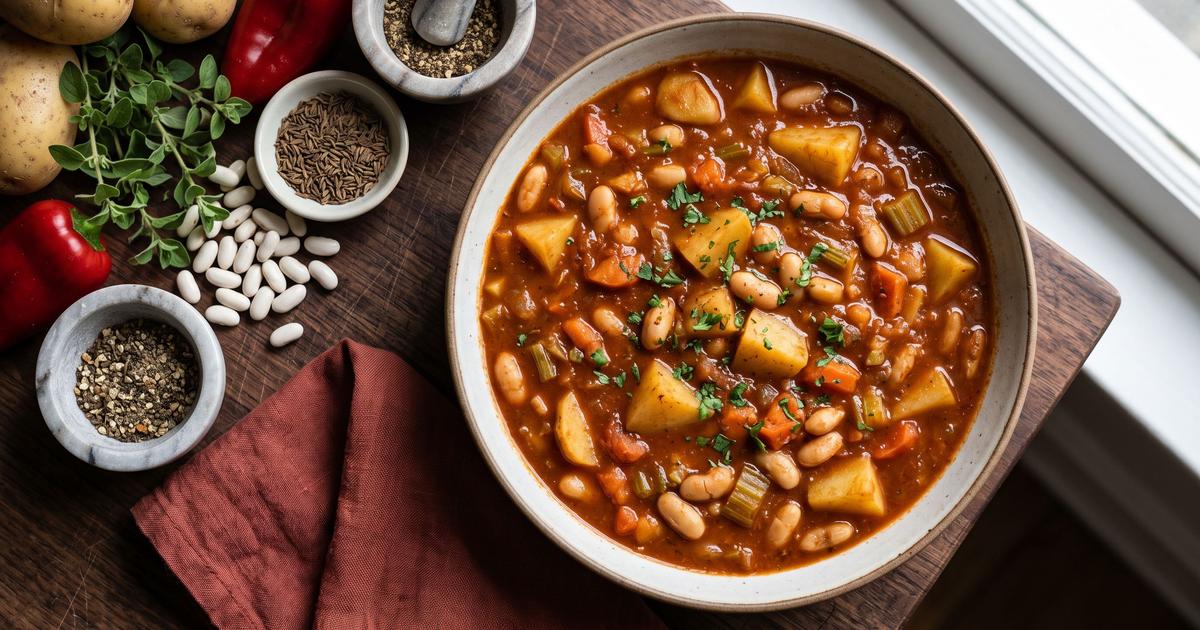
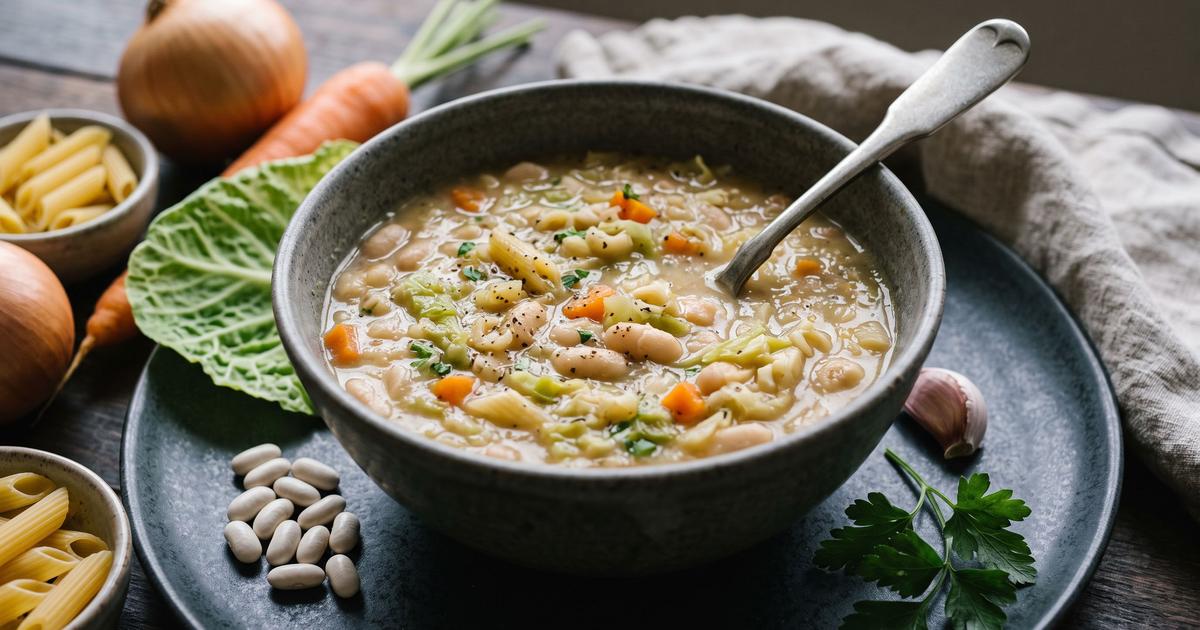
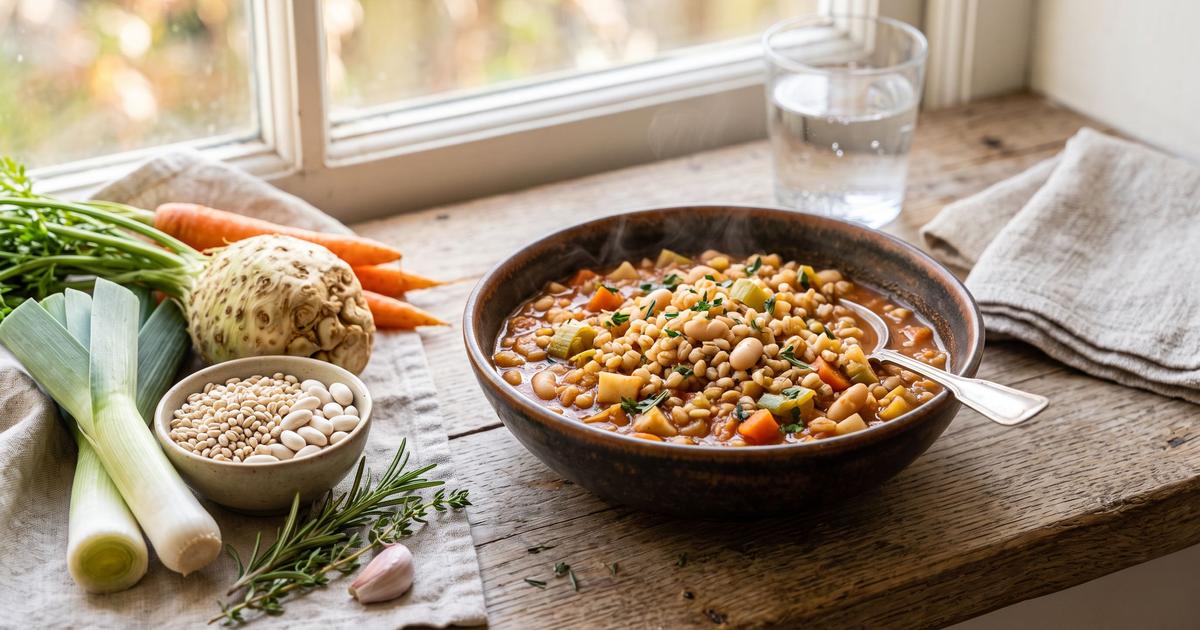
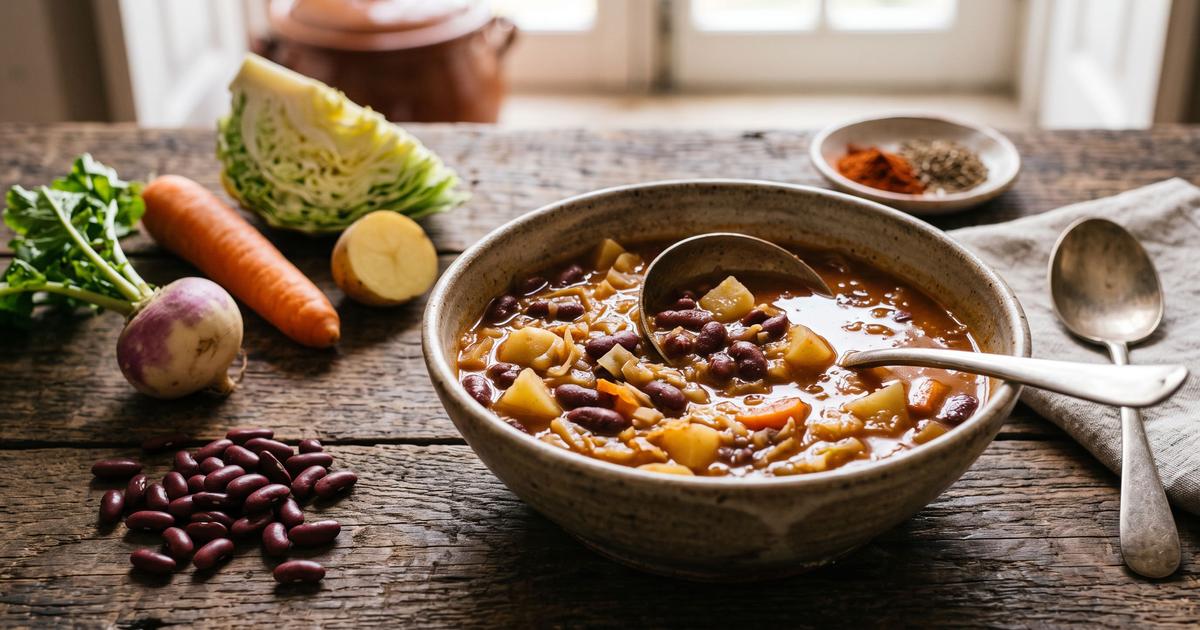
Jardineira means from the garden, and it is the Portuguese way of turning a drawer of odd vegetables into a full pot of dinner. Every household cuts it differently, so treat the vegetables here as a template rather than a rule and use what needs using. The paprika and toasted tomato paste give it the warm red depth that makes it Portuguese, while white beans quietly do double duty, adding protein and thickening the broth as they soften. Built in one pot and better reheated, it is a stew made for cooking on Sunday and eating through the week. Serve it in deep bowls with a wedge of whole-grain bread to catch the broth.
Ingredients
- 1 Yellow onion, diced
- 4 cloves Garlic, minced
- 1 tbsp Tomato paste
- 1 tbsp Sweet paprika
- 1 1/2 cups Canned crushed tomatoes
- 1 tbsp no-salt vegetable bouillon
- 1 lb Potatoes, cut in 1-inch cubes
- 3 Carrots (cooking)s, cut into coins
- 1 Bay leave
- 8 oz Green beans, cut into 1-inch lengths
- 1 cup Frozen peas
- 1 1/2 cups Great northern beans, cooked, drained
- 1 tbsp White wine vinegar
- 1/4 cup Flat-leaf parsley, chopped
- 1/2 tsp Black peppercorns, ground
Method
- Sweat the onion and garlic in a large pot with a splash of water until soft, about 6 minutes. Clear a space in the pan, add the tomato paste and paprika, and let them toast in the dry spot for a minute until the paste darkens to brick red. Toasting both here builds a deeper, rounder base than stirring them into liquid would.
- Add the crushed tomatoes, bouillon, and 3 cups (720 ml) water, then the potatoes, carrots, and bay leaf. Bring to a simmer and cook 15 minutes, until the potatoes are nearly tender.
- Add the green beans and cook 8 minutes more. Adding the vegetables in order of how long they take is what keeps the potatoes from dissolving before the green beans are done.
- Stir in the peas and the white beans and simmer just 3 to 4 minutes to heat through. The white beans also thicken the broth as some of them break down, giving it body without any flour.
- Off the heat, stir in the white wine vinegar and parsley and grind over the pepper. The vinegar sharpens a pot that is otherwise all sweet vegetables, and does the work you would have reached for salt to do. It keeps four days and freezes well.
Nutrition
Estimated per serving: 240 calories, 10 g protein, 9 g fiber, 90 mg sodium. Computed from USDA FoodData Central reference values for the main ingredients. This is an approximation, not a laboratory measurement. How these are computed.
Cost per serving is estimated from US national-average retail prices for cheap staple forms, using BLS dried-bean prices and USDA produce prices. Prices vary by store and season, so treat it as a guide, not a receipt. How this is computed.