Sopa de Feijão, Portuguese White Bean and Cabbage Soup
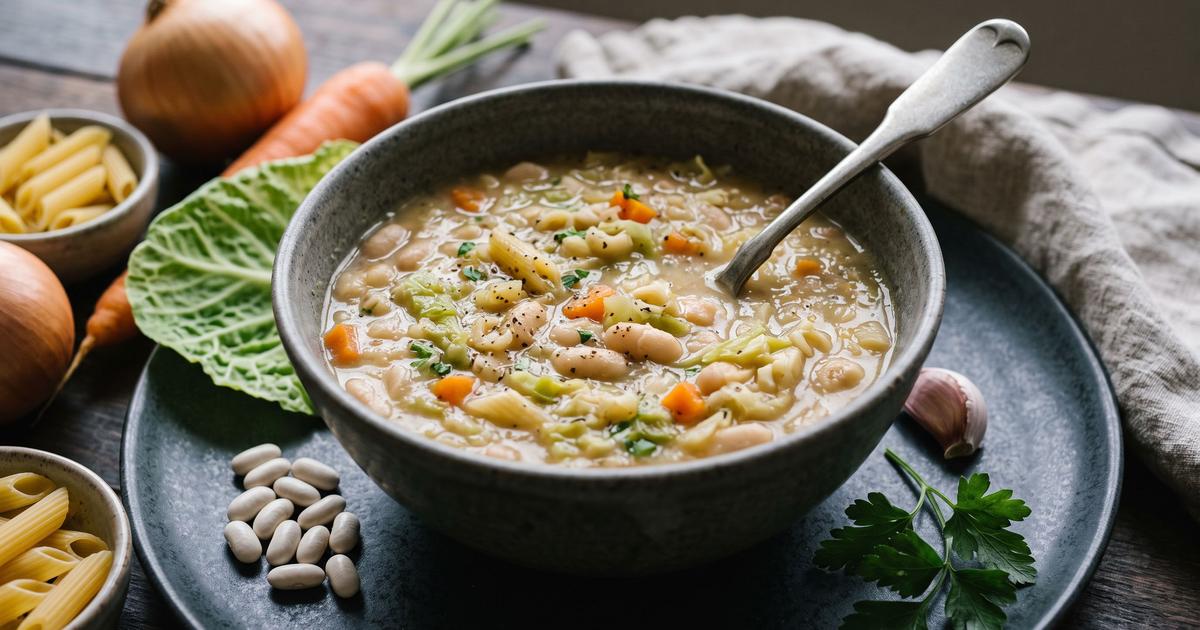
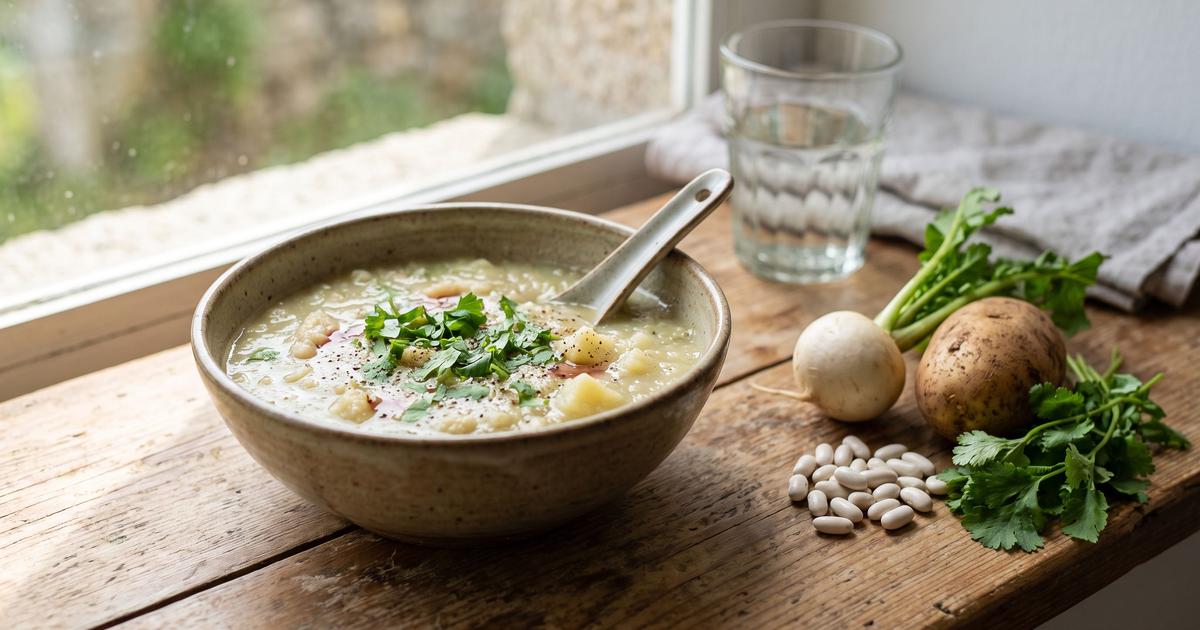
Every Portuguese kitchen has a sopa de feijão, a bean soup that changes with the season and whatever is in the garden. The constant is the technique: part of the beans is blended into a smooth base so the broth has weight, and the rest is left whole for texture, alongside cabbage or another sturdy green, a potato for body, and a handful of small pasta or rice. It is peasant food built to stretch a bag of dried beans across a week, which is exactly why it suits a no-oil kitchen so well, since the beans and potato do all the thickening themselves. Smoked paprika stands in for the smoky pork that often flavors the pot. Cook the beans yourself to keep the sodium low, blend a cup of them for the base, and add the cabbage and pasta near the end so nothing turns to mush. Make a big pot; it only improves overnight.
Ingredients
- 2 cups Cannellini beans, cooked
- 1 cup Blended white beans
- 1 medium Yellow onions, chopped
- 3 cloves Garlic, minced
- 2 mediums Carrots (cooking), diced
- 1 large Potatoes, diced
- 1/2 cup Canned crushed tomatoes
- 1/2 tsp Smoked paprika
- 2 leafs Bay leaves
- 3 cups green cabbage, shredded
- 1/2 cup Whole wheat short pasta
- 1/4 cup Flat-leaf parsley, chopped
- 1/2 tsp Black peppercorns, ground
Method
- Sweat the onion, carrot, and garlic in a soup pot with 1/4 cup water (60 ml) until the onion is soft, about 8 minutes. This water-cooked base is the refogado, the Portuguese soffritto, done without the usual olive oil.
- Blend the cup of white beans smooth with 1 cup water (240 ml) and pour it in. The bean puree is what gives a Portuguese sopa its body: it thickens the broth with protein and fiber where another kitchen would stir in oil, cream, or a flour roux.
- Add the potato, tomato, smoked paprika, bay, and 4 cups water (950 ml). Simmer until the potato is nearly tender, about 12 minutes. The starch shedding off the potato thickens the pot further.
- Stir in the cabbage, the whole beans, and the pasta, and simmer 10 more minutes until the pasta and cabbage are tender. Adding the cabbage late keeps a little of its bite, and small whole-wheat shapes hold up in soup where thin pasta would fall apart.
- Fish out the bay, then finish with parsley and plenty of black pepper. It thickens as it sits, so loosen leftovers with water, and it freezes well before the pasta goes in.
Nutrition
Estimated per serving: 240 calories, 12 g protein, 10 g fiber, 95 mg sodium. Computed from USDA FoodData Central reference values for the main ingredients. This is an approximation, not a laboratory measurement. How these are computed.
Cost per serving is estimated from US national-average retail prices for cheap staple forms, using BLS dried-bean prices and USDA produce prices. Prices vary by store and season, so treat it as a guide, not a receipt. How this is computed.