Garden Egg Stew, Nigerian Eggplant
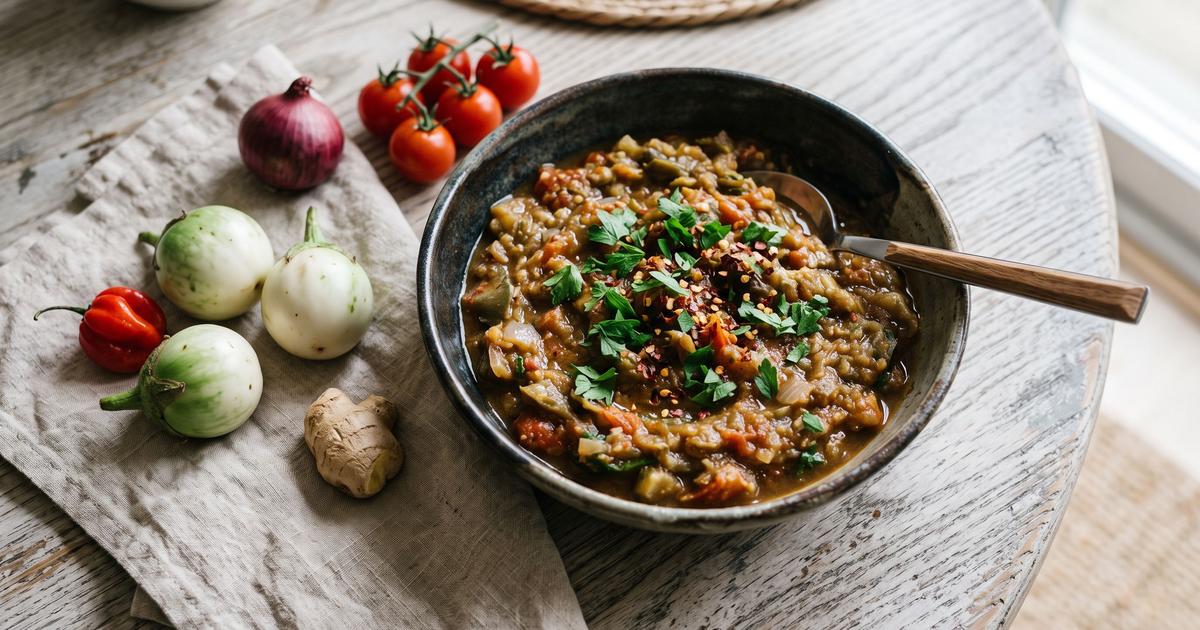
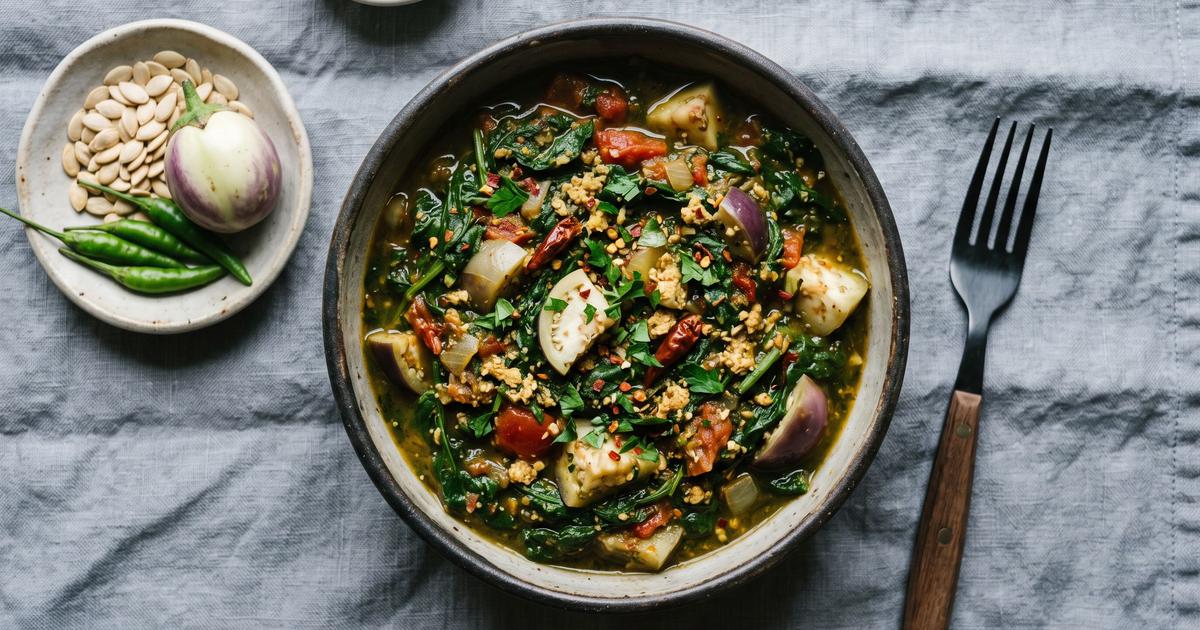
Garden egg stew is a staple across Nigeria and Ghana, built on the small, pale eggplants called garden eggs that give it its name. They are boiled soft and mashed into a sauce of tomato, onion, pepper, and ginger, then heated hard with Scotch bonnet. Traditionally the pot is finished with red palm oil, so here smoked paprika and a well-toasted spoon of tomato paste stand in for that smoky richness. Steaming the eggplant first, rather than frying it, keeps the dish light and lets it soak up sauce instead of oil. It is a side that eats like a relish, spooned over yam, plantain, or rice.
Ingredients
- 1 1/4 lb Eggplant, cubed
- 3 wholes Fresh tomatoes, chopped
- 1 whole Red onions, diced
- 1 whole Bell peppers, red, chopped
- 3 cloves Garlic, minced
- 1 tbsp Ginger, grated
- 1/2 whole Habanero, minced
- 1 tbsp Tomato paste
- 1 tsp Smoked paprika
Method
- Steam or boil the eggplant until completely soft, 10 to 12 minutes, then drain well. Cooking it in water first means it collapses into the sauce without drinking up fat, which is exactly why garden eggs are usually not fried for this dish.
- While it steams, sweat the onion in 3 tablespoons (45 ml) water in a wide pan until soft, about 6 minutes, then add the garlic, ginger, and bell pepper and cook 3 minutes more.
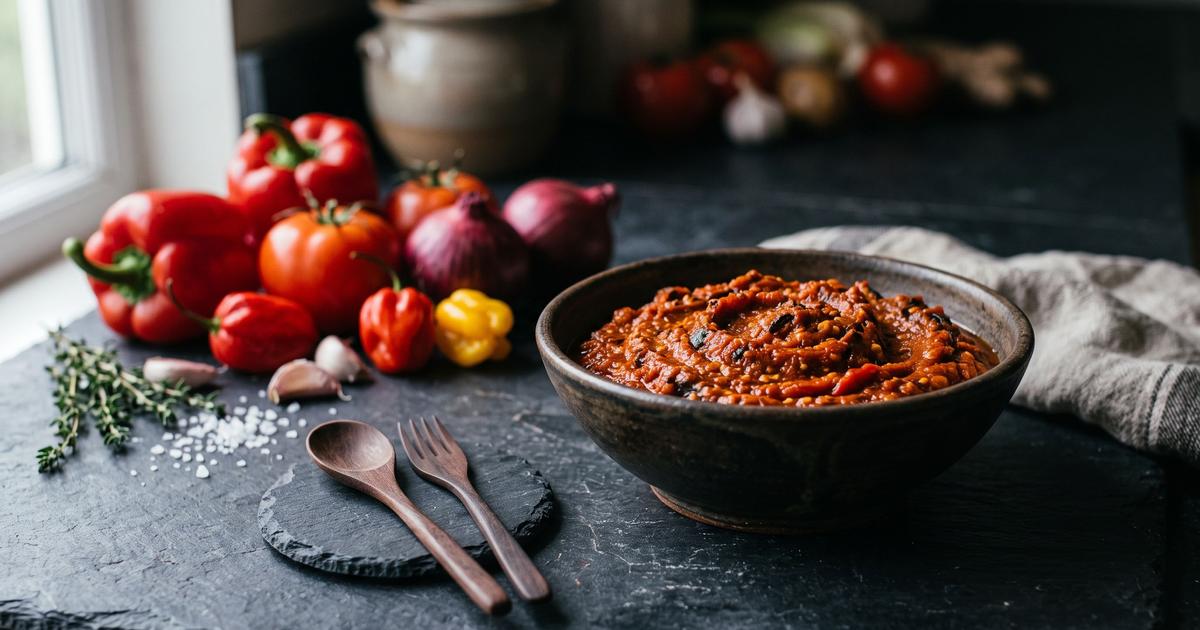
- Stir in the tomato paste and smoked paprika and let them darken for 2 minutes before adding the fresh tomatoes. Toasting the paste until it turns brick red and blooming the paprika builds the smoky, savory backbone that a splash of palm oil would give the original.
- Add the tomatoes and habanero and cook until the sauce thickens and pulls together, about 8 minutes. Then fold in the soft eggplant and mash it coarsely into the sauce so it turns pulpy but still has some texture.
- Simmer 5 minutes to marry everything, tasting for heat. The tomato and Scotch bonnet carry the seasoning, so it needs no salt. Serve alongside boiled yam, sweet potato, or brown rice.
Nutrition
Estimated per serving: 110 calories, 3 g protein, 7 g fiber, 45 mg sodium. Computed from USDA FoodData Central reference values for the main ingredients. This is an approximation, not a laboratory measurement. How these are computed.
Cost per serving is estimated from US national-average retail prices for cheap staple forms, using BLS dried-bean prices and USDA produce prices. Prices vary by store and season, so treat it as a guide, not a receipt. How this is computed.