Frijoles de la Olla, Mexican Pot Beans
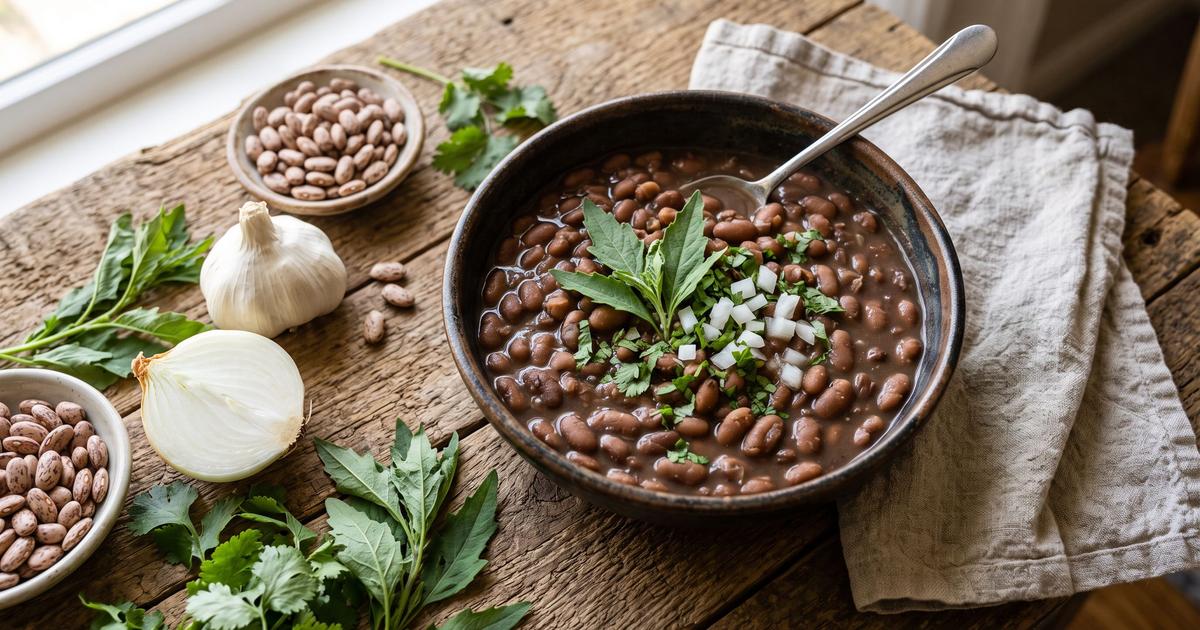
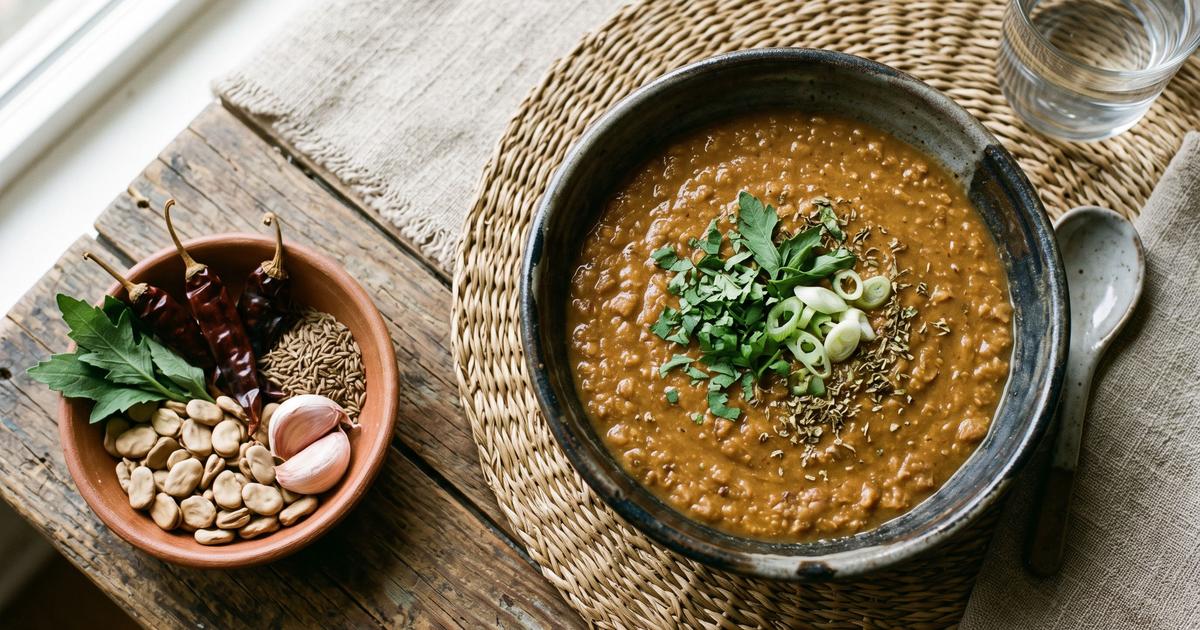
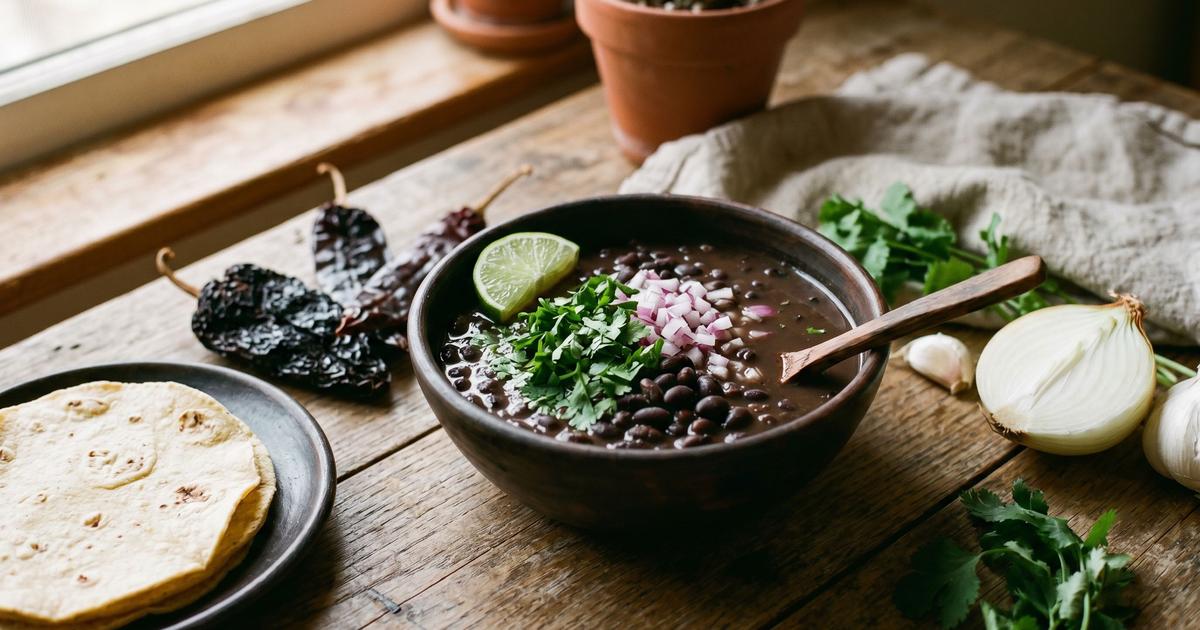
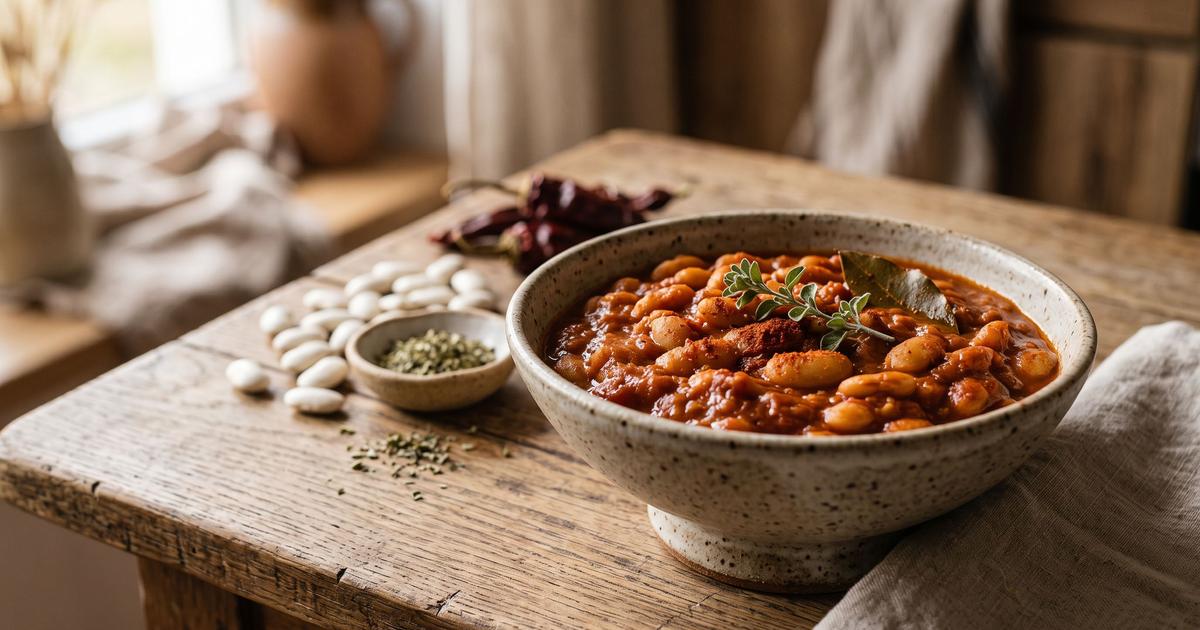
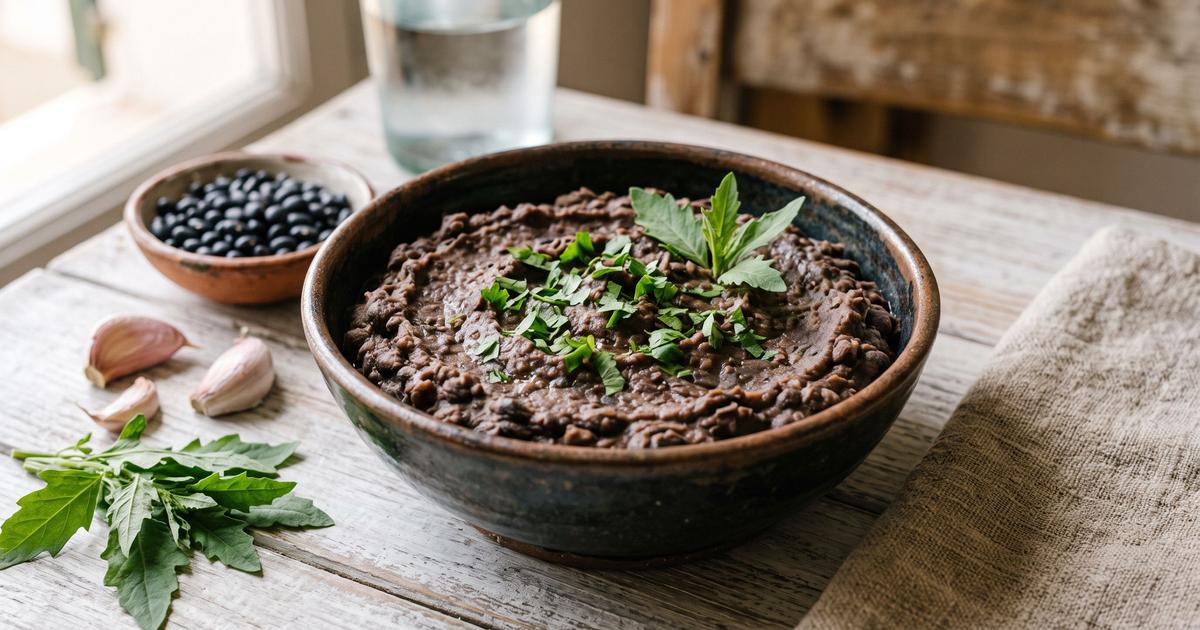
Frijoles de la olla, beans from the pot, is the plain daily bean of Mexican kitchens and the starting point for almost everything else: refried beans, charro beans, a bowl of caldo with a tortilla. The whole method is patience. Dried beans, an onion, garlic, and a branch of epazote go into water and simmer until the pot makes its own thick, glossy broth. Cooking them from dried, rather than opening a can, is where the flavor and the low cost both come from. Salt and acid are held back until the very end because either one, added early, keeps the skins tough no matter how long you cook. A squeeze of lime and a grind of pepper at the finish carry the seasoning, so no salt is needed at all.
Ingredients
- 1 cup Pinto beans, dried, picked over and rinsed
- 1 Yellow onion, halved
- 4 cloves Garlic, peeled and smashed
- 1 sprig Epazote, fresh, or 1 tsp dried
- 2 Bay leaves
- 1 Serrano, left whole
- 1 tbsp Lime juice
- 1/2 tsp Black peppercorns, ground
Method
- Soak the beans overnight if you can, or start them dry. A soak shortens the simmer and helps them cook evenly, but pinto beans are forgiving enough to go straight in the pot.
- Combine the beans, onion halves, garlic, epazote, bay, and whole serrano with 6 cups (1.4 L) water, enough to cover by 2 inches (5 cm). Bring to a boil, then drop to the barest simmer. A gentle simmer keeps the skins intact and the broth clear instead of cloudy and blown apart.
- Cook partly covered 90 minutes to 2 hours, topping up with hot water so the beans stay submerged. Add no salt and no acid yet: both toughen the skins and the beans will never soften once they are in.
- When the beans are creamy through and the broth has thickened, fish out the onion, bay, epazote, and serrano. Press a spoonful of beans against the side of the pot and stir it back in to thicken the caldo without any flour.
- Finish off the heat with lime juice and black pepper. The acid brightens the pot and does the seasoning that salt usually would. Serve the beans in their broth, alongside rice or greens.
Nutrition
Estimated per serving: 180 calories, 11 g protein, 11 g fiber, 15 mg sodium. Computed from USDA FoodData Central reference values for the main ingredients. This is an approximation, not a laboratory measurement. How these are computed.
Cost per serving is estimated from US national-average retail prices for cheap staple forms, using BLS dried-bean prices and USDA produce prices. Prices vary by store and season, so treat it as a guide, not a receipt. How this is computed.