Fakes, Greek Lentil Soup
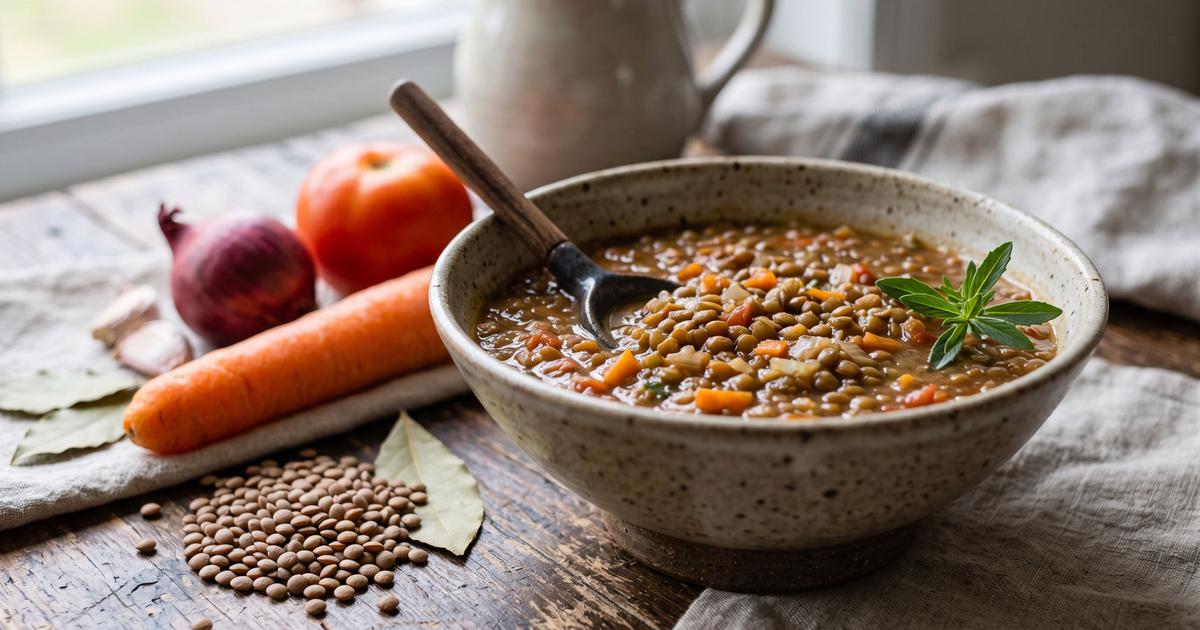
Fakes is the plain brown lentil soup that Greek households cook on the days between richer meals, thickened only with its own lentils and a little tomato. What makes it Greek is the finish: a hard splash of red wine vinegar stirred into each bowl at the table, which turns a modest pot into something bright and almost savory-sour. It costs next to nothing, it keeps and freezes well, and it asks for no oil to taste complete. Cook the aromatics down slowly at the start, hold the vinegar until serving so it stays sharp, and put the bottle on the table so everyone can adjust their own.
Ingredients
- 1 1/2 cups Brown lentils, rinsed
- 1 Yellow onion, diced
- 4 cloves Garlic, minced
- 2 Carrots, diced
- 2 stalks Celery, diced
- 1 cup Canned crushed tomatoes
- 2 Bay leaves
- 1 tsp Dried oregano
- 2 tbsp Red wine vinegar, to finish
- 1/2 tsp Black peppercorns, ground
Method
- Sweat the onion, carrot, and celery in a splash of water in a heavy pot over medium heat until soft, about 8 minutes, topping up the water as it dries. This slow base without oil is where the soup gets its body, so aim to soften rather than to brown.
- Add the garlic and cook a minute until it smells sweet, not raw. Garlic added after the vegetables has a moment to bloom without scorching.
- Stir in the lentils, crushed tomatoes, bay leaves, and oregano, then pour in about 6 cups (1.4 L) of water. Add the tomato with the lentils, not before, since its acid can keep lentils firm if it goes in too early.
- Bring to a boil, then simmer partly covered 30 to 40 minutes until the lentils are soft and the broth has thickened. Older lentils take longer, so judge by texture and add water if it tightens too much.
- Fish out the bay leaves, grind in the black pepper, and stir a spoon of red wine vinegar into each bowl at the table. The vinegar is not a garnish in fakes, it is the point: a Greek cook finishes the soup in the bowl, and the sharp splash is what a pot this plain has been building toward.
Nutrition
Estimated per serving: 210 calories, 13 g protein, 10 g fiber, 75 mg sodium. Computed from USDA FoodData Central reference values for the main ingredients. This is an approximation, not a laboratory measurement. How these are computed.
Cost per serving is estimated from US national-average retail prices for cheap staple forms, using BLS dried-bean prices and USDA produce prices. Prices vary by store and season, so treat it as a guide, not a receipt. How this is computed.