Esquites, Off-the-Cob Corn Salad
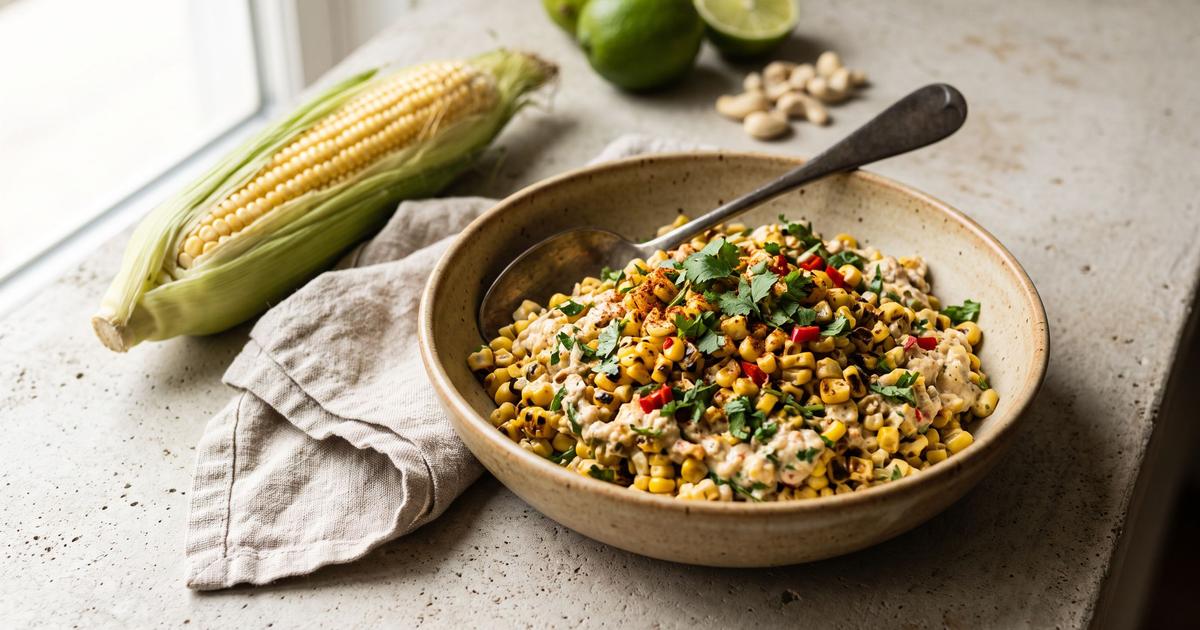
Esquites is elote taken off the cob and eaten with a spoon, sold from carts across Mexico in paper cups. The street version is built on mayonnaise, cotija cheese, and often a salty chile-lime dust. Here a spoonful of cashew cream carries the richness and a little nutritional yeast carries the savory, cheesy edge, so the dish stays creamy without dairy or oil. The one step you cannot skip is the char: corn cooked in a dry, screaming-hot pan until it spots brown is a different ingredient from corn that was merely warmed. Lime and pure chile powder do the rest, which is why the salt shaker stays in the cupboard.
Ingredients
- 4 cups Frozen corn, thawed and patted dry
- 3 tbsp Cashew cream
- 2 tbsp Nutritional yeast
- 2 tbsp Lime juice
- 1 tsp pure chile powder
- 1 Jalapeño, seeded and minced
- 1/4 cup Red onions, finely diced
- 1 clove Garlic, grated
- 1/3 cup Cilantro, chopped
Method
- Heat a dry cast-iron or heavy pan until very hot. Add the corn in one layer and leave it alone for 2 to 3 minutes at a time, stirring only occasionally, until the kernels take on brown and black spots. That char is the whole point of esquites: it stands in for the smoke of a street griddle and gives the corn a depth raw kernels never have.
- Scrape the charred corn into a bowl and let it cool for 5 minutes so the next additions do not turn to steam.
- Stir in the grated garlic, red onion, and minced jalapeño while the corn is still warm. The residual heat takes the raw bite off the garlic without cooking it.
- Fold in the cashew cream and nutritional yeast until every kernel is coated. The cashew cream does the job of mayonnaise and the nutritional yeast does the job of cotija, both in small amounts, so the corn stays the star.
- Add the lime juice and chile powder and toss. Taste: it should read tart, smoky, and a little spicy, with no need for salt.
- Finish with the cilantro and serve warm, in cups or a bowl, with a spoon.
Nutrition
Estimated per serving: 160 calories, 6 g protein, 5 g fiber, 30 mg sodium. Computed from USDA FoodData Central reference values for the main ingredients. This is an approximation, not a laboratory measurement. How these are computed.
Cost per serving is estimated from US national-average retail prices for cheap staple forms, using BLS dried-bean prices and USDA produce prices. Prices vary by store and season, so treat it as a guide, not a receipt. How this is computed.