Ensalada de Nochebuena, Mexican Christmas Eve Salad
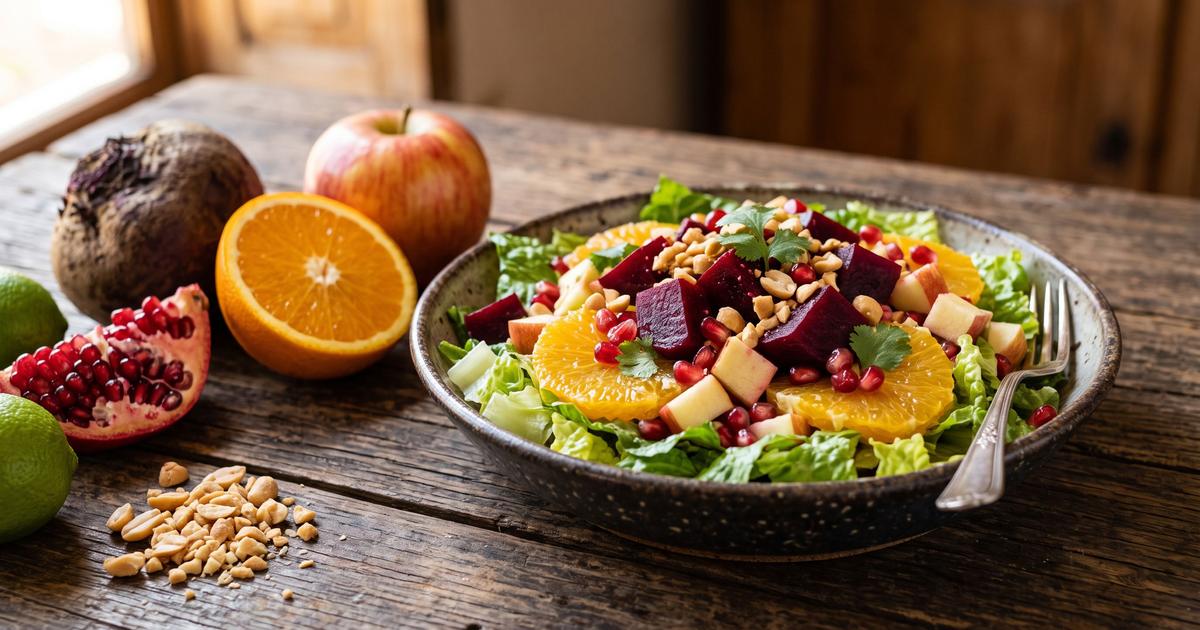
Ensalada de Nochebuena is the salad that lands on the table across Mexico on Christmas Eve, and every family builds it a little differently. The constants are its colors, red and green and white for the season, and its collision of textures: earthy roasted beet, sweet orange, crisp apple and radish, and the bright rattle of pomegranate seeds over lettuce. Jicama usually adds crunch too, and thin-sliced radish stands in for it well here. The dressing is nothing more than citrus, which is the point: with fruit this sweet and beets this earthy, a squeeze of lime and orange does all the seasoning, and the toasted peanuts carry the richness that oil would. It is festive, cheap, and entirely raw apart from the beets.
Ingredients
- 3 Beets, roasted, peeled, and sliced
- 2 Oranges, peeled and segmented
- 1 Apple, cored and thinly sliced
- 4 cups Romaine, shredded
- 1/2 cup Pomegranate, seeds
- 4 Radishes, thinly sliced
- 1/3 cup Peanuts, toasted and chopped
- 3 tbsp Lime juice
- 1/4 tsp Cumin seed, ground
Method
- Wrap the beets in foil and roast at 400F (200C) for about an hour, until a knife slides in easily. The foil steams them tender and the skins slip off under your thumb once cool, no peeling a raw beet.
- Whisk the dressing from lime juice, the squeezed juice of a spare orange segment or two, and the ground cumin. The orange and lime stand in for a sweet-tart vinaigrette, so no oil and no sugar are needed.
- Layer the romaine, then the beets, orange segments, apple, and radish on a platter. Keep the beets in their own zone rather than tossed through, so they do not bleed magenta over everything.
- Spoon the dressing over and scatter the pomegranate seeds and peanuts on top. The seeds and nuts are the traditional crunch and the tart pop that make the salt beside the point.
- Serve right away, while the apple and romaine are still crisp and the pomegranate is snapping.
Nutrition
Estimated per serving: 160 calories, 4 g protein, 6 g fiber, 55 mg sodium. Computed from USDA FoodData Central reference values for the main ingredients. This is an approximation, not a laboratory measurement. How these are computed.
Cost per serving is estimated from US national-average retail prices for cheap staple forms, using BLS dried-bean prices and USDA produce prices. Prices vary by store and season, so treat it as a guide, not a receipt. How this is computed.