English Mint Sauce
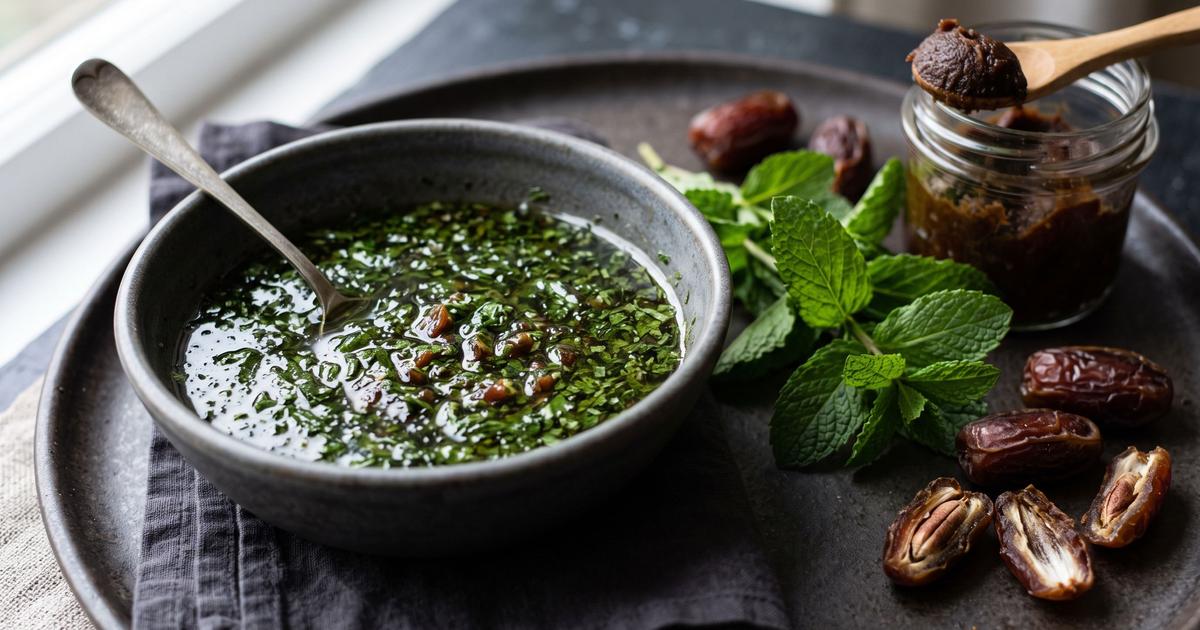
Mint sauce is the sharp green spoonful the English put next to a Sunday roast, and it is one of the few classic condiments that needs almost no reworking to fit here. The only change is the sweetener: a spoon of sugar becomes a little mashed date, which does the same job of rounding the vinegar's edge while carrying its own fruit. Everything else is traditional. Chop the mint fine, wake it up with a splash of boiling water to fix the color, then loosen the whole thing with white wine vinegar until it pours. Keep it thin. This is a sauce, not a jelly, and its point is to cut through anything rich or starchy on the plate. Spoon it over roasted potatoes, braised peas, or a plate of lentils.
Ingredients
- 1 cup Mint, leaves, finely chopped
- 2 wholes Medjool dates, pitted
- 1/3 cup White wine vinegar
- 1/8 tsp Black peppercorns, freshly ground
Method
- Chop the mint leaves as fine as you can manage, then pour 2 tbsp boiling water (30 ml) over them in a bowl. The hot water sets the green color and softens the leaves so they release their oils instead of staying tough and grassy, which is why a good mint sauce smells of the whole garden.
- Mash the pitted dates with 2 tbsp hot water (30 ml) into a smooth paste and stir it in. The dates supply the small hit of sweetness that traditionally came from a spoon of sugar, the balance that stops the vinegar from being simply sour.
- Stir in the vinegar and the pepper. The sauce should be thin and pourable, almost a loose slurry, not a paste. It is meant to be spooned over food, not spread.
- Let it sit at least 10 minutes before serving so the mint, acid, and sweetness meld. It keeps in the fridge for a week and only improves on the second day.
Nutrition
Estimated per serving: 12 calories, 0 g protein, 1 g fiber, 3 mg sodium. Computed from USDA FoodData Central reference values for the main ingredients. This is an approximation, not a laboratory measurement. How these are computed.
Cost per serving is estimated from US national-average retail prices for cheap staple forms, using BLS dried-bean prices and USDA produce prices. Prices vary by store and season, so treat it as a guide, not a receipt. How this is computed.