Couve à Mineira, Brazilian Collard Greens
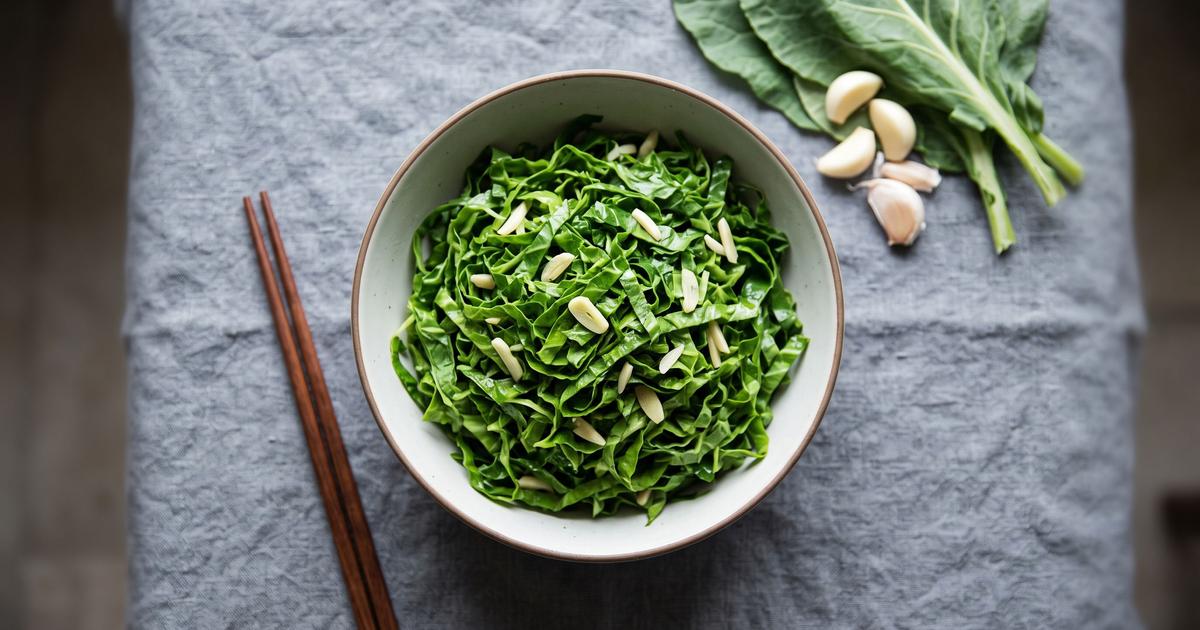
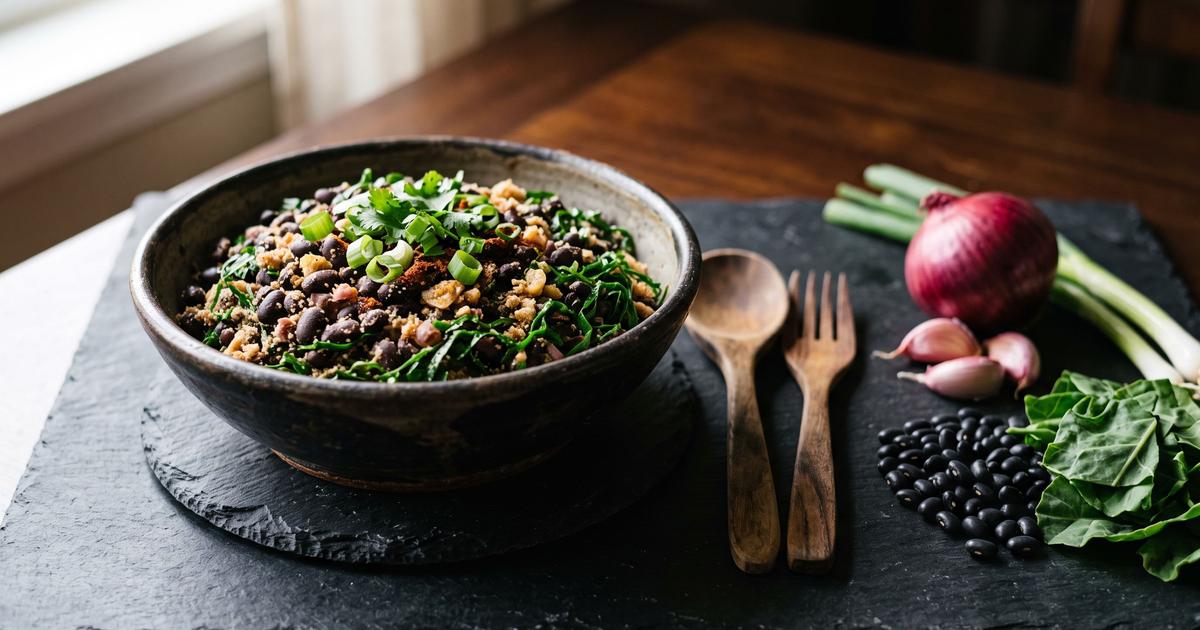
Couve à mineira comes from Minas Gerais and is the standard partner to feijoada and to everyday rice and beans across Brazil. The restaurant version usually starts with bacon fat or a slick of oil. It does not need either. Garlic softened in a little water gives the same aromatic base, and the greens themselves carry the flavor once they are sliced thin and cooked fast. The cut matters more than anything else here: roll the leaves and shave them into thread-thin ribbons, then get them in and out of a hot pan in under three minutes. Lime and a pinch of chile at the end keep it lively without salt.
Ingredients
- 1 bunch Collard greens, about 10 oz (285 g), stems removed
- 4 cloves Garlic, thinly sliced
- 1 tbsp Lime juice
- 1/4 tsp Red pepper flakes
Method
- Stack five or six collard leaves on top of each other, roll the stack into a tight cigar, and slice across it into ribbons as thin as you can manage. This fine cut, the chiffonade, is what defines couve à mineira. Thick pieces stay tough and taste of sulfur.
- Heat a wide pan over medium and sweat the sliced garlic in 2 tablespoons (30 ml) water until it smells sweet and soft, about a minute. Do not let it brown or it turns bitter.
- Turn the heat to high, add the collard ribbons, and toss constantly for 2 to 3 minutes, just until they wilt and turn a deeper, glossier green. Add a splash more water only if the pan goes dry. The whole trick is speed: collards cooked hard and long go army-green and give off a cabbage-y smell, while a fast toss keeps them bright and grassy.
- Take the pan off the heat, add the lime juice and red pepper flakes, and toss once more. Serve right away, alongside beans and rice.
Nutrition
Estimated per serving: 55 calories, 4 g protein, 4 g fiber, 30 mg sodium. Computed from USDA FoodData Central reference values for the main ingredients. This is an approximation, not a laboratory measurement. How these are computed.
Cost per serving is estimated from US national-average retail prices for cheap staple forms, using BLS dried-bean prices and USDA produce prices. Prices vary by store and season, so treat it as a guide, not a receipt. How this is computed.