Cheesy Popcorn with Nutritional Yeast
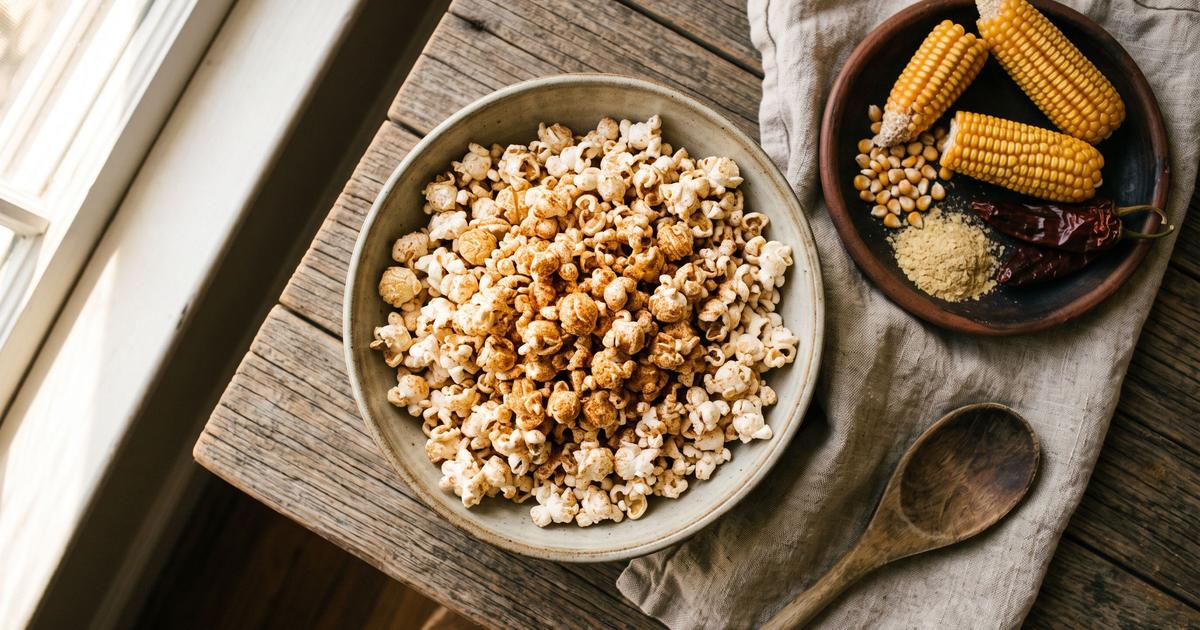
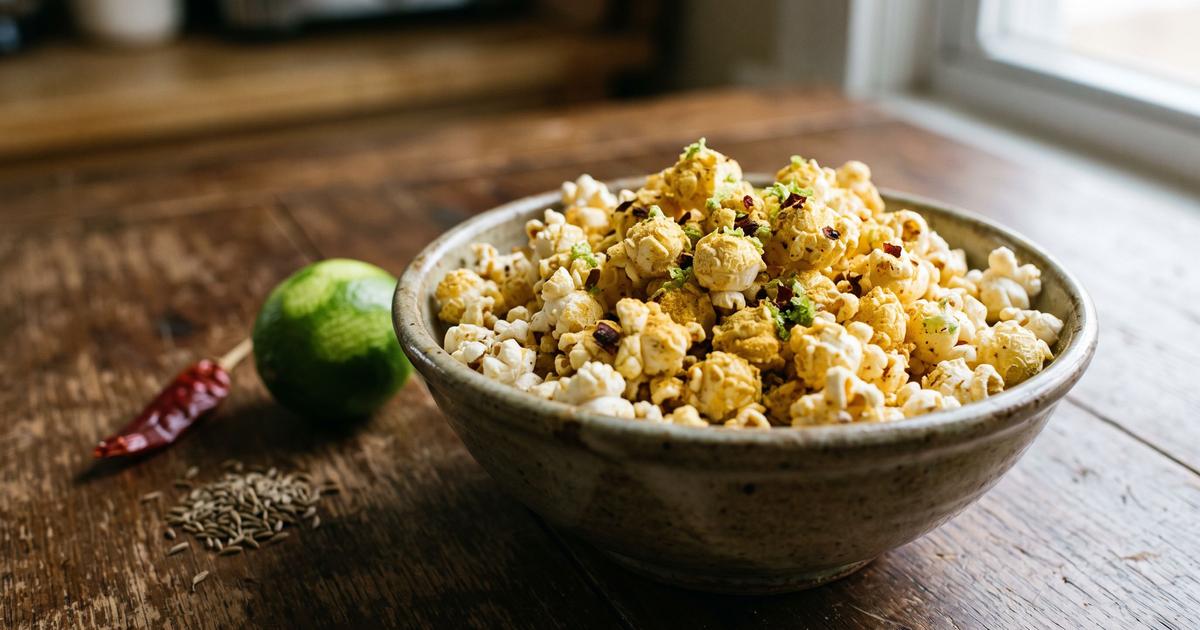
Nutritional yeast popcorn is the whole-food answer to the cheese powder on movie-theater popcorn: savory, a little funky, and genuinely cheesy-tasting without any dairy. The yeast brings the glutamate for that savory hit, smoked paprika adds warmth and a hint of smoke, and a pinch of cayenne wakes it up. The one problem with oil-free popcorn is getting the seasoning to stick, and the fix is a barely-there mist of water rather than butter. Air-pop the corn, mix the seasoning first so it lands evenly, and toss it in stages while the popcorn is still warm. It costs pennies a bowl and comes together faster than a bag of the microwave kind.
Ingredients
- 1/2 cup Popcorn kernels
- 3 tbsp Nutritional yeast
- 1 tsp Smoked paprika
- 1/4 tsp Cayenne
Method
- Air-pop the kernels, or pop them in a dry lidded pot over medium heat, shaking constantly until the pops slow to a few seconds apart. Popping dry with no oil keeps the corn light and the snack low in calories, and shaking stops the bottom layer from scorching.
- Stir the nutritional yeast, smoked paprika, and cayenne together first. Premixing the seasoning means it lands evenly instead of clumping in one spot, so every handful tastes cheesy rather than one bite carrying it all.
- Mist the hot popcorn very lightly with water from a spray bottle, tossing as you go. A whisper of moisture is the oil-free trick that makes the seasoning cling, and too much turns it soggy, so aim for barely damp.
- Add the seasoning in two or three additions, tossing hard between each. Adding it in stages coats far more surface than dumping it all at once, which is how you get cheesy flavor on every piece.
- Eat it right away, while it is warm and just tacky enough to hold the coating. Popcorn softens as it sits, so this is a make-and-eat snack, not a make-ahead one.
Nutrition
Estimated per serving: 110 calories, 5 g protein, 4 g fiber, 8 mg sodium. Computed from USDA FoodData Central reference values for the main ingredients. This is an approximation, not a laboratory measurement. How these are computed.
Cost per serving is estimated from US national-average retail prices for cheap staple forms, using BLS dried-bean prices and USDA produce prices. Prices vary by store and season, so treat it as a guide, not a receipt. How this is computed.