Bulgur Pilaf with Chickpeas
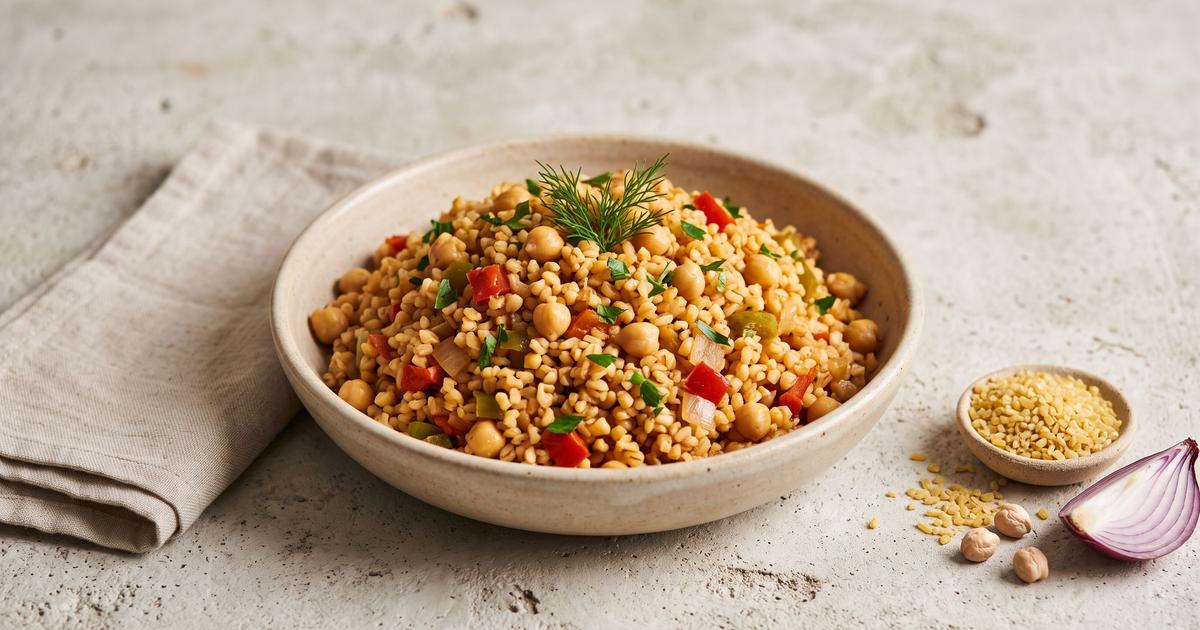
Nohutlu bulgur pilavi is a staple of the Turkish home kitchen, a full meal of coarse cracked wheat and chickpeas that costs very little and reheats well. Using whole bulgur in place of white rice makes it a genuine whole grain, with far more fiber, and the chickpeas turn it into a complete plate of protein. The technique is the same as any good pilaf: toast the tomato paste, coat the grain, add hot liquid, then rest it off the heat so it steams to a fluff. No-salt bouillon does the seasoning that butter and salt usually would. Serve it with a spoonful of plain plant yogurt or a simple tomato salad.
Ingredients
- 1 1/2 cups Bulgur, coarse
- 1 1/2 cups Chickpeas, cooked, or one 15 oz can, drained
- 1 whole Yellow onions, finely diced
- 1 whole Bell peppers, green, finely diced
- 2 tbsp Tomato paste
- 1 whole Fresh tomatoes, grated, skin discarded
- 1/2 tsp Red pepper flakes
- 1/2 tsp Black peppercorns, ground
- 1 tsp no-salt vegetable bouillon, dissolved in 3 cups (720 ml) hot water
- 3 tbsp Flat-leaf parsley, chopped, to finish
Method
- Sweat the onion and green pepper in a pot with a few tablespoons of water over medium heat until soft, about 8 minutes. Cooking them in water rather than butter keeps the dish oil-free while still building the sweet base a pilaf needs.
- Stir in the tomato paste and cook until it darkens, about 2 minutes, then add the grated tomato, red pepper flakes, and black pepper. Toasting the paste first is what gives the pilaf its color and savory depth.
- Add the chickpeas and the bulgur and stir for a minute to coat every grain in the tomato base. Coating the bulgur before the liquid goes in helps the grains stay separate rather than clumping.
- Pour in the hot no-salt broth, stir once, cover, and cook on low for 12 to 15 minutes, until the liquid is absorbed. The no-salt bouillon lets the wheat and chickpeas taste seasoned without adding sodium.
- Take the pot off the heat and let it stand, still covered, for 10 minutes. This rest is the most important step: the trapped steam finishes the bulgur into separate, fluffy grains, and lifting the lid early leaves it gummy.
- Fluff with a fork and fold through the parsley just before serving.
Nutrition
Estimated per serving: 330 calories, 13 g protein, 12 g fiber, 35 mg sodium. Computed from USDA FoodData Central reference values for the main ingredients. This is an approximation, not a laboratory measurement. How these are computed.
Cost per serving is estimated from US national-average retail prices for cheap staple forms, using BLS dried-bean prices and USDA produce prices. Prices vary by store and season, so treat it as a guide, not a receipt. How this is computed.