Buckwheat Porridge with Apple and Walnut
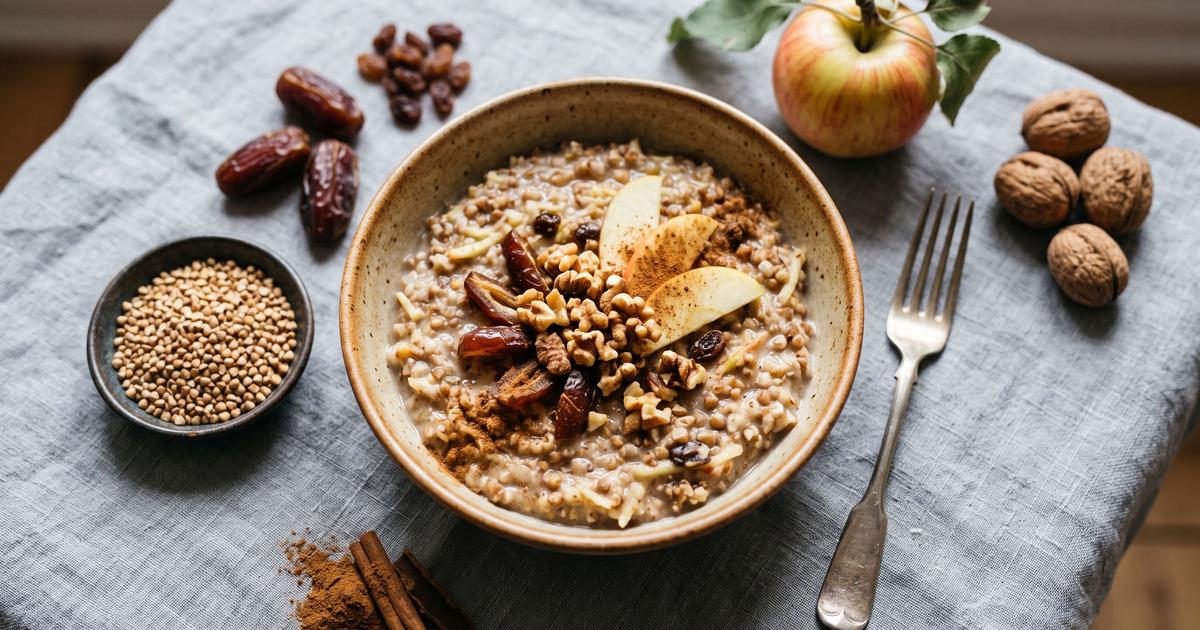
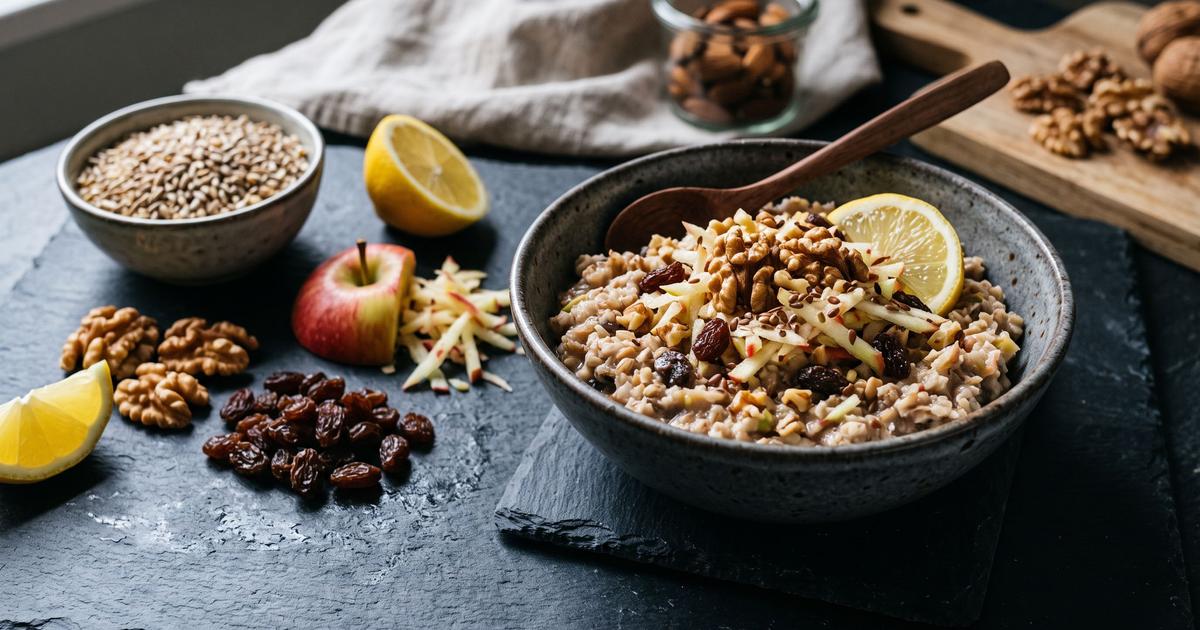
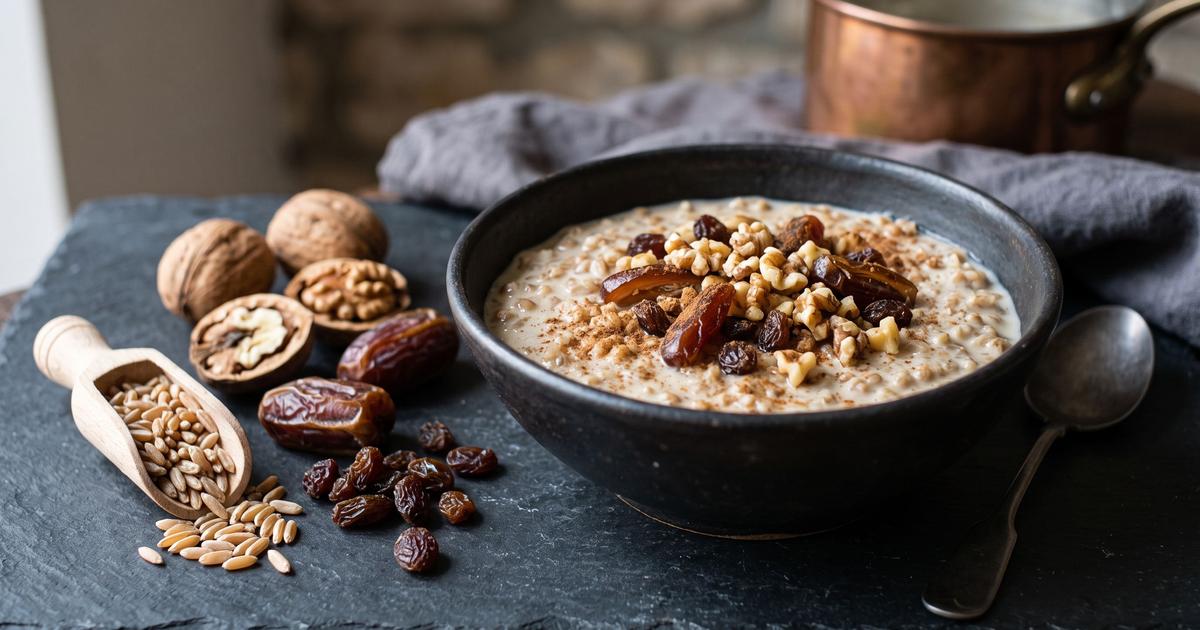
Buckwheat is not wheat and holds no gluten: it is the seed of a plant related to rhubarb, and across Eastern Europe it has been breakfast and side dish for centuries as kasha. Toasting the groats before they ever meet liquid is the step that matters, turning a bland grain into something deep and roasted. From there it behaves like any porridge, softening in soy milk and water while a grated apple and a few chopped dates melt through the pot and sweeten it without a spoon of sugar. Diced apple and toasted walnuts on top give the crunch and fat that a bowl of soft grain needs, and the whole batch reheats through the week.
Ingredients
- 1 cup Buckwheat groats
- 1 cup Unsweetened soy milk
- 2 wholes Apples, 1 grated, 1 diced
- 3 wholes Medjool dates, pitted and chopped
- 1/3 cup Raisins
- 1 tsp cassia cinnamon
- 2 tbsp Ground flaxseed
- 1/3 cup Walnuts, toasted and chopped
Method
- Toast the dry buckwheat groats in a dry saucepan over medium heat, stirring, until they smell nutty and darken a shade, about 3 minutes. This turns plain groats into kasha: the toasting is what gives the porridge its roasted, almost coffee-like backbone instead of a raw, grassy taste.
- Add 1.5 cups (355 ml) water, the soy milk, the grated apple, and the chopped dates. Grating one apple in and chopping the dates small means both dissolve as the porridge cooks, sweetening every spoonful rather than leaving sweetness in clumps.
- Simmer covered on low for about 12 minutes, until the groats are tender and the liquid is creamy. Buckwheat cooks faster than oat groats and turns softer, so watch the last few minutes and add a splash of water if it tightens up.
- Stir in the raisins, cinnamon, and flaxseed off the heat. The flax thickens the porridge and adds a nutty background, and the raisins plump in the residual heat.
- Top with the diced apple and toasted walnuts. Reheat leftovers with a splash of soy milk or water; buckwheat firms up cold and comes back with a little liquid and heat.
Nutrition
Estimated per serving: 300 calories, 9 g protein, 8 g fiber, 30 mg sodium. Computed from USDA FoodData Central reference values for the main ingredients. This is an approximation, not a laboratory measurement. How these are computed.
Cost per serving is estimated from US national-average retail prices for cheap staple forms, using BLS dried-bean prices and USDA produce prices. Prices vary by store and season, so treat it as a guide, not a receipt. How this is computed.