Braised Fennel with Thyme
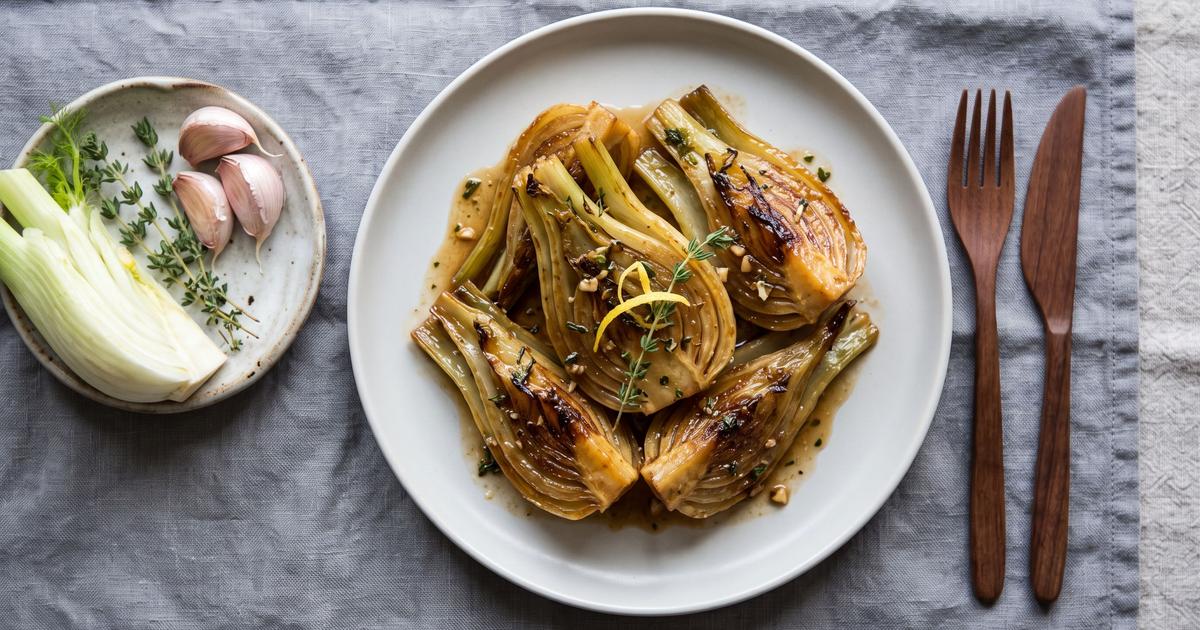
Raw fennel is all sharp anise and crunch; braised, it becomes a different vegetable entirely, meltingly soft and gently sweet, one of the quiet pleasures of the wider European table with no single country's claim on it. The method is simple and forgiving: stand the wedges cut-side down in a little seasoned water so one face caramelizes while the rest steams tender, then boil the liquid down to a glaze at the end. Keeping a sliver of core on each wedge is the one thing worth getting right, since it holds the layers together instead of letting them collapse. A finish of vinegar, lemon, and parsley lifts the sweetness. It sits happily at room temperature, so it is a good make-ahead side for a crowd.
Ingredients
- 2 larges Fennel bulb, cut into wedges through the core
- 3 cloves Garlic, smashed
- 4 sprigs Thyme
- 1 Bay leave
- 1 tsp no-salt vegetable bouillon
- 1 tbsp White wine vinegar
- 1 tbsp Lemon juice
- 1/2 tsp Black peppercorns, freshly ground
- 2 tbsp Flat-leaf parsley, chopped
Method
- Cut each fennel bulb top to bottom into wedges, leaving a little of the core on each so the layers stay attached. The core is the hinge that holds a wedge together through braising; cut it out and the fennel falls into loose shreds.
- Lay the wedges cut-side down in a wide pan and add water to come halfway up, with the bouillon, garlic, thyme, and bay. Cover and simmer until a knife slides through the thick end with no resistance, about 20 minutes. The flat face browns against the pan while the steam cooks the fennel through, so it caramelizes without any oil.
- Uncover and raise the heat so the liquid boils down to a few glossy spoonfuls that coat the fennel. Reducing the braise concentrates the fennel's own anise sweetness into a light pan syrup rather than leaving it to drown in broth.
- Turn off the heat and add the vinegar, lemon juice, black pepper, and parsley. The acid at the end keeps the sweetness from going flat and does the work salt would; serve warm or at room temperature.
Nutrition
Estimated per serving: 70 calories, 3 g protein, 5 g fiber, 85 mg sodium. Computed from USDA FoodData Central reference values for the main ingredients. This is an approximation, not a laboratory measurement. How these are computed.
Cost per serving is estimated from US national-average retail prices for cheap staple forms, using BLS dried-bean prices and USDA produce prices. Prices vary by store and season, so treat it as a guide, not a receipt. How this is computed.