Blitva, Dalmatian Chard and Potatoes
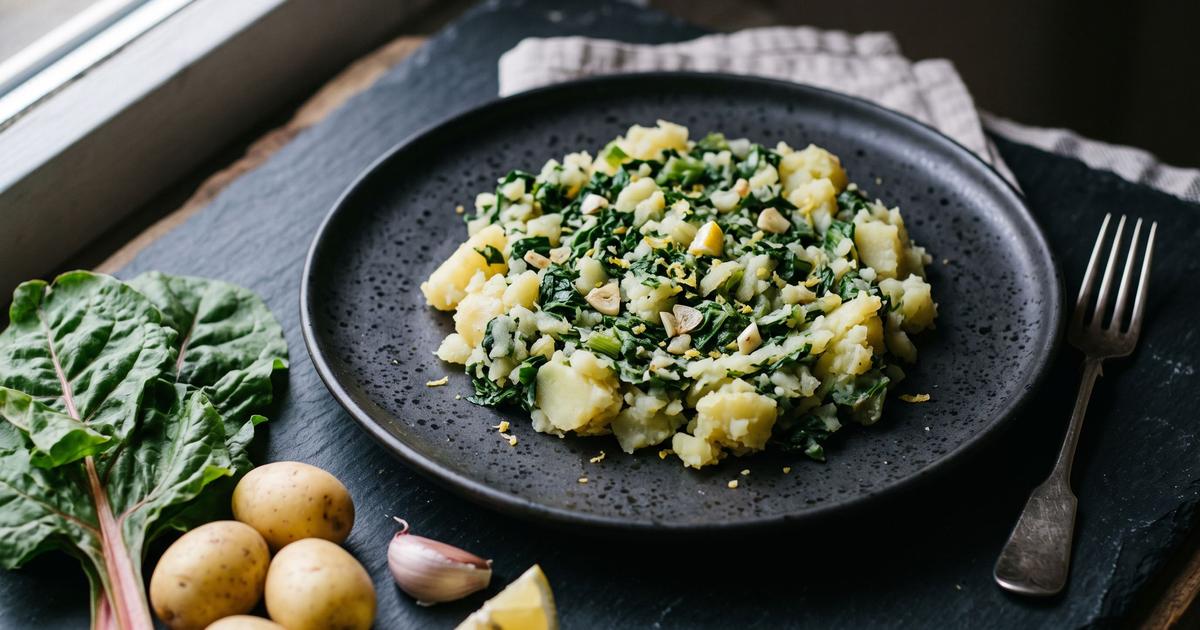
Blitva na dalmatinski is the standby green of the Croatian coast, chard and potatoes boiled and then crushed together into one soft, garlicky tangle. On the Adriatic it arrives under a generous slick of olive oil, but the dish underneath is really about the sweet potato melting into the mineral greens, and it holds up without the oil. The move that replaces it is warming the sliced garlic gently in a little of the cooking water, which mellows its raw edge so it perfumes the dish rather than biting. Keep the chard stems and leaves separate, since they cook at different speeds, and finish with enough lemon to make it bright. It is a plain, honest side that goes with almost anything, and it takes about half an hour.
Ingredients
- 1 lb Swiss chard, leaves and stems separated
- 3/4 lb Potatoes, peeled and cubed
- 3 cloves Garlic, sliced thin
- 2 tbsp Lemon juice
- 1/4 tsp Black peppercorns, freshly ground
Method
- Boil the cubed potatoes in a large pot of water until they are nearly tender, about 10 minutes. Give them a head start, because they take longer than the greens and everything finishes in the same pot.
- Chop the chard stems and add them to the pot, then the leaves a couple of minutes later. Chard is really two vegetables: the stems need a few minutes to soften, while the leaves wilt almost on contact, so they go in separately.
- Drain, saving about 0.25 cup (60 ml) of the cooking water. Warm the sliced garlic gently in that reserved water in the empty pot for a minute, just until it smells sweet, without letting it color. Softening the garlic in water, not oil, keeps its bite from turning harsh and raw in the finished dish.
- Return the potatoes and chard to the pot and crush them together roughly with the garlic water, so the potato half-melts into the greens and binds them. Fold in the lemon juice and black pepper. The lemon and the mineral chard together read as fully seasoned, which is why no salt goes in.
Nutrition
Estimated per serving: 120 calories, 4 g protein, 4 g fiber, 150 mg sodium. Computed from USDA FoodData Central reference values for the main ingredients. This is an approximation, not a laboratory measurement. How these are computed.
Cost per serving is estimated from US national-average retail prices for cheap staple forms, using BLS dried-bean prices and USDA produce prices. Prices vary by store and season, so treat it as a guide, not a receipt. How this is computed.