West African Cabbage Slaw with Scotch Bonnet
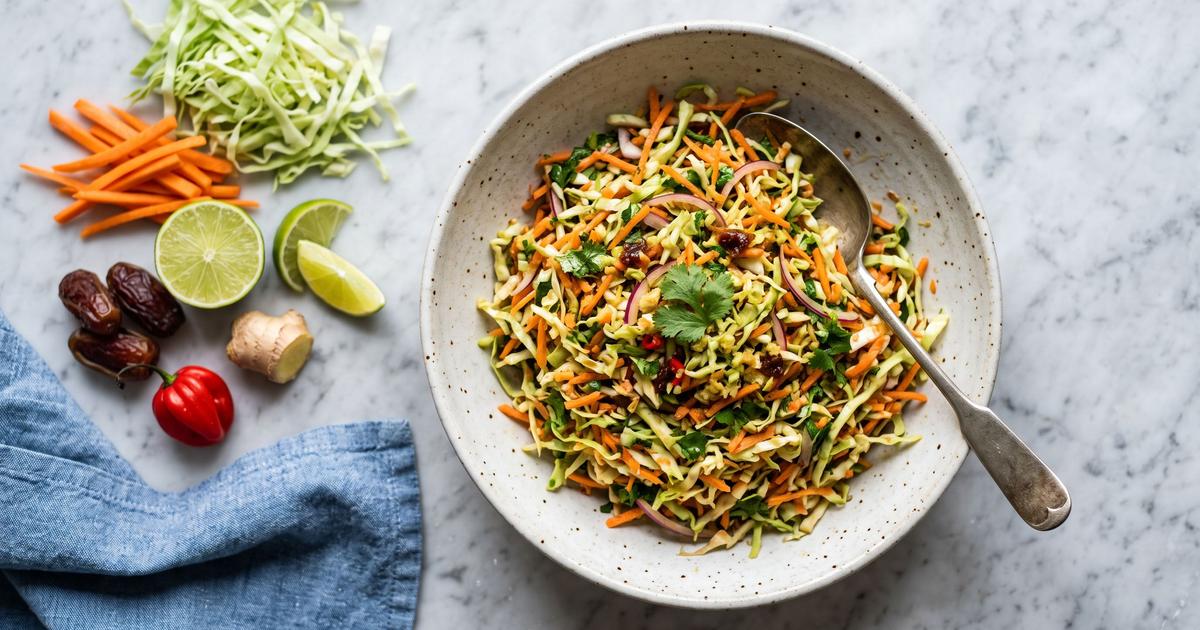
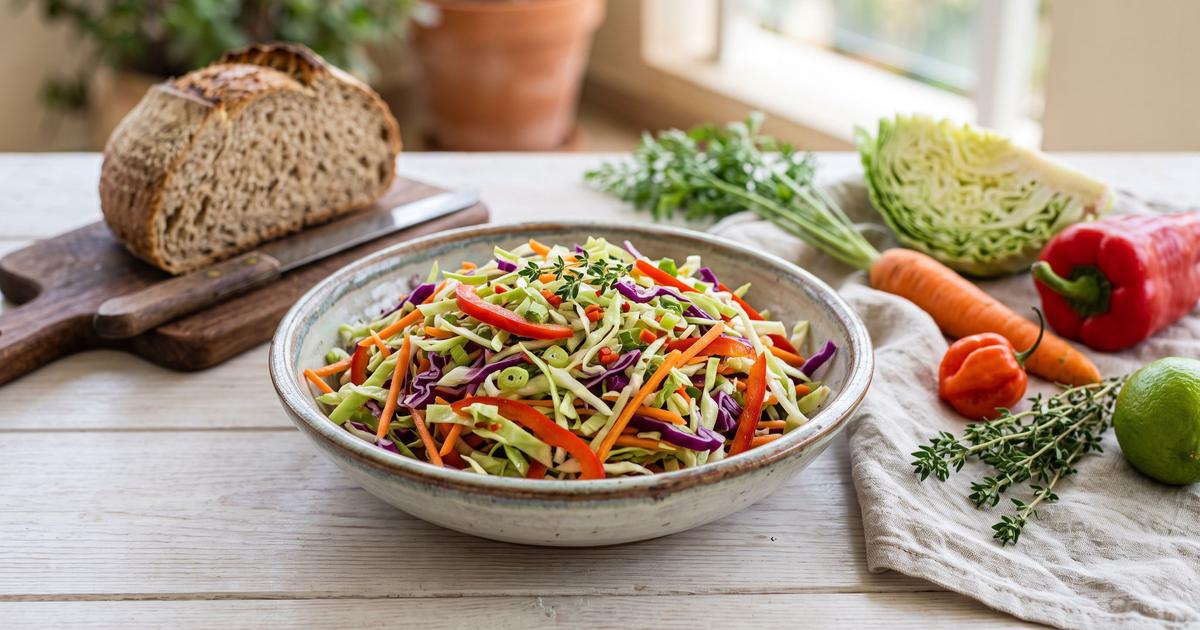
Across West Africa the scotch bonnet is the default heat, a small lantern-shaped chile with a fruity, almost apricot note under the fire, and it turns up in nearly every savory dish. This raw slaw puts it front and center against cheap, sturdy cabbage and sweet carrot, with ginger and cider vinegar sharpening the edge and a little date paste keeping the heat sociable. A bright, crunchy plate like this is what you want next to the heavier stews and rice dishes that anchor the table. Habanero is the easiest stand-in for scotch bonnet, and half of one is plenty.
Ingredients
- 1/2 head green cabbage, cored and finely shredded
- 2 wholes Carrots, grated
- 1/2 whole Red onions, thinly sliced
- 1 whole Bell peppers, red, cut into thin strips
- 1/2 whole Habanero, seeded and minced
- 1 tbsp Ginger, grated
- 3 tbsp Lime juice
- 2 tbsp Apple cider vinegar
- 2 wholes Medjool dates, pitted
- 1/3 cup Cilantro, chopped
Method
- Shred the cabbage and carrot fine. Thin shreds soak up the dressing and soften faster, which matters when the only thing tenderizing them is acid.
- Blend the dates with 2 tablespoons water into a smooth paste. Liquid dates are the sweetener across this whole site, and here they balance the fire so the slaw is hot but not punishing.
- Whisk the lime, vinegar, ginger, minced habanero, and date paste together. Scotch bonnet, which the habanero stands in for, carries a fruit-and-fire flavor that reads as seasoning without salt. It tastes mild at first and builds, so add it in stages if you are unsure.
- Toss everything together and massage lightly with your hands, then rest 15 to 20 minutes. The acid wilts the cabbage just enough, doing the softening job that salt would in most slaws.
- Fold in the cilantro just before serving. It keeps for 2 days, getting hotter and more tender as it sits.
Nutrition
Estimated per serving: 80 calories, 3 g protein, 5 g fiber, 35 mg sodium. Computed from USDA FoodData Central reference values for the main ingredients. This is an approximation, not a laboratory measurement. How these are computed.
Cost per serving is estimated from US national-average retail prices for cheap staple forms, using BLS dried-bean prices and USDA produce prices. Prices vary by store and season, so treat it as a guide, not a receipt. How this is computed.