Velvety Cauliflower Soup with Nutmeg
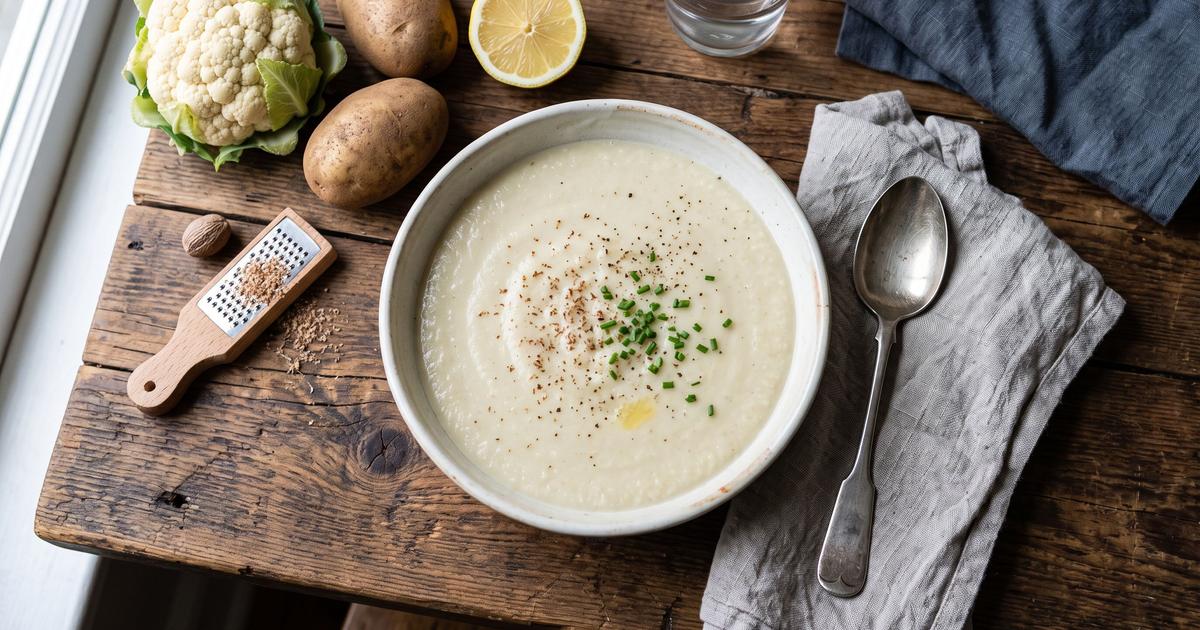
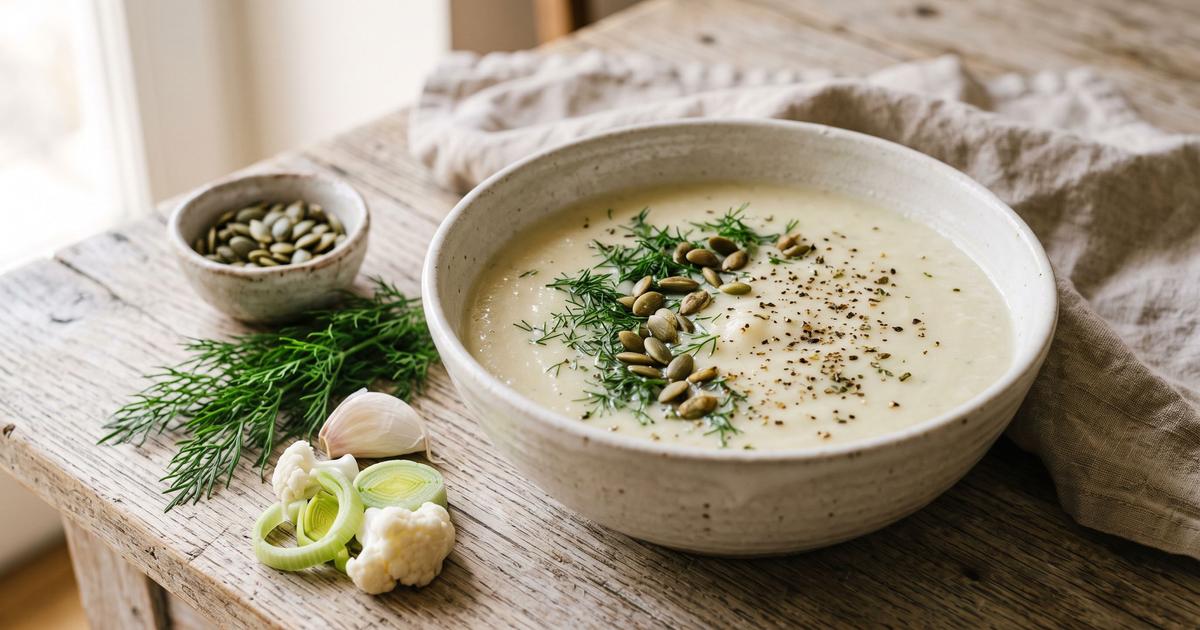
Cauliflower makes one of the most luxurious-seeming soups you can build from cheap parts, because it purees into a genuine silk with no help from cream. This is a plain, pale, comforting bowl of the kind found across Northern and Western Europe under a dozen names, thickened with a diced potato and rounded with a spoonful of oat cream rather than dairy. Two small things lift it above blandness: fresh nutmeg, the classic seasoning for cauliflower and cabbage, and a squeeze of lemon at the end to keep the smoothness from going dull. Leek instead of onion keeps the base sweet and the color clean. It comes together in about half an hour in a single pot, weeknight food that tastes like more.
Ingredients
- 1 large head Cauliflower, cut into florets
- 1 whole Leeks, white and pale green, sliced
- 1 medium Potatoes, diced
- 2 cloves Garlic, sliced
- 1 tbsp no-salt vegetable bouillon
- 1/4 tsp Nutmeg, freshly grated
- 1/4 cup Oat cream
- 1 tbsp Lemon juice
- 1/2 tsp Black peppercorns, freshly ground
- 2 tbsp Chives, snipped
Method
- Sweat the sliced leek and garlic in a few tablespoons of water over medium heat until soft but not colored, about 6 minutes. Leek makes a rounder, sweeter base than onion and keeps the soup pale, which matters for a soup meant to look and taste delicate.
- Add the cauliflower, potato, bouillon, and 4 cups (1 L) water. Simmer until both are completely fork-soft, about 18 minutes. The potato is there for body; cauliflower alone blends thin, and the starch is what gives the soup weight.
- Blend until absolutely smooth, working in batches if needed. Cauliflower purees to a silk that reads as creamy on its own, so a full, patient blend does most of the work that cream would in a classic version.
- Off the heat, stir in the oat cream, grated nutmeg, lemon juice, and black pepper. Nutmeg is the traditional partner to cauliflower and cabbage in European cooking, and the lemon keeps the richness from tasting flat; add the cream at the end so it does not split.
- Ladle out and scatter the chives over. A green, oniony finish brightens the pale bowl and adds a note the smooth soup otherwise lacks.
Nutrition
Estimated per serving: 130 calories, 6 g protein, 5 g fiber, 95 mg sodium. Computed from USDA FoodData Central reference values for the main ingredients. This is an approximation, not a laboratory measurement. How these are computed.
Cost per serving is estimated from US national-average retail prices for cheap staple forms, using BLS dried-bean prices and USDA produce prices. Prices vary by store and season, so treat it as a guide, not a receipt. How this is computed.