Turkish Green Beans in Tomato
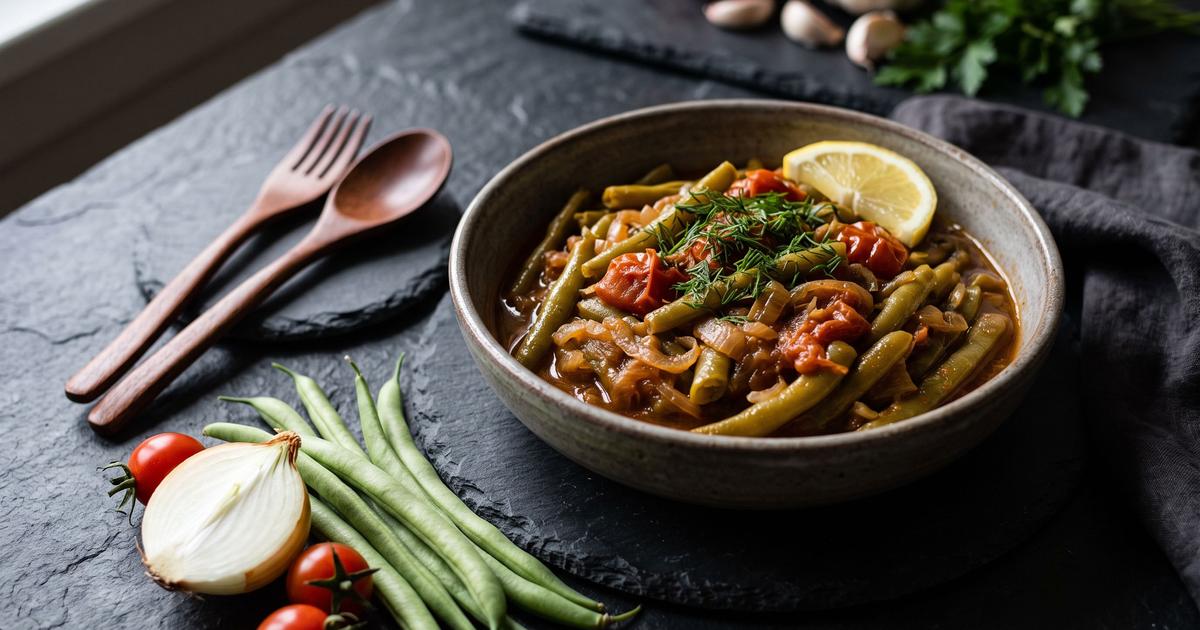
Zeytinyagli means cooked in olive oil, so an oil-free version sounds like a contradiction, but what actually carries the dish is a long, patient braise. Cook the onion low until it goes sweet, toast the tomato paste until it turns savory, then let the beans simmer until they surrender completely. The result is soft, rich, and a little jammy, exactly the texture Turkish home cooks are after. Serve it cool with a squeeze of lemon and bread to mop the tomato.
Ingredients
- 1 lb Green beans, trimmed, halved if long
- 1 whole Yellow onions, thinly sliced
- 3 cloves Garlic, sliced
- 1 tbsp Tomato paste
- 2 wholes Fresh tomatoes, grated, skins discarded
- 1 tbsp Lemon juice, to finish
Method
- Sweat the sliced onion in a wide pot with a few tablespoons of water over low heat, stirring now and then, until it collapses and turns pale gold, about 12 minutes. This slow-cooked onion is the sweetness that oil and a pinch of sugar usually provide.
- Add the garlic and the tomato paste and stir until the paste darkens to brick red, about 2 minutes. Toasting the paste in the dry-ish pot builds a savory base that tastes far deeper than raw tomato.
- Grate the fresh tomatoes on a box grater, letting the skin stay behind in your hand, and add the pulp to the pot. Grating gives you tomato sauce with no peeling and no blender.
- Add the green beans and just enough water to come halfway up. Cover and simmer for 25 to 30 minutes, until the beans are fully soft and slumped, not crisp-tender. Turkish cooks take these beans well past bright green on purpose, and that softness is the whole style.
- Cool the beans to room temperature and finish with the lemon juice. Zeytinyagli dishes are meant to be eaten cool, when the flavors settle, and the lemon at the end does the brightening that salt would otherwise be asked to do.
Nutrition
Estimated per serving: 85 calories, 3 g protein, 5 g fiber, 30 mg sodium. Computed from USDA FoodData Central reference values for the main ingredients. This is an approximation, not a laboratory measurement. How these are computed.
Cost per serving is estimated from US national-average retail prices for cheap staple forms, using BLS dried-bean prices and USDA produce prices. Prices vary by store and season, so treat it as a guide, not a receipt. How this is computed.