Sholeh Zard, Persian Saffron Rice Pudding
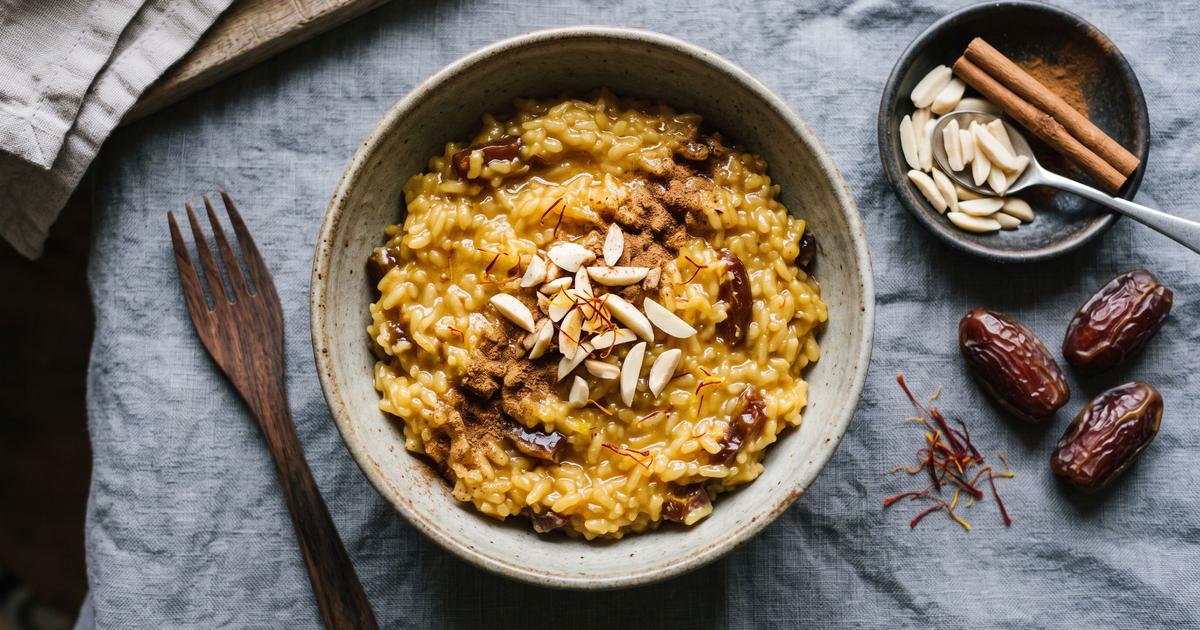
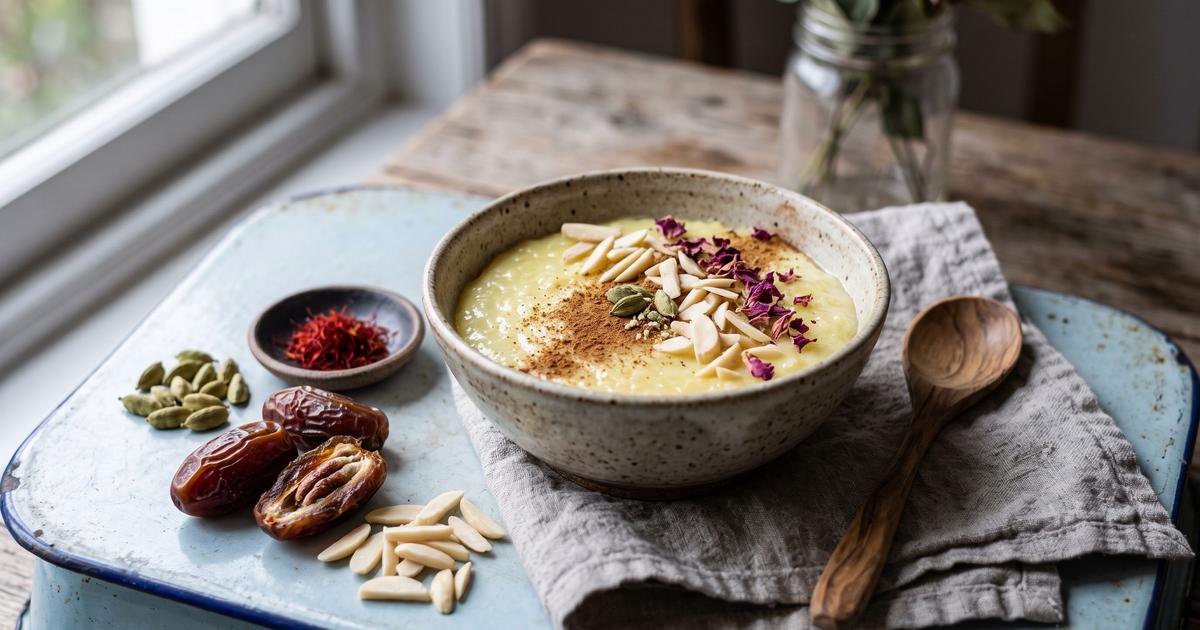
Sholeh zard is the saffron rice pudding Iranians make for gatherings and give away to neighbors, and unlike most puddings it contains no milk at all. The rice is simmered soft in water until it breaks down, and saffron, added late to keep its color and perfume, turns the whole pot deep gold. Dates blended to a paste do the sweetening that sugar normally would. A dusting of cinnamon and a scatter of slivered almonds are the traditional finish, often drawn into patterns across the top. A splash of rosewater is classic if you have it. Serve it cold in shallow bowls, set but still spoonable.
Ingredients
- 3/4 cup short grain brown rice, rinsed
- 1/4 tsp Saffron, ground and bloomed in 3 tbsp hot water
- 6 wholes Medjool dates, pitted and blended with 0.5 cup water into a paste
- 3 pods Green cardamom, seeds crushed
- 1/2 tsp cassia cinnamon, ground
- 3 tbsp Almonds, slivered
Method
- Simmer the rice in 4 cups water, partly covered, until very soft and beginning to break down, about 40 minutes. Sholeh zard is meant to be soft and porridge-like, not distinct grains, so cook it well past the point you would for plain rice, adding a splash more water if it dries out.
- Stir in the date paste and the crushed cardamom and cook 5 minutes more, until it thickens to a loose pudding. Dates blended to a paste sweeten it in place of the sugar the original leans on, and hold it back from being cloying.
- Stir in the bloomed saffron and cook 2 minutes. Adding the saffron near the end keeps its color deep gold and its perfume intact, which long boiling would dull.
- Pour into shallow bowls, dust with the cinnamon, and scatter the almonds. Chill until set but still spoonable. A splash of rosewater stirred in at the end is the traditional finish if you have it.
Nutrition
Estimated per serving: 210 calories, 4 g protein, 4 g fiber, 10 mg sodium. Computed from USDA FoodData Central reference values for the main ingredients. This is an approximation, not a laboratory measurement. How these are computed.
Cost per serving is estimated from US national-average retail prices for cheap staple forms, using BLS dried-bean prices and USDA produce prices. Prices vary by store and season, so treat it as a guide, not a receipt. How this is computed.