Fereni, Persian Milk Pudding
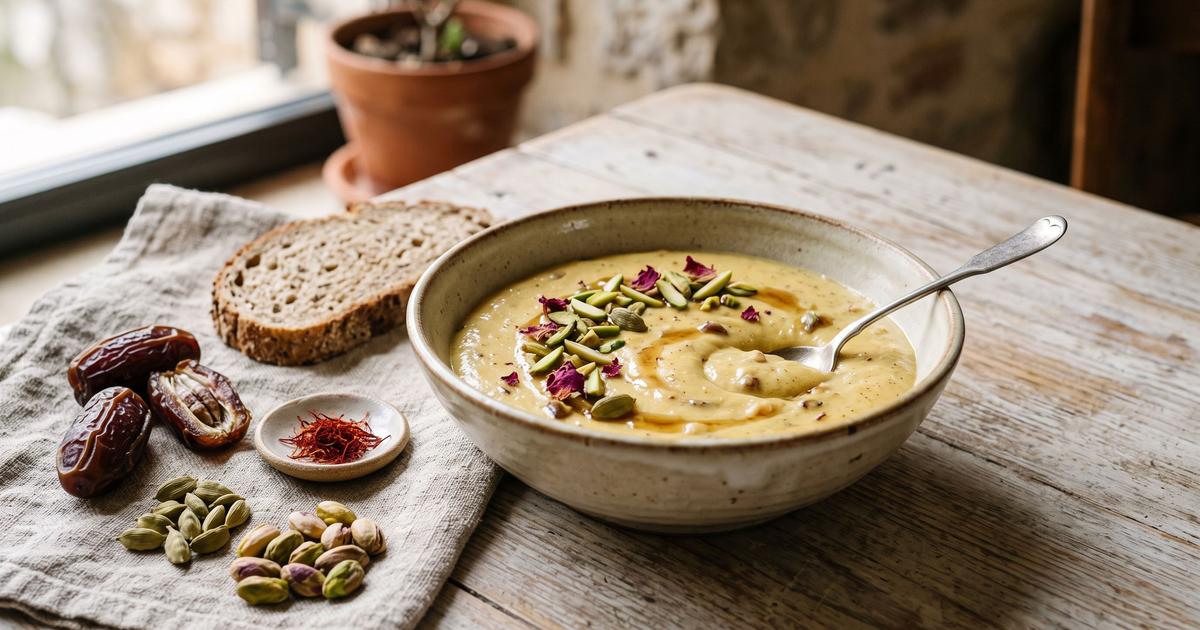
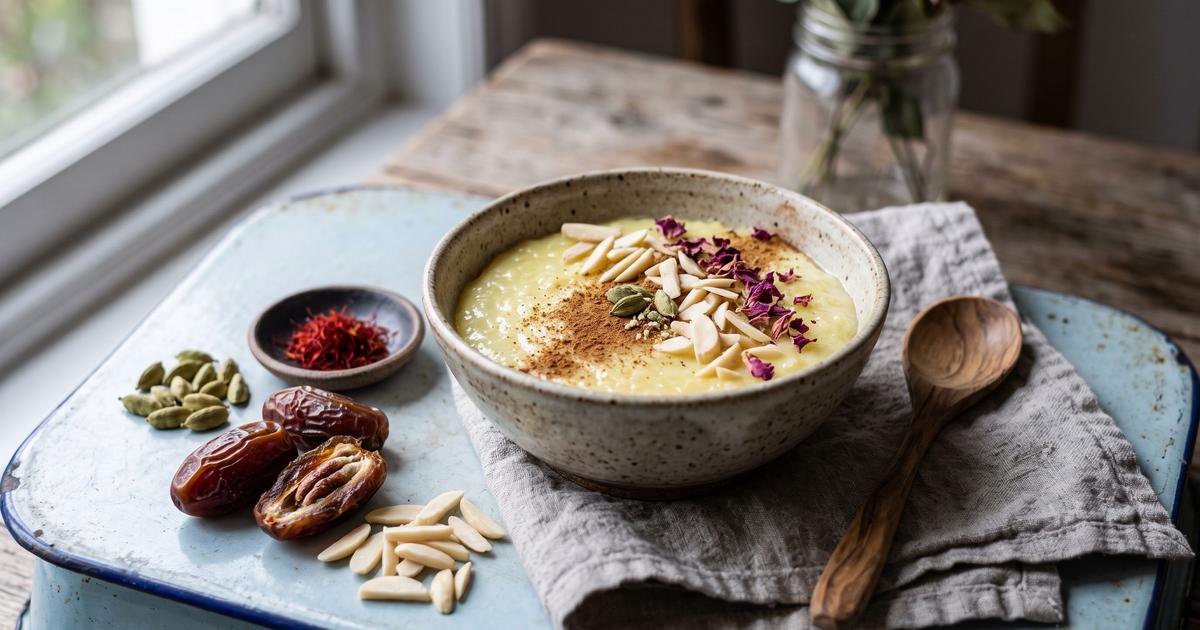
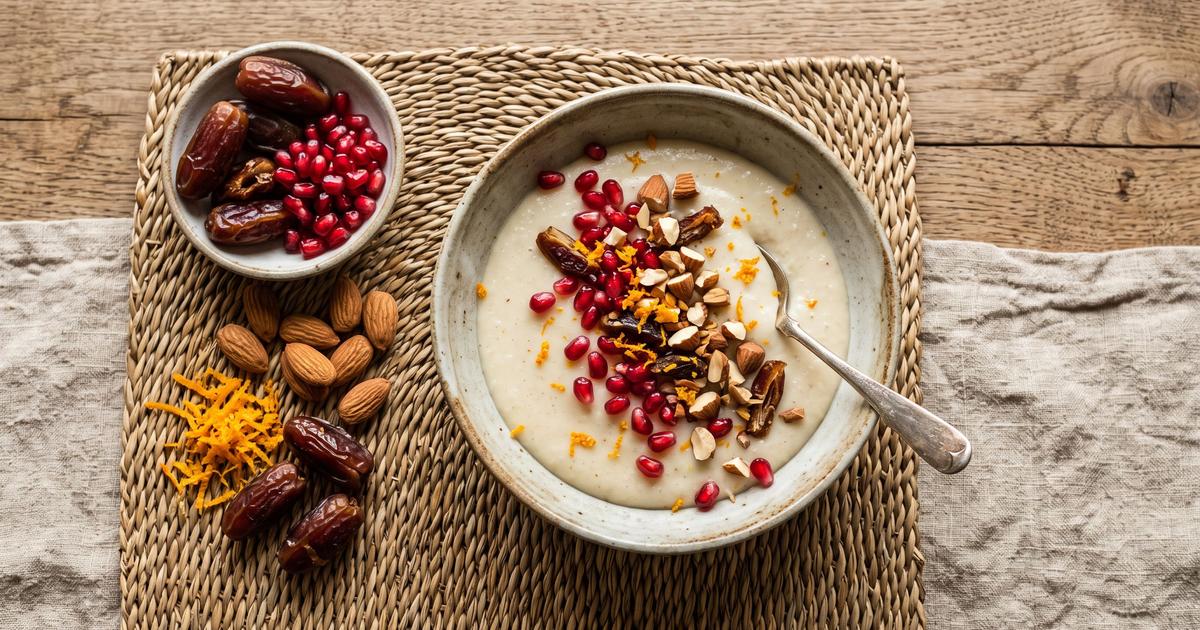
Fereni is the pudding Iranian parents make for a child home sick from school, plain and soothing and barely sweet. It is usually built on rice flour or cornstarch cooked into warm milk, then scented with rosewater and cardamom. This version leans on cardamom and saffron and lets blended dates do all the sweetening, so there is no added sugar and nothing refined in the bowl. Keep it loose rather than stiff, the way it is meant to be eaten warm with a spoon, and save the walnuts and pomegranate for the moment you serve it.
Ingredients
- 2 1/2 cups Unsweetened soy milk
- 5 wholes Medjool dates, pitted
- 1/4 cup Cornstarch
- 1/2 tsp Green cardamom, seeds only, ground
- 1 pinch Saffron, ground and steeped in 1 tbsp hot water
- 2 tbsp Walnuts, toasted and chopped, to garnish
- 1/4 cup Pomegranate, seeds, to garnish
Method
- Blend the dates with 1 cup (240 ml) of the soy milk until completely smooth. Dates are the only sweetener here, so blending rather than chopping them means their sweetness is carried evenly through the pudding with no grit.
- Whisk the cornstarch into the remaining 1.5 cups (360 ml) cold soy milk until no lumps remain, then pour in the date milk and the ground cardamom. Starting with cold milk keeps the cornstarch from seizing into knots the moment it meets heat.
- Cook over medium heat, whisking constantly, until the mixture thickens to a loose custard that coats the back of a spoon, about 6 to 8 minutes. Constant whisking is what gives fereni its signature satin texture instead of a skin and lumps.
- Stir in the saffron water off the heat, which streaks the pale pudding gold and adds its faint honeyed aroma. Adding it at the end preserves the color, since long cooking dulls saffron.
- Spoon into small bowls and chill for at least an hour to set. Top with the toasted walnuts and pomegranate seeds just before serving, so the walnuts stay crisp and the seeds stay bright.
Nutrition
Estimated per serving: 170 calories, 5 g protein, 3 g fiber, 45 mg sodium. Computed from USDA FoodData Central reference values for the main ingredients. This is an approximation, not a laboratory measurement. How these are computed.
Cost per serving is estimated from US national-average retail prices for cheap staple forms, using BLS dried-bean prices and USDA produce prices. Prices vary by store and season, so treat it as a guide, not a receipt. How this is computed.