Setup Pisang, Sundanese Spiced Banana Compote
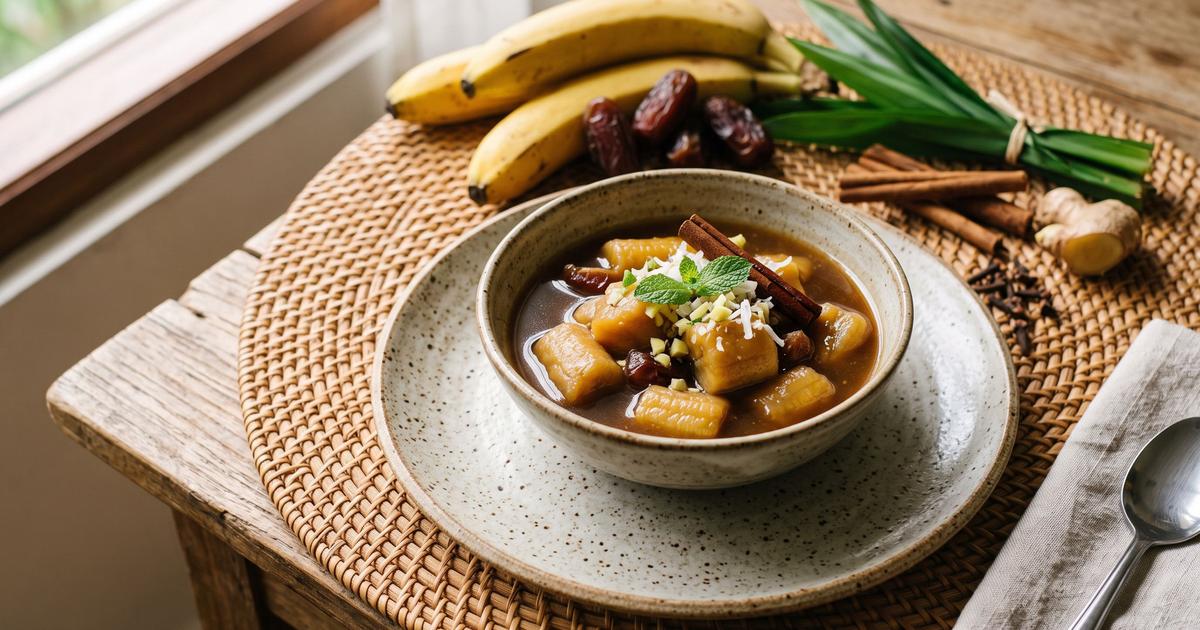
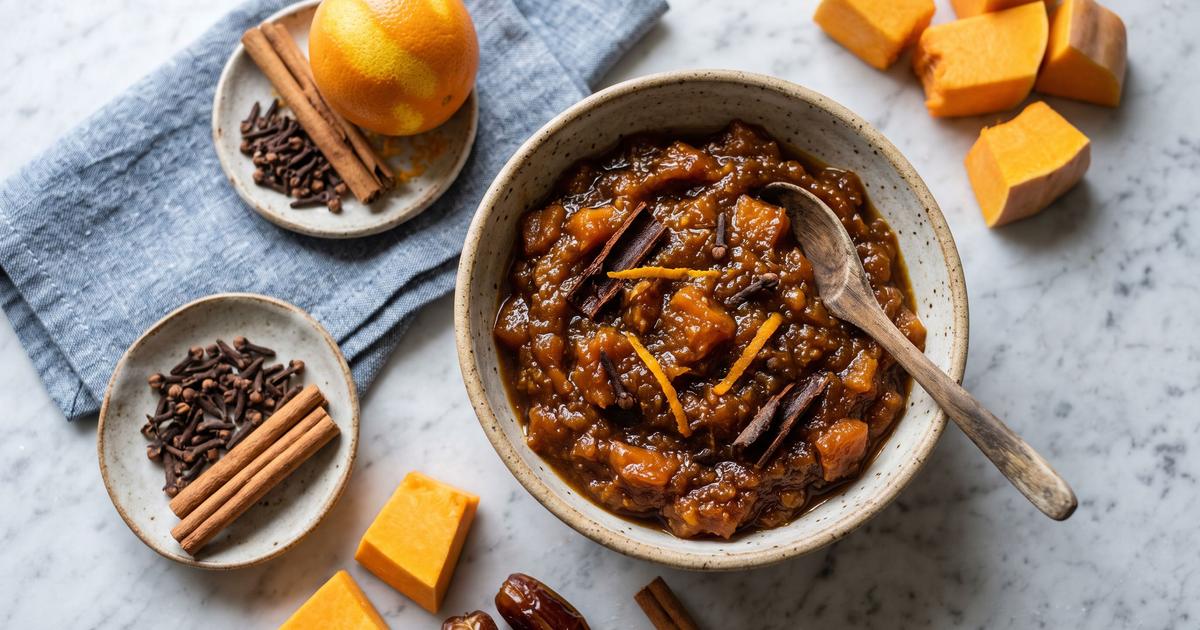
Setup pisang is a Sundanese dessert from West Java, bananas poached in a clear, fragrant syrup rather than the coconut milk of the better-known kolak. That makes it a natural fit here: no coconut, no oil, and all the sweetness coming from the fruit itself plus a few blended dates in place of the usual palm sugar. The character is in the spicing, cinnamon, clove, ginger, and a knot of pandan, which the syrup steeps before the bananas ever touch it. Firm, barely ripe bananas are the trick, holding their shape through the poach instead of dissolving. Eat it warm on a cool evening or cold from the fridge in the heat.
Ingredients
- 4 wholes Bananas, firm, just ripe, cut into thick diagonals
- 3 wholes Medjool dates, pitted
- 1 whole cassia cinnamon, stick
- 3 wholes Cloves
- 1 inch Ginger, sliced into coins
- 1 whole Pandan leaf, knotted
Method
- Blend the dates with 0.5 cup (120 ml) hot water until smooth, then pour that into a wide pot with another 1.5 cups (360 ml) water, the cinnamon stick, cloves, ginger, and the knotted pandan. Blending the dates first means their sweetness disperses evenly through the poaching liquid instead of sinking as lumps.
- Bring the spiced liquid to a gentle simmer and let it steep for 8 minutes before the fruit goes in. The syrup needs that time to pull the warmth out of the whole spices; add the bananas too early and the broth stays thin and one-note.
- Slide in the banana pieces and poach gently, never boiling, for 6 to 8 minutes, just until they are heated through and tender but still holding their shape. Use bananas that are firm and only just ripe, since a soft banana will collapse into the syrup and a green one will stay chalky.
- Fish out the pandan, cinnamon, and cloves. Serve the bananas warm in their spiced syrup, or chill them overnight, when the flavor deepens and the liquid thickens slightly around the fruit.
Nutrition
Estimated per serving: 160 calories, 2 g protein, 4 g fiber, 3 mg sodium. Computed from USDA FoodData Central reference values for the main ingredients. This is an approximation, not a laboratory measurement. How these are computed.
Cost per serving is estimated from US national-average retail prices for cheap staple forms, using BLS dried-bean prices and USDA produce prices. Prices vary by store and season, so treat it as a guide, not a receipt. How this is computed.