Che Bap, Vietnamese Sweet Corn Pudding
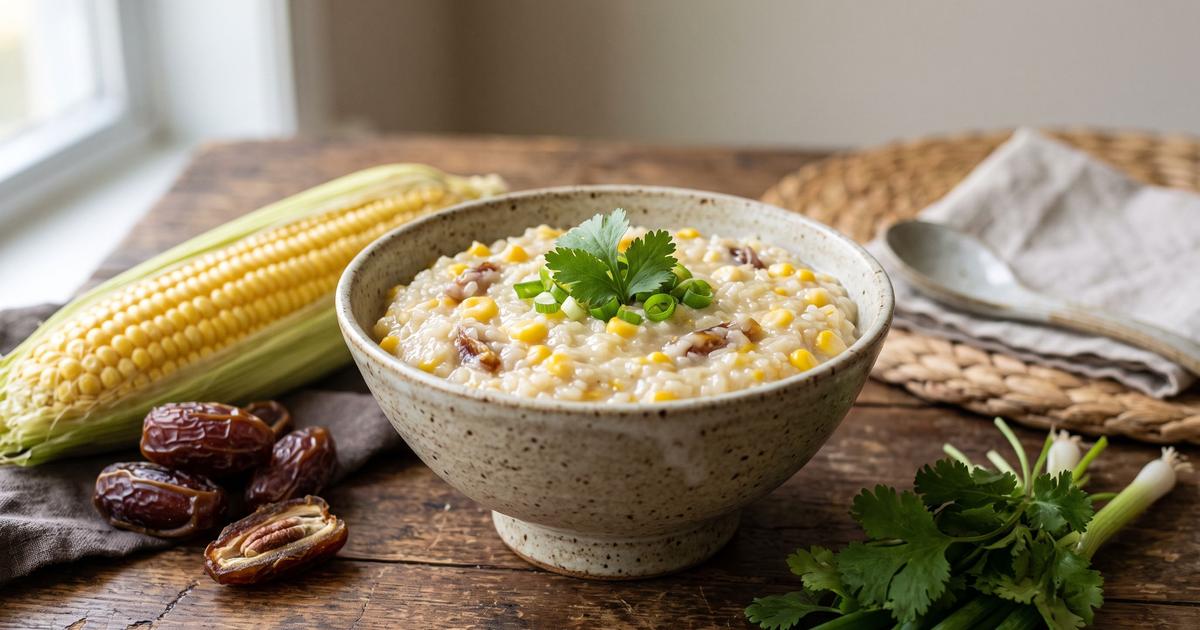
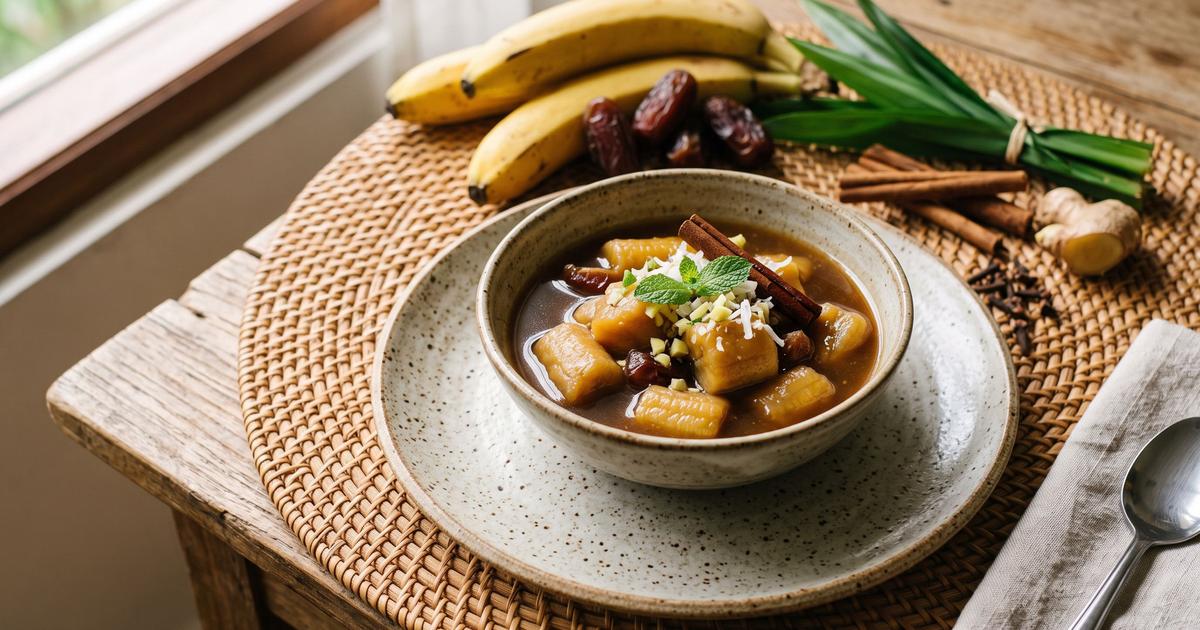
Che is the whole Vietnamese family of sweet soups and puddings, and che bap is the summer one, made when corn is at its peak and cheap by the sackful. It is little more than corn, a thickening starch, and something creamy poured over, which makes it easy to bring inside the rules. Soaked short grain rice, simmered until it collapses, does the thickening that glutinous rice does in the original, and blended dates replace the sugar. The classic topping is nuoc cot dua, a salted coconut cream; unsweetened soy milk stands in with the same gentle richness and no coconut at all. Pandan perfumes the pot. Eat it warm on a cool night or cold from the fridge in the heat.
Ingredients
- 2 1/2 cups Frozen corn
- 1/3 cup short grain brown rice, soaked 4 hours, rinsed
- 4 wholes Medjool dates, pitted
- 1 whole Pandan leaf, knotted
- 1 cup Unsweetened soy milk
Method
- Simmer the soaked short grain rice with the knotted pandan in 3 cups (710 ml) water until the grains swell and go soft and the liquid turns thick and starchy, about 25 minutes. The rice is the thickener here, the same role glutinous rice plays in the original, and cooking it until it breaks down is what gives che bap its spoonable body without any starch or coconut cream.
- Blend the dates with 0.5 cup (120 ml) of the hot cooking liquid until smooth, then stir the date syrup back into the pot. Sweetening at this stage, once the rice has done its thickening, lets you taste and adjust; the dates replace the palm or white sugar a traditional che leans on heavily.
- Stir in the corn and cook another 8 minutes, just until it is hot and tender. Reserve a spoonful of corn to blend smooth and stir back in if you want a thicker pudding; keeping most of the kernels whole is what makes it che bap, corn sweet soup, rather than a puree.
- Fish out the pandan and pour in the soy milk, warming it through off the boil. In Vietnam this dessert is crowned with a salty coconut cream; unsweetened soy milk gives the same soft richness against the sweet corn, and it can be served warm now or chilled for later.
Nutrition
Estimated per serving: 200 calories, 5 g protein, 4 g fiber, 25 mg sodium. Computed from USDA FoodData Central reference values for the main ingredients. This is an approximation, not a laboratory measurement. How these are computed.
Cost per serving is estimated from US national-average retail prices for cheap staple forms, using BLS dried-bean prices and USDA produce prices. Prices vary by store and season, so treat it as a guide, not a receipt. How this is computed.