Doce de Abóbora, Brazilian Squash and Clove Compote
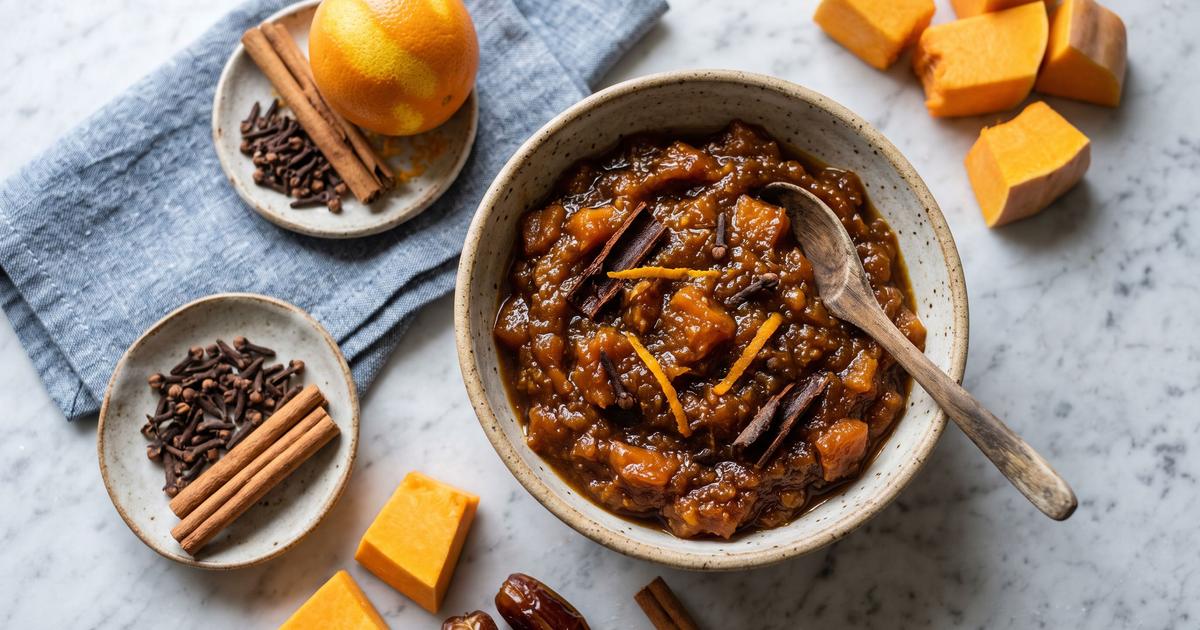
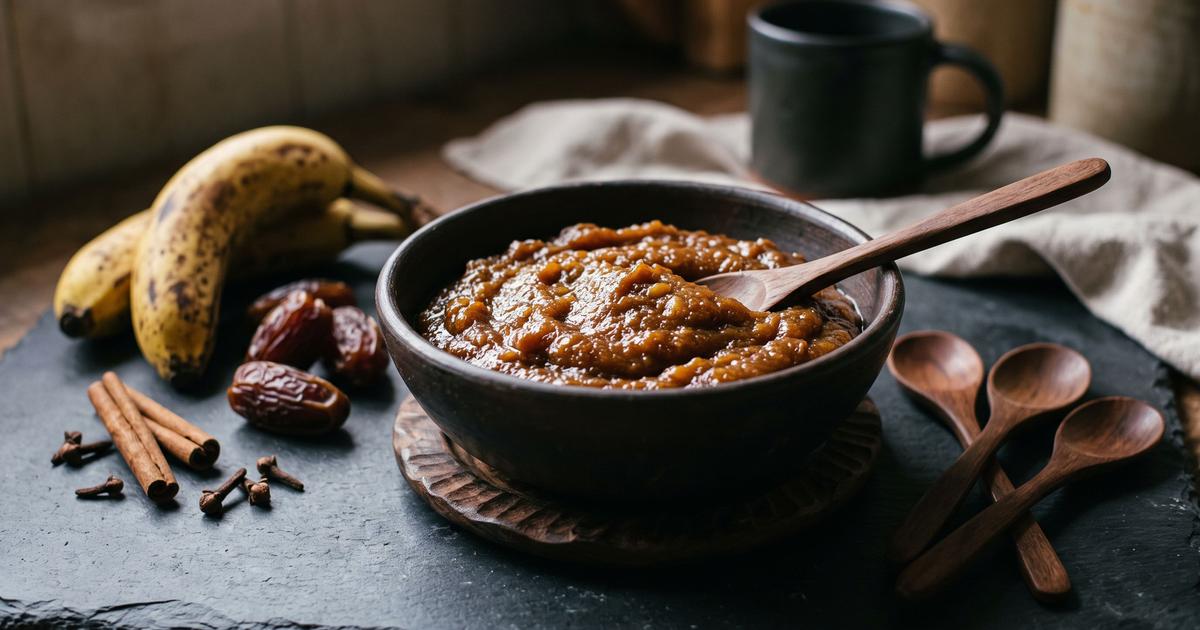
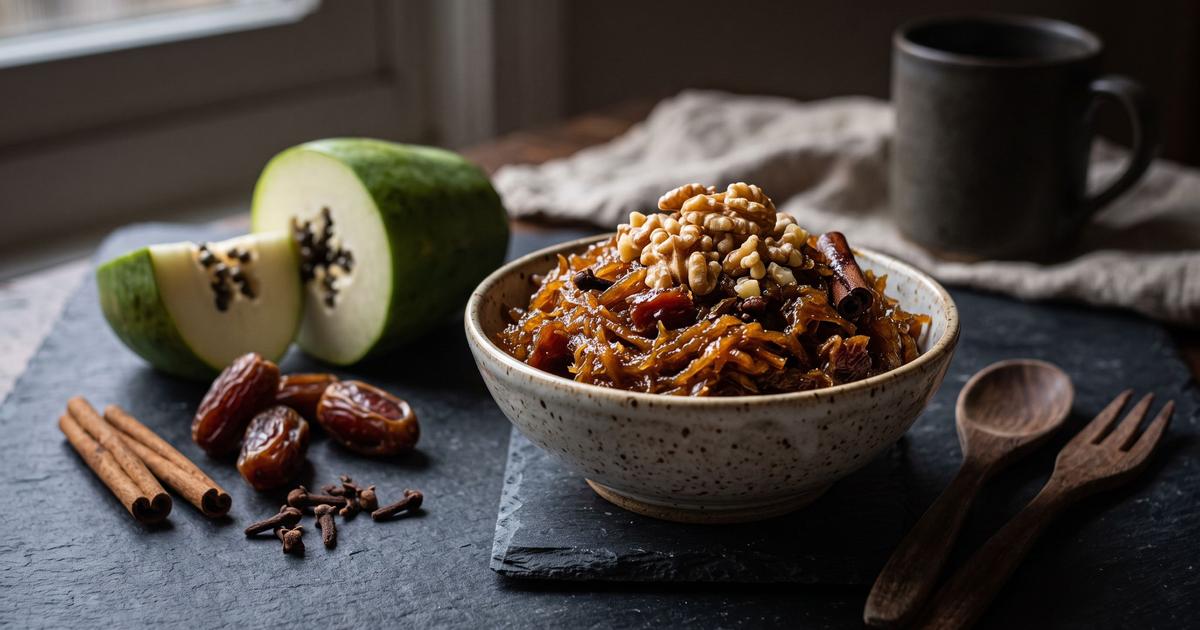
Doce de abóbora is one of Brazil's everyday sweets, a thick squash preserve cooked slowly with warm spice until it turns to jam. In much of the country it is made with coconut, and elsewhere just with sugar and clove; this version skips both. Grated squash breaks down fast and reduces to a deep, spoonable compote, and blended dates do the sweetening with their fiber intact. Clove and cinnamon give it the perfume that defines the doce, while orange zest and a little grated ginger keep it from turning one-note. Butternut works well for its sweetness, though any dense winter squash will do. Eat it the way Brazilians do, with a spoon on its own or alongside something plain, or stir it into morning oats. It keeps for a week in the fridge and thickens as it sits.
Ingredients
- 4 cups Butternut squash, peeled and grated or small-diced
- 6 Medjool dates, pitted and chopped
- 1 Orange, zested and juiced
- 3 wholes Cloves
- 1 stick cassia cinnamon, or 1 tsp ground
- 1 tsp Ginger, grated
Method
- Blend the dates with 0.5 cup (120 ml) hot water into a smooth paste. This is the only sweetener, and unlike sugar it brings fiber along with the sweetness.
- Combine the squash, date paste, orange juice and zest, cloves, cinnamon, and ginger in a pot with another 0.5 cup (120 ml) water.
- Simmer partly covered for 25 to 30 minutes, stirring now and then, until the squash collapses and the mixture goes thick and jammy. The slow reduction is what turns loose squash into a compote.
- Mash it to the texture you like and cook a few minutes uncovered if it is still watery. Fish out the whole cloves and the cinnamon stick before they turn it bitter.
- Cool it down. It sets further as it sits, since the squash's own pectin firms up. Spoon it over oats or eat it cold from the jar.
Nutrition
Estimated per serving: 150 calories, 2 g protein, 5 g fiber, 15 mg sodium. Computed from USDA FoodData Central reference values for the main ingredients. This is an approximation, not a laboratory measurement. How these are computed.
Cost per serving is estimated from US national-average retail prices for cheap staple forms, using BLS dried-bean prices and USDA produce prices. Prices vary by store and season, so treat it as a guide, not a receipt. How this is computed.