Selq, Moroccan Chard with Chickpeas and Preserved Lemon
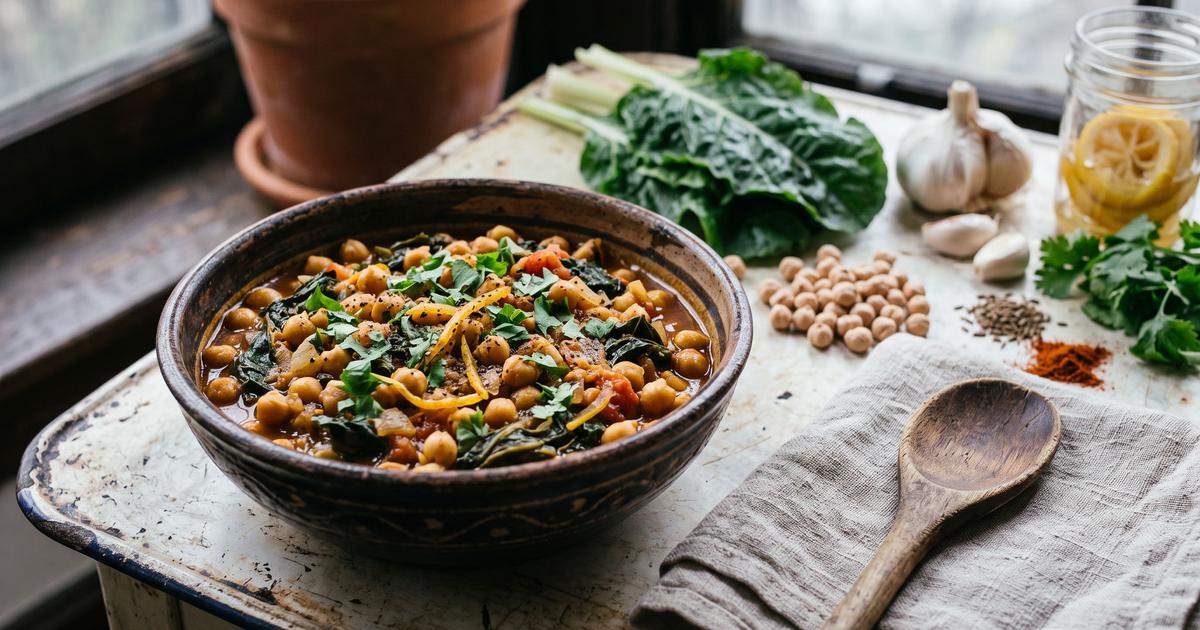
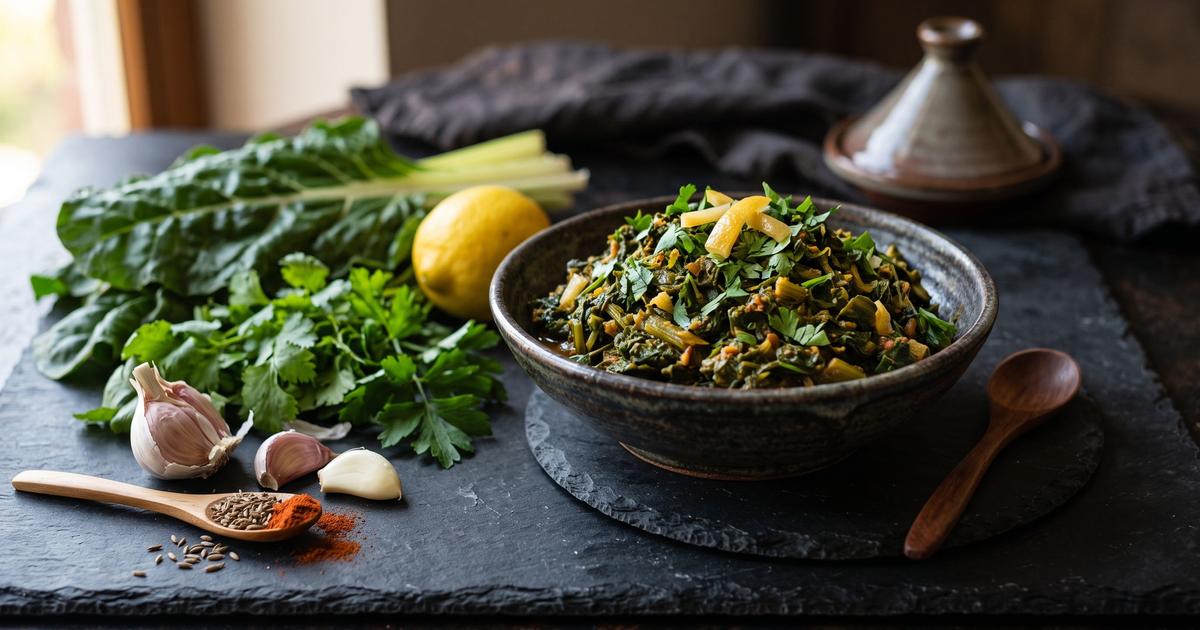
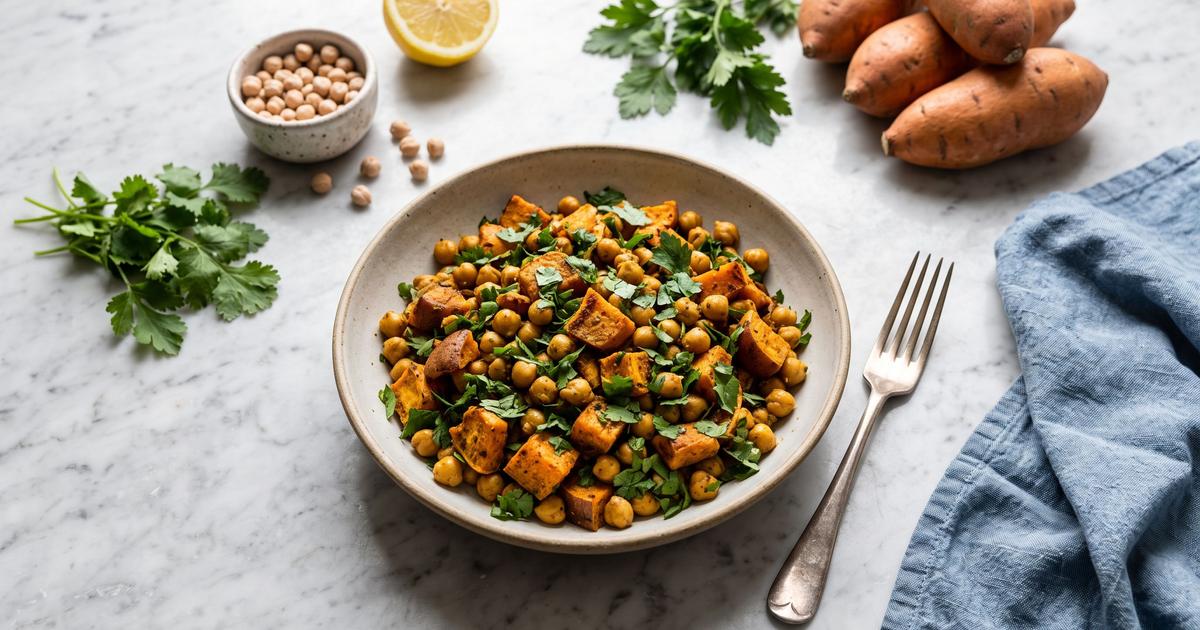
Selq is the Moroccan way with chard, cooked down with chickpeas until the greens are silky and the beans start to fall apart. It leans on the two flavors that make so much Moroccan food work without salt or oil: cumin and paprika bloomed in a wet pan, and preserved lemon, the salt-cured rind that carries both sodium and a perfume no fresh lemon has. Because the preserved lemon does the seasoning, this is the one place the site allows a light salt: it comes from a traditional cure, used in a small, rinsed amount, and it is what makes the dish taste like itself. Serve it warm as a side or scoop it up with whole grains.
Ingredients
- 1 lb Swiss chard, stems diced, leaves chopped
- 1 1/2 cups Chickpeas, cooked, or one can drained
- 4 cloves Garlic, sliced
- 1 tsp Cumin seed, ground
- 1 tsp Sweet paprika
- 1/4 tsp Cayenne
- 1/2 whole Preserved lemon, rind only, rinsed and minced
- 1/2 cup Cilantro, chopped
- 1/2 cup Flat-leaf parsley, chopped
- 1 tbsp Lemon juice
- 1/4 tsp Black peppercorns, ground
Method
- Sweat the garlic and the chard stems in a covered pan with 0.25 cup (60 ml) water until the stems soften, about 5 minutes. Stems and leaves are two vegetables on one plant: the stems need a head start, the leaves need almost none.
- Stir in the cumin, paprika, and cayenne and cook 30 seconds. Ground spices need heat and a little moisture to bloom, and dropping them into a dry pan just toasts them raw.
- Add the chard leaves with a splash more water and cook until wilted, about 3 minutes.
- Add the chickpeas and the minced preserved lemon rind. Cook 8 to 10 minutes so the flavors marry, mashing a handful of the chickpeas against the pan to thicken the whole into a loose, spoonable stew.
- Off the heat, fold in the parsley, cilantro, lemon juice, and black pepper. The preserved lemon is the only salt in the dish, so taste before you reach for anything else: rinsed rind is salty, bright, and floral all at once.
Nutrition
Estimated per serving: 190 calories, 9 g protein, 8 g fiber, 220 mg sodium. Computed from USDA FoodData Central reference values for the main ingredients. This is an approximation, not a laboratory measurement. How these are computed.
Cost per serving is estimated from US national-average retail prices for cheap staple forms, using BLS dried-bean prices and USDA produce prices. Prices vary by store and season, so treat it as a guide, not a receipt. How this is computed.