Salmorejo Cordobés, Chilled Tomato Cream
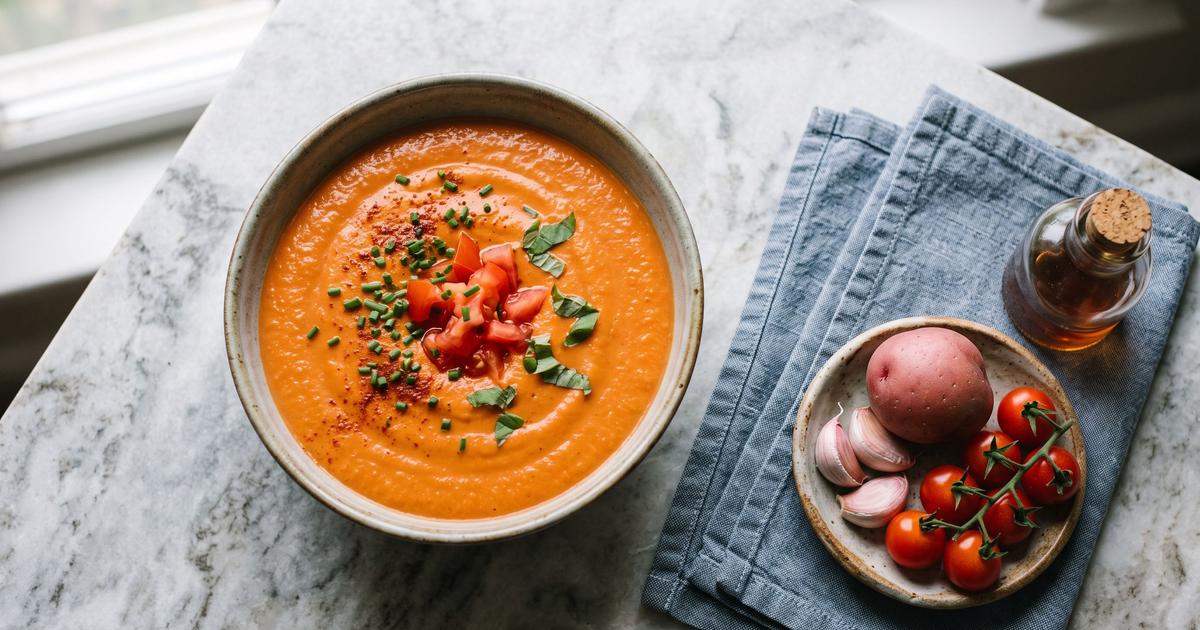
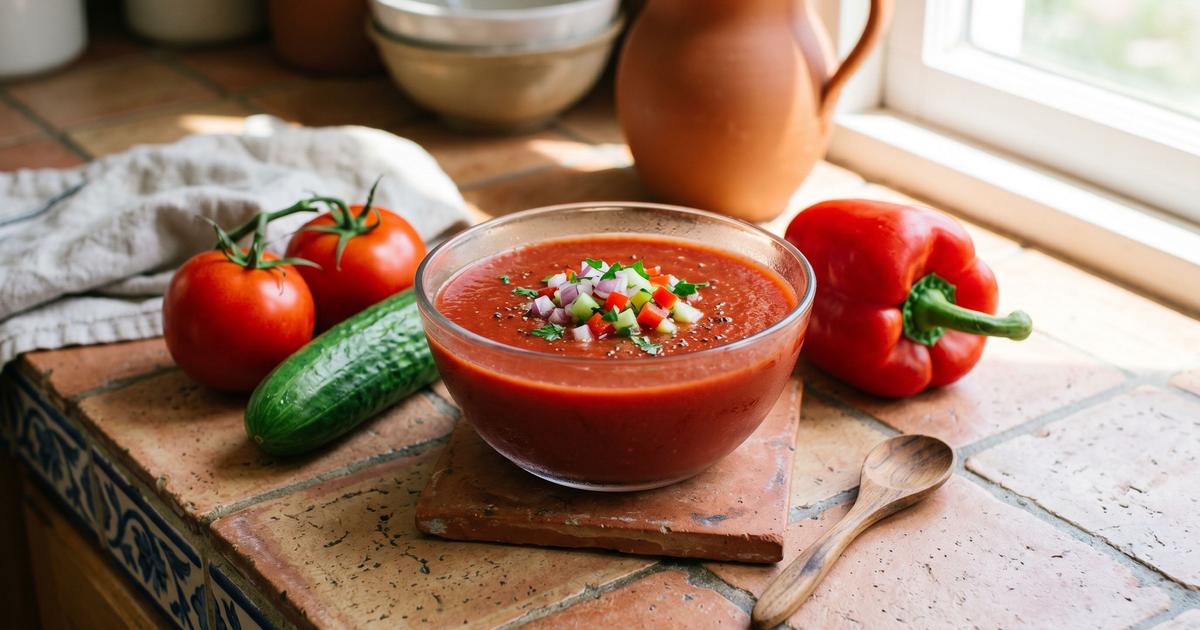
Salmorejo is the thicker, richer cousin of gazpacho from Cordoba in southern Spain, closer to a sauce than a soup. The traditional version leans on stale bread and a heavy pour of olive oil for its body, but a single boiled potato does the same work, holding the blended tomato in a smooth cream that clings to the spoon. Because the tomatoes carry the whole dish, use the ripest you can find; a pale winter tomato has nowhere to hide here. It comes together in one blender, keeps for two days, and only tastes better cold, which makes it the summer lunch you make the night before.
Ingredients
- 2 lb Fresh tomatoes, very ripe, cored and roughly chopped
- 1 medium Potatoes, peeled and boiled soft, about 150 g
- 1 clove Garlic, small
- 2 tbsp Sherry vinegar
- 1/4 tsp Black peppercorns, ground
- 2 Scallions, thinly sliced, for garnish
Method
- Boil the peeled potato until a knife slides straight through, about 12 minutes, then let it cool. The potato is what replaces the bread that thickens a classic salmorejo, giving the soup its spoon-coating body without any oil.
- Blend the ripe tomatoes on their own until fully liquid, then add the cooled potato and garlic and blend again until glossy and thick. Breaking the tomatoes down first turns the soup the pale coral color that tells you it is salmorejo and not gazpacho.
- With the blender running, pour in the sherry vinegar and grind in the black pepper. The vinegar does the job salt would, waking up the sweet tomato, and sherry vinegar's nutty edge is worth the small premium here.
- Chill the soup at least an hour so it thickens and the flavors settle. Served warm it tastes flat; cold it turns silky and the acid sharpens, which is why every version in Cordoba comes out of the fridge.
- Serve in shallow bowls topped with sliced scallion. The classic garnish is chopped egg and ham, so a scatter of scallion or a few diced tomatoes keeps the fresh bite that finishes the dish without them.
Nutrition
Estimated per serving: 120 calories, 4 g protein, 5 g fiber, 35 mg sodium. Computed from USDA FoodData Central reference values for the main ingredients. This is an approximation, not a laboratory measurement. How these are computed.
Cost per serving is estimated from US national-average retail prices for cheap staple forms, using BLS dried-bean prices and USDA produce prices. Prices vary by store and season, so treat it as a guide, not a receipt. How this is computed.