Moroccan Roasted Squash Salad with Dates and Almonds
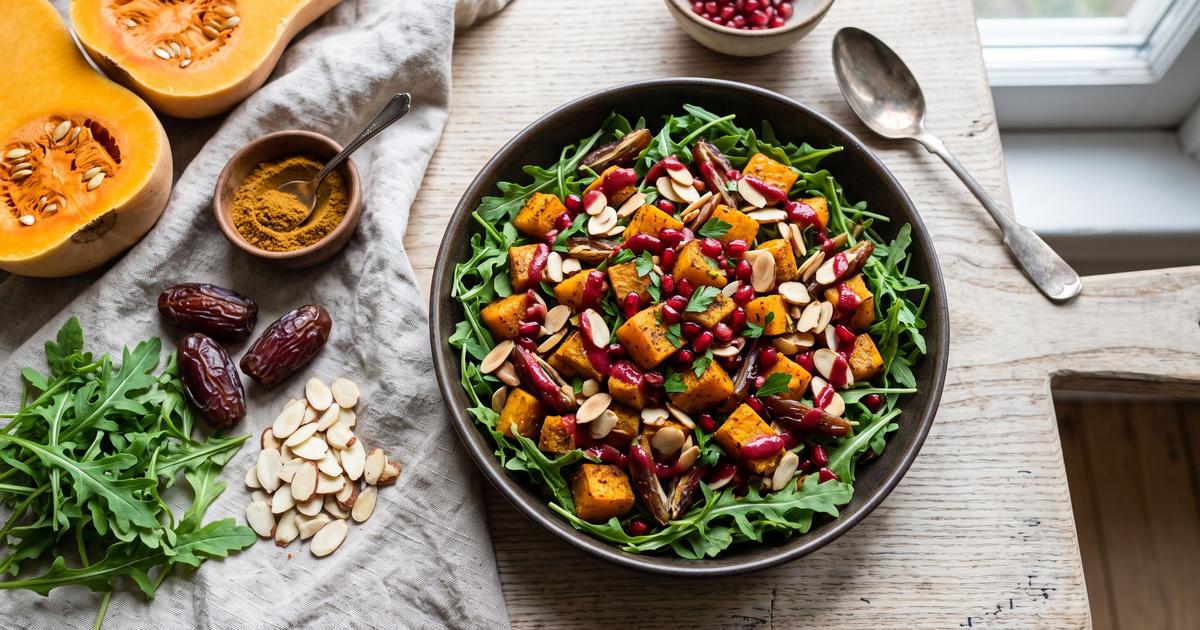
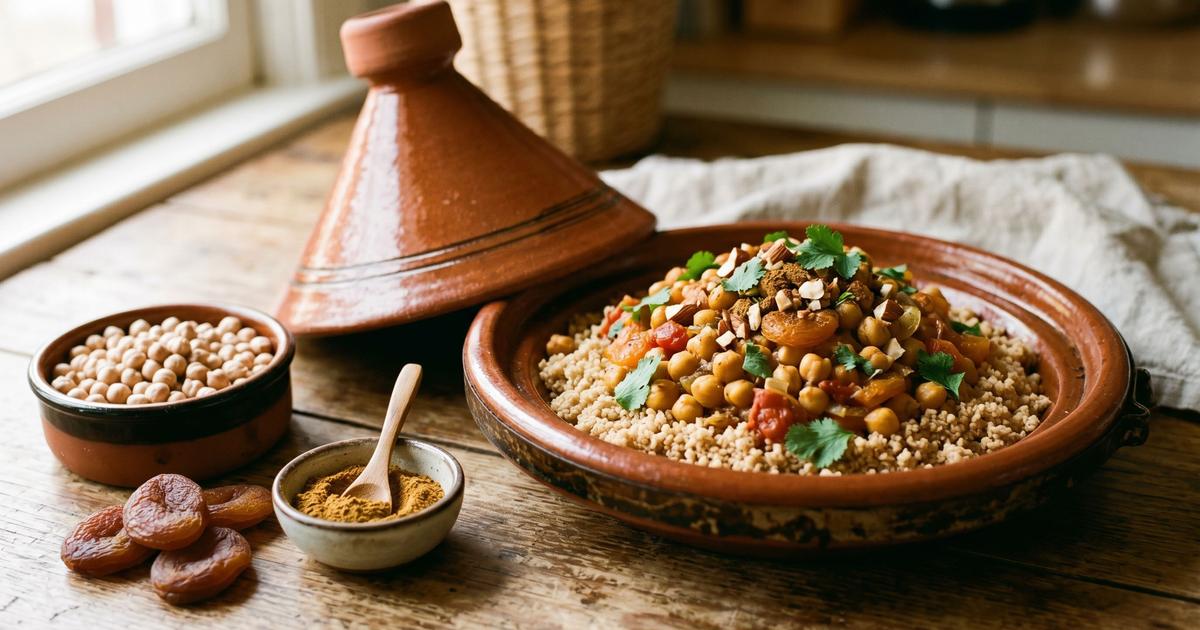
This is a warm salad built on the Moroccan love of squash, dates, and warm spice, the same trio that shows up in a tagine, here plated bright and fresh instead. Ras el hanout is the shop blend that can run to thirty spices, and roasting it onto the squash toasts it into something deep and a little smoky. The sweetness of the dates and the caramelized squash plays against peppery arugula and a sharp pomegranate dressing, so nothing needs salt to feel seasoned. Toasted almonds give the crunch a fried garnish usually would. It holds well at room temperature, which makes it a good dish to carry to a table.
Ingredients
- 1 1/2 lb Butternut squash, peeled, cut in 1-inch cubes
- 2 tsp Ras el hanout
- 1/4 tsp Black peppercorns, ground
- 4 oz Arugula
- 4 wholes Medjool dates, pitted and slivered
- 1/4 cup Almonds, toasted and chopped
- 1/4 whole Red onions, sliced thin
- 2 tbsp Lemon juice
- 1 tbsp Pomegranate molasses
- 2 tbsp Mint, torn
Method
- Toss the squash with the ras el hanout and black pepper and spread it on a lined tray in one layer. Roast at 425 F (220 C), turning once, until the edges are browned and the cubes are tender, about 30 minutes. Dry high heat caramelizes the natural sugars in the squash, which is how you get color and depth with no oil.
- Whisk the lemon juice and pomegranate molasses into a sweet-tart dressing. With no oil to soften them, the acid and the molasses are the whole flavor, so taste and balance the two.
- Soak the sliced onion in cold water for 5 minutes, then drain. This pulls out the raw sulfur bite so the onion reads sweet against the squash.
- Let the squash cool until just warm, not hot, or it will collapse the arugula. Toss the arugula, squash, dates, and onion with the dressing.
- Pile it onto a platter and top with the almonds and mint. Serve warm or at room temperature.
Nutrition
Estimated per serving: 230 calories, 5 g protein, 7 g fiber, 30 mg sodium. Computed from USDA FoodData Central reference values for the main ingredients. This is an approximation, not a laboratory measurement. How these are computed.
Cost per serving is estimated from US national-average retail prices for cheap staple forms, using BLS dried-bean prices and USDA produce prices. Prices vary by store and season, so treat it as a guide, not a receipt. How this is computed.