Slata Qara, Moroccan Spiced Pumpkin Salad
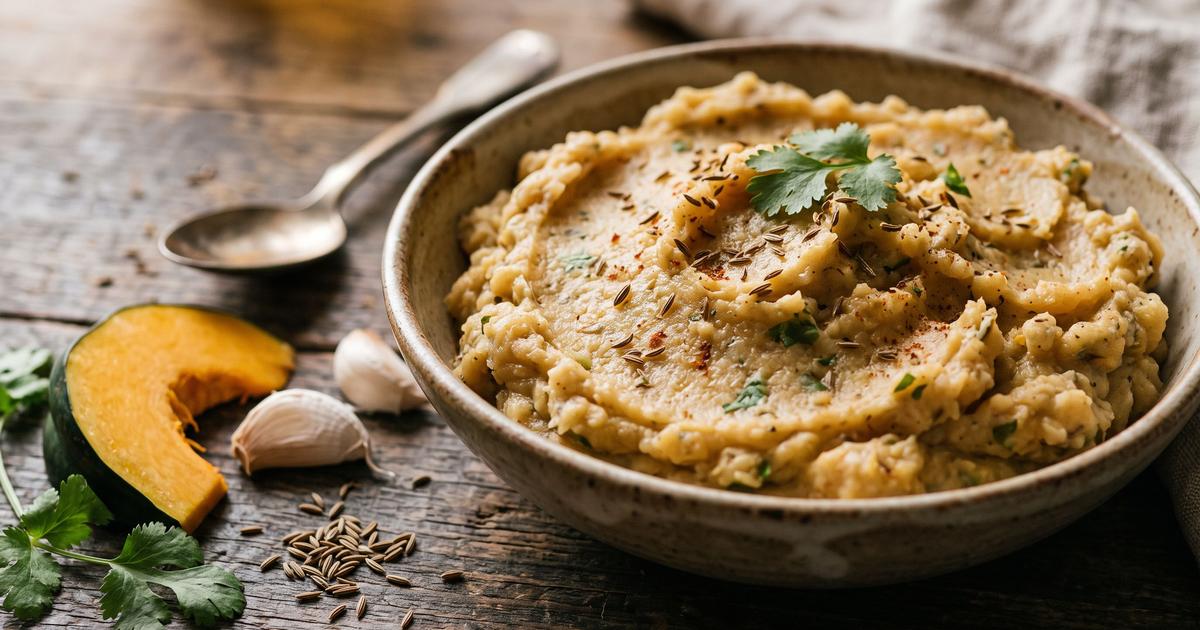
Moroccan cooks turn pumpkin into a cooked salad the same way they treat carrots and peppers: steamed soft, mashed rough, and seasoned hard with toasted cumin, paprika, and garlic. Steaming rather than boiling keeps the squash from going watery, which matters when the finished dish should be jammy enough to scoop with bread. A short cook after mashing drives off the last of the moisture and concentrates the sweetness, so no sugar is wanted to balance the spice. Lemon and cilantro at the end keep it from turning heavy. Serve it warm or at room temperature as part of a spread of small salads.
Ingredients
- 1 1/2 lb Butternut squash, (700 g), peeled and cubed
- 1 1/2 tsp Cumin seed, toasted and ground
- 1 tsp Sweet paprika
- 2 cloves Garlic, grated
- 1/4 tsp Cayenne
- 1/3 cup Cilantro, chopped
- 2 tbsp Lemon juice
Method
- Steam the squash over simmering water until very soft, about 15 minutes. Steaming rather than boiling keeps the squash from waterlogging, which matters when the finished salad should be thick enough to scoop with bread.
- Toast the cumin in a dry pan until fragrant and grind it. Whole seed toasted this way carries several times the flavor of pre-ground, which counts in a dish this plain.
- Warm the grated garlic and paprika in a splash of water in a wide pan for 30 seconds to take off the raw garlic bite, then add the steamed squash and the cumin and cayenne.
- Mash the squash rough and cook a few minutes, stirring, until it stops giving off steam and turns jammy. Driving off the last of the water concentrates the squash's own sweetness, so no sugar is wanted to balance the spice.
- Off the heat, stir in the lemon and cilantro. The acid and fresh herb keep it from tasting heavy and do the seasoning that salt usually would. Serve warm or at room temperature.
Nutrition
Estimated per serving: 90 calories, 2 g protein, 4 g fiber, 15 mg sodium. Computed from USDA FoodData Central reference values for the main ingredients. This is an approximation, not a laboratory measurement. How these are computed.
Cost per serving is estimated from US national-average retail prices for cheap staple forms, using BLS dried-bean prices and USDA produce prices. Prices vary by store and season, so treat it as a guide, not a receipt. How this is computed.