Polenta Dolce, Sweet Breakfast Polenta with Apples
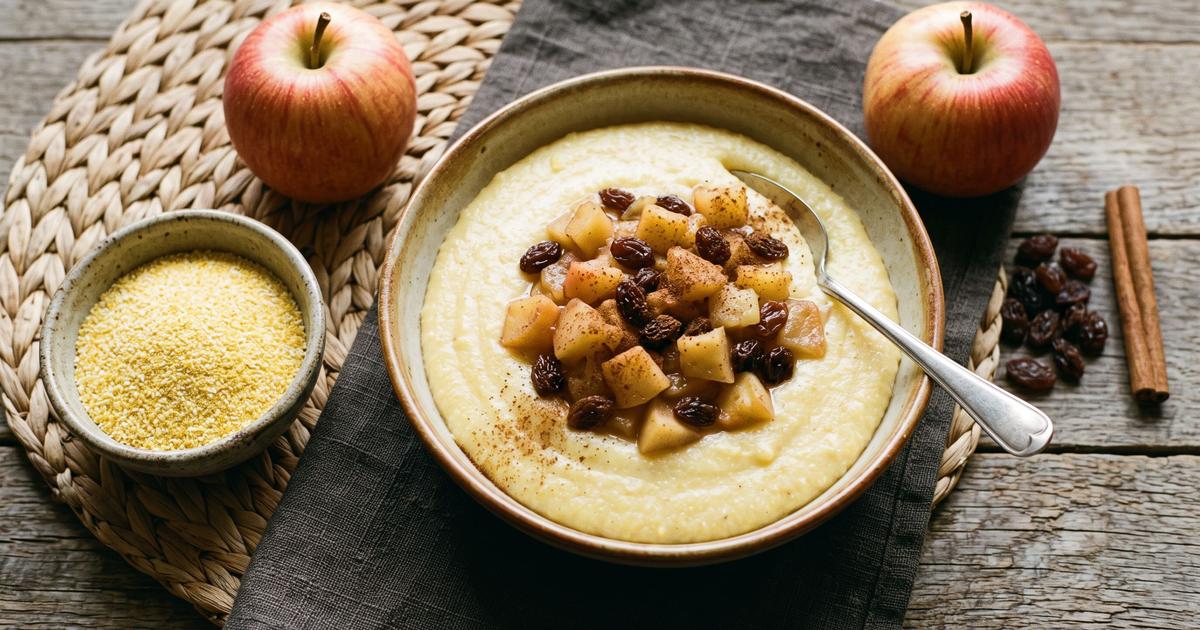
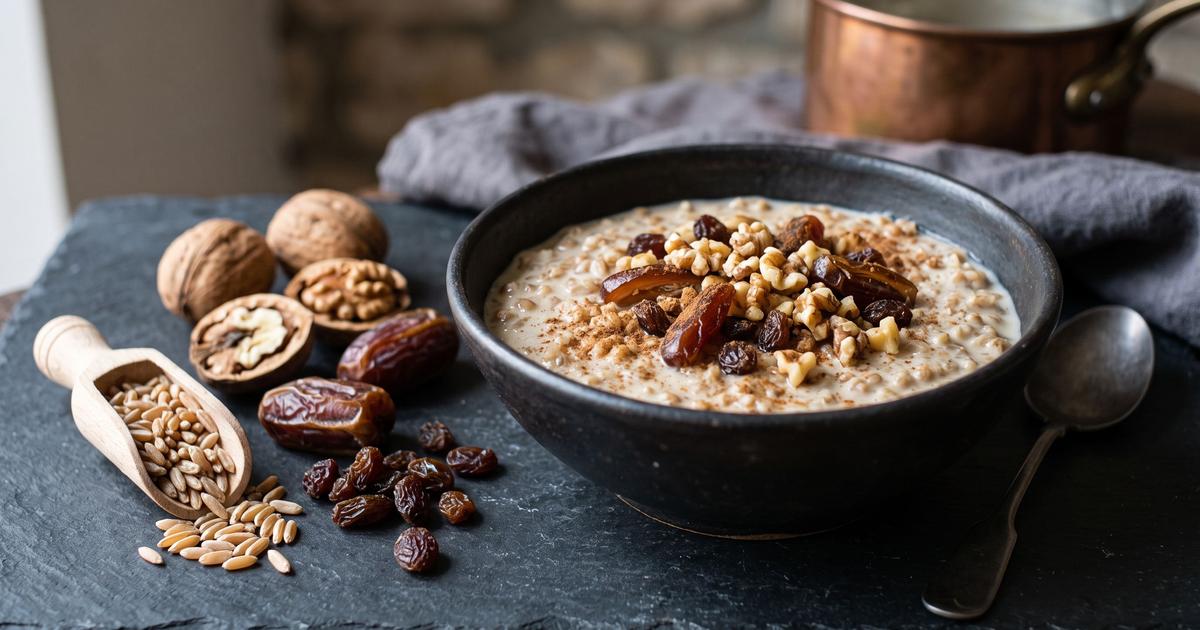
In the north of Italy polenta is as much a breakfast as a dinner, and cooked in milk instead of water it turns into something close to porridge. Stone-ground corn is the whole grain, bran and all, and it rewards the twenty minutes of stirring with a creaminess that needs no butter. The sweetness comes from apples and raisins cooked down into a quick compote, so there is no sugar in the pot. Toasted walnuts on top add the crunch and the fat. Use coarse polenta, not the instant kind, and keep a wooden spoon moving through it so it never catches on the bottom.
Ingredients
- 1 cup Polenta / coarse cornmeal
- 3 cups Unsweetened soy milk
- 2 Apples, cored and diced small
- 1/3 cup Raisins
- 1/2 tsp cassia cinnamon, ground
- 1/3 cup Walnuts, toasted and chopped
Method
- Dice the apples small and cook them in a small pan with the raisins, cinnamon, and a splash of water over medium heat for 8 to 10 minutes until the apples slump and the raisins swell. Cooking the fruit down first draws out its sugar, which is the only sweetener this bowl gets.
- Bring the soy milk and an equal cup of water to a bare simmer in a heavy pot. Cutting the milk with water keeps the polenta from scorching and lets the corn flavor through.
- Rain the polenta in slowly while whisking so it does not clump, then drop the heat to low. Whisking as it goes in is the difference between smooth and lumpy; once it is in you can switch to a spoon.
- Cook 20 to 25 minutes, stirring often, until the polenta is thick and no longer gritty on the tongue. Coarse stone-ground corn needs the full time to soften, while instant polenta is faster but loses the texture and most of the bran.
- Spoon the polenta into bowls, top with the apple compote, and scatter over the toasted walnuts. Leftover polenta sets firm in the fridge and can be sliced and warmed the next morning, so cook the whole cup.
Nutrition
Estimated per serving: 330 calories, 9 g protein, 6 g fiber, 50 mg sodium. Computed from USDA FoodData Central reference values for the main ingredients. This is an approximation, not a laboratory measurement. How these are computed.
Cost per serving is estimated from US national-average retail prices for cheap staple forms, using BLS dried-bean prices and USDA produce prices. Prices vary by store and season, so treat it as a guide, not a receipt. How this is computed.