Phat Fak Thong, Thai Stir-Fried Kabocha with Basil
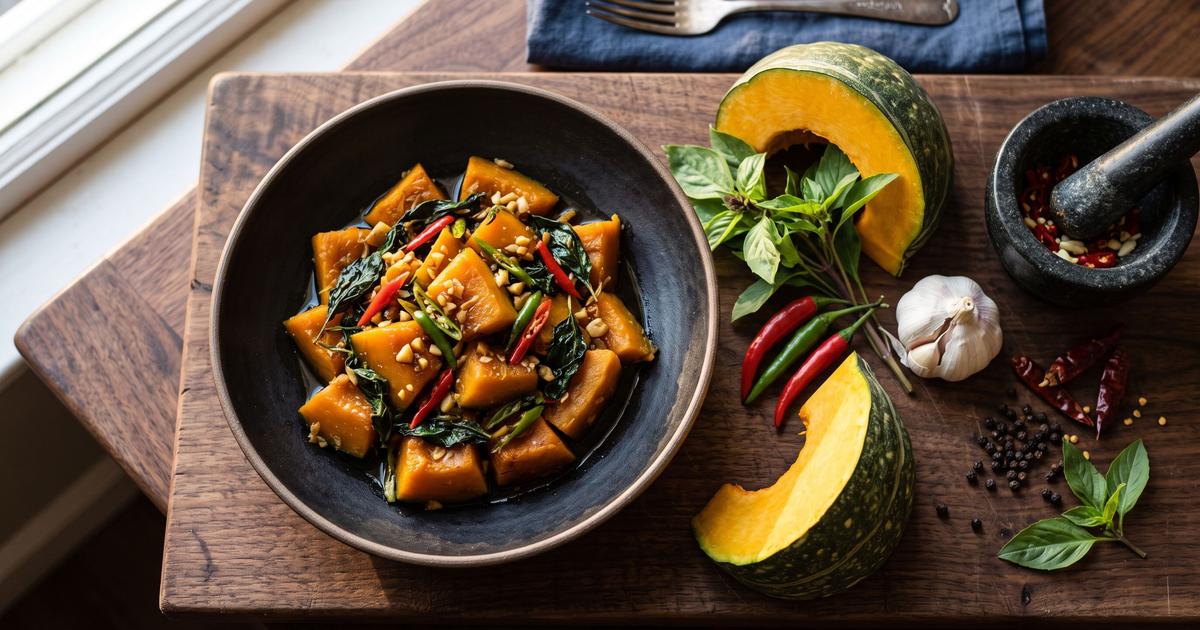
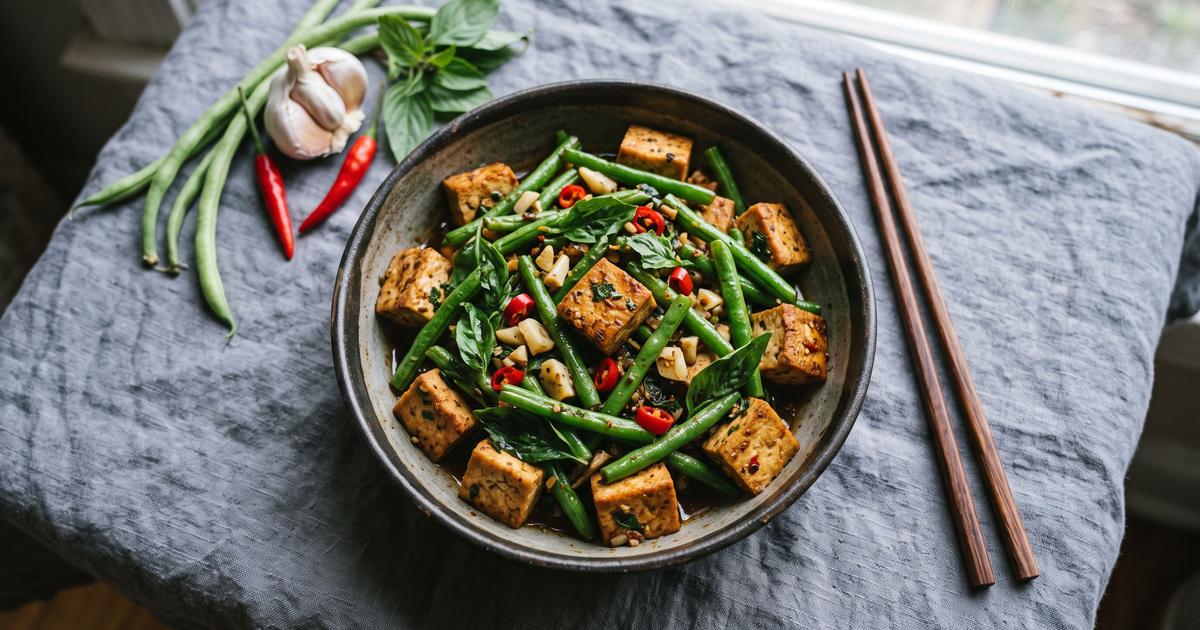
Phat fak thong is a quick Thai home stir-fry of pumpkin or kabocha squash with garlic, chile, and basil, usually bound with egg and slicked with oil. This version keeps the squash the star and drops both: sliced thin and seared in a dry pan, then finished with a splash of water that steams it tender. A tablespoon of tamari carries the salty, savory backbone that soy and oyster sauce give the original, and it is the only salted thing in the pan. Slice the kabocha thin so it cooks fast, leave the skin on, and add the Thai basil off the heat so it stays fragrant.
Ingredients
- 1 1/2 lb Kabocha squash, seeded and cut into thin bite-size slices
- 4 cloves Garlic, minced
- 2 wholes Thai bird chile, sliced
- 2 wholes Scallions, cut into 1-inch lengths
- 1 tbsp Low-sodium tamari
- 1/4 tsp White pepper
- 1 cup Thai basil, leaves
Method
- Slice the kabocha thin, no thicker than a quarter inch (about half a centimeter), skin left on. Thin slices are what make an oil-free stir-fry work: thick squash needs long cooking that a hot dry pan cannot give without burning, while thin pieces steam through in minutes. Kabocha skin is tender and edible once cooked, so there is no peeling.
- Get a wide pan very hot and lay the squash in a single layer, letting it sear undisturbed for a minute or two until the cut faces brown. Dry-searing first builds a roasted flavor that stands in for the wok's usual oil.
- Add the garlic, chiles, and scallions and toss for 30 seconds, then splash in the tamari and about a quarter cup (60 ml) of water and cover. The liquid hits the hot pan and turns to steam, which cooks the squash tender in 3 to 4 minutes without a slick of fat.
- Uncover, let any extra water cook off, and grind in the white pepper. Kill the heat and fold in the Thai basil so it just wilts. Thai basil is added off the flame on purpose: its anise scent is volatile and a few seconds too long turns it dark and flat. The tamari is the one salted ingredient standing in for the soy and oyster sauces of the original, so taste before adding more.
Nutrition
Estimated per serving: 120 calories, 4 g protein, 4 g fiber, 180 mg sodium. Computed from USDA FoodData Central reference values for the main ingredients. This is an approximation, not a laboratory measurement. How these are computed.
Cost per serving is estimated from US national-average retail prices for cheap staple forms, using BLS dried-bean prices and USDA produce prices. Prices vary by store and season, so treat it as a guide, not a receipt. How this is computed.