Peruvian Quinoa Salad with Aji Amarillo
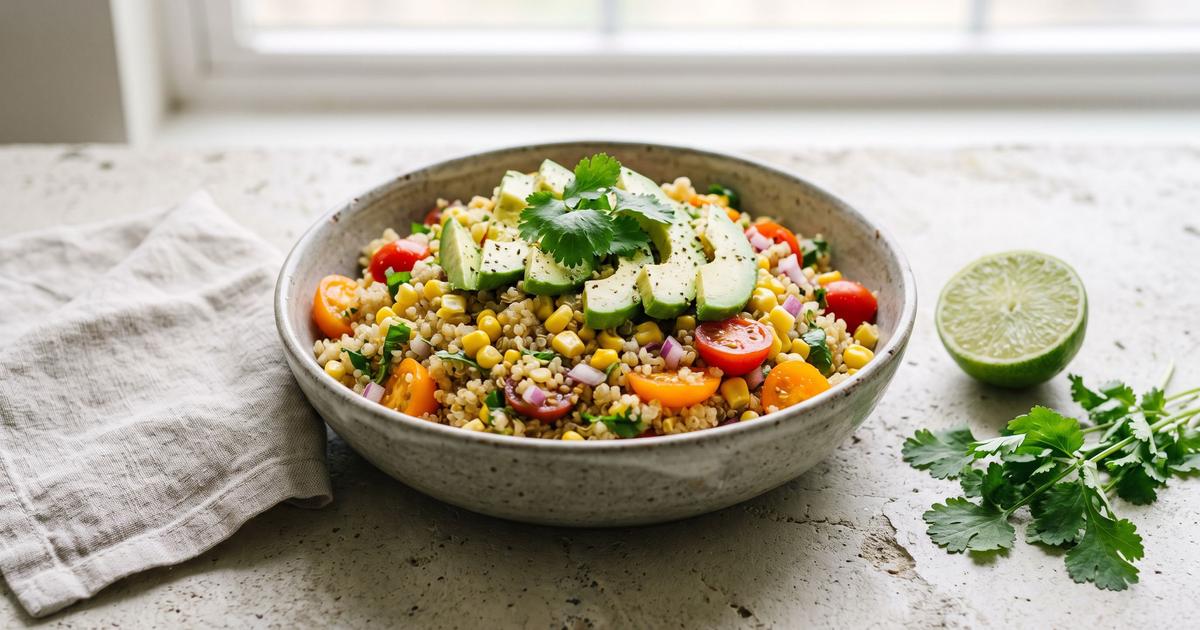
Quinoa comes from the Andes, where it was a staple for thousands of years before it reached North American salad bars. This is a plate built around it, not the trendy garnish version: enough quinoa to be a meal, dressed the Peruvian way with aji amarillo, the yellow chile paste that colors and flavors much of the country's savory cooking. Rinsing the raw grain and cooling the cooked grain are the two unglamorous steps that decide whether the salad is fluffy and clean or soapy and heavy. Lime and the chile carry the seasoning, avocado carries the richness, and there is no oil and no salt anywhere in it. It keeps well for three days, so it is worth making a double batch.
Ingredients
- 1 cup Quinoa, rinsed well
- 1 cup Frozen corn, thawed
- 1 1/2 cups Cherry tomatoes, halved
- 1/2 Red onions, thinly sliced
- 1 tbsp Aji amarillo paste
- 3 tbsp Lime juice
- 1 Avocado, diced
- 1/2 cup Cilantro, chopped
Method
- Rinse the quinoa under cold water until it runs clear. The natural coating on the seed is saponin, which tastes soapy and bitter if you leave it on.
- Simmer the quinoa in 1.75 cups (415 ml) water, covered, for about 15 minutes, until the water is gone and the grains show their little curled tails. Take it off the heat, leave the lid on for 5 minutes, then fluff and spread it on a plate to cool. Cooling stops it from steaming into mush.
- While it cools, soak the sliced red onion in cold water for 10 minutes and drain. This pulls out the raw sulfurous sharpness and leaves only the sweetness and crunch.
- Whisk the aji amarillo paste with the lime juice and a tablespoon of water into a loose, pourable dressing. Aji amarillo is Peru's everyday chile: fruity and floral more than fiery, and it is what makes this taste Peruvian rather than generic.
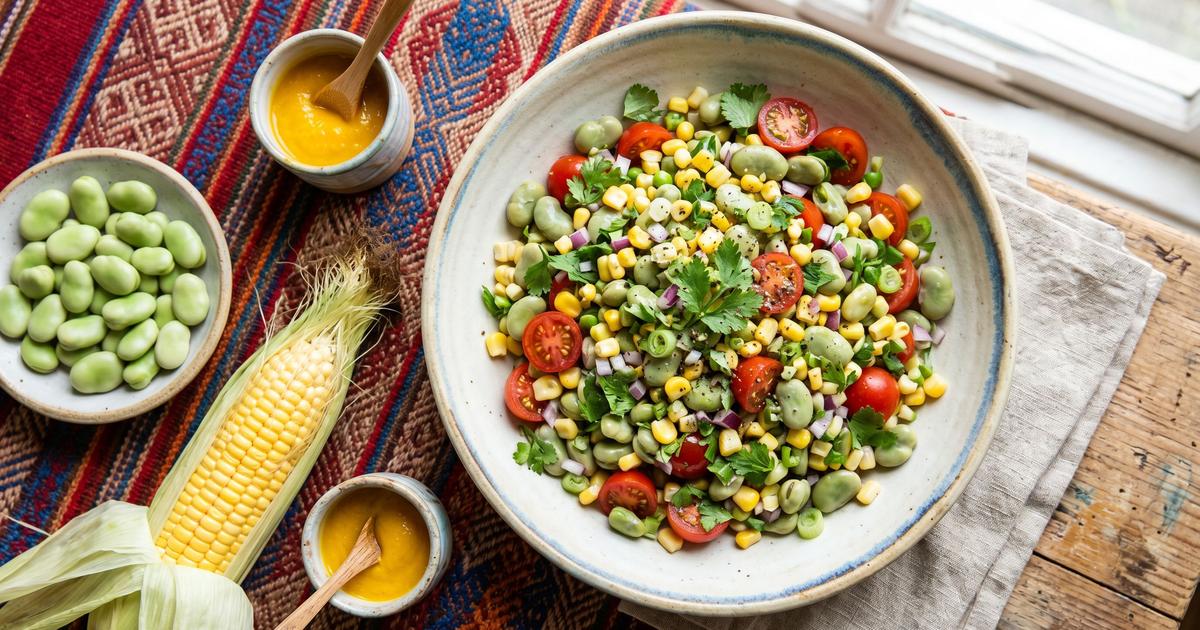
- Toss the cooled quinoa with the corn, tomatoes, drained onion, and dressing.
- Fold in the avocado and cilantro at the very end so the avocado holds its shape. Serve at room temperature or cold.
Nutrition
Estimated per serving: 270 calories, 9 g protein, 8 g fiber, 25 mg sodium. Computed from USDA FoodData Central reference values for the main ingredients. This is an approximation, not a laboratory measurement. How these are computed.
Cost per serving is estimated from US national-average retail prices for cheap staple forms, using BLS dried-bean prices and USDA produce prices. Prices vary by store and season, so treat it as a guide, not a receipt. How this is computed.