Sarza de Vainitas, Peruvian Green Bean Salad
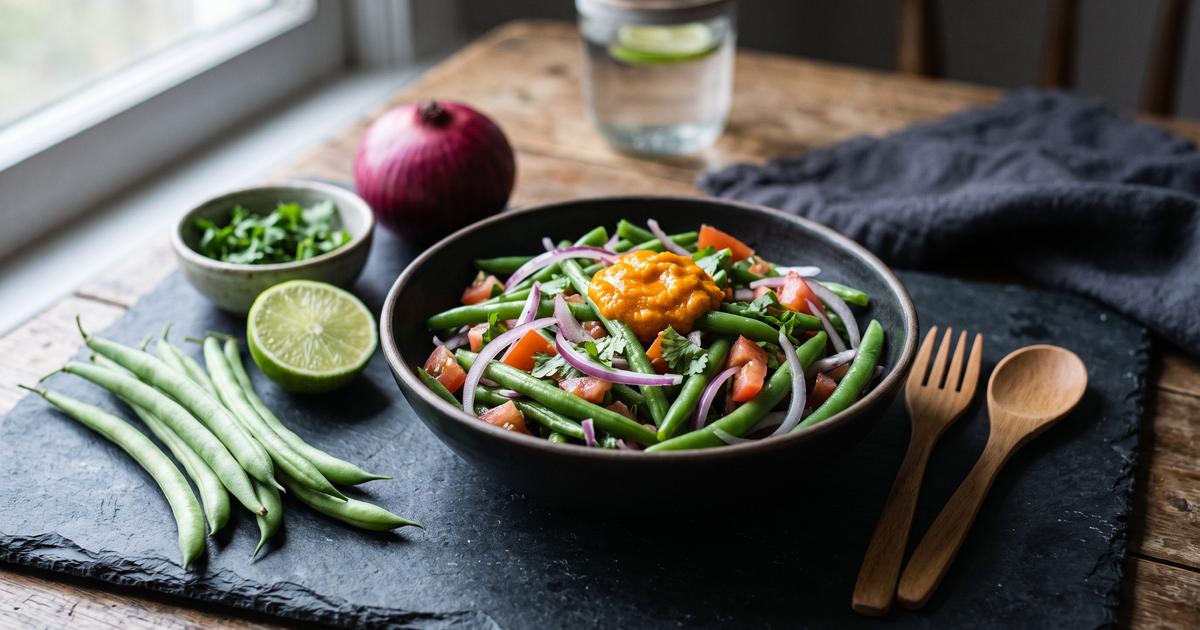
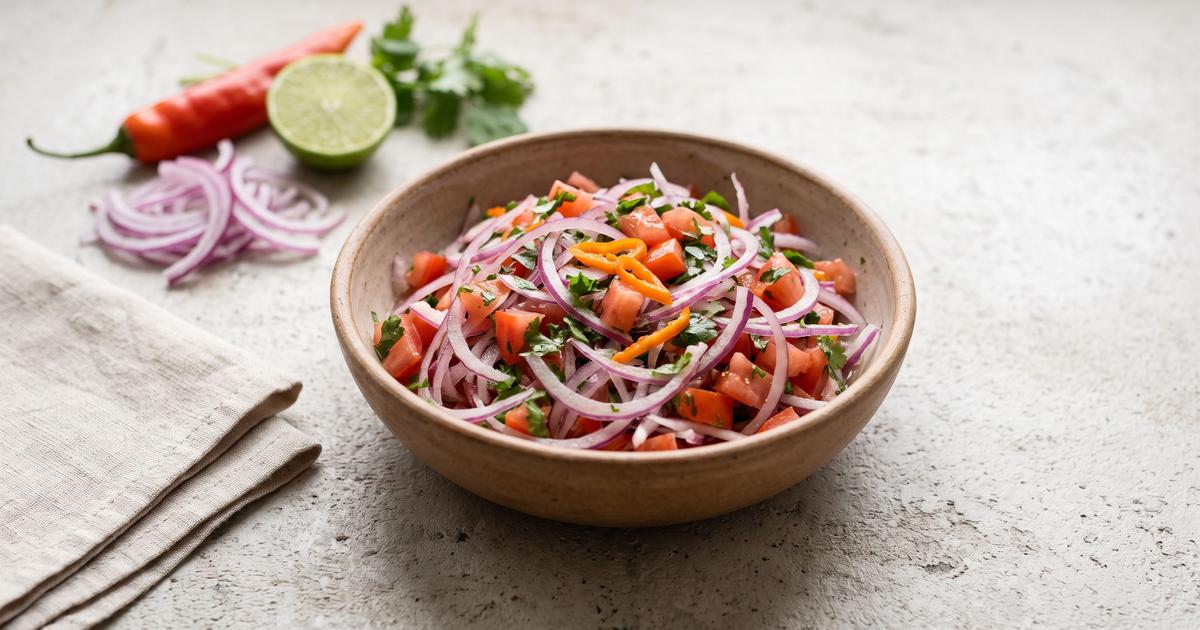
Sarza, sometimes spelled zarza, is the Peruvian family of raw onion salads dressed with lime and aji, the same treatment that tops a plate of beans or a sandwich across the country. Built on green beans, it becomes a cool, crunchy salad that leans on acid and chile rather than oil or salt for its snap. The two small techniques that matter are shocking the beans so they stay green and soaking the onion so it stays sharp without being harsh. A single spoon of aji amarillo paste carries the whole thing, fruity and warm, and a rest of ten minutes lets the lime do the seasoning. It keeps well for a day, so it is worth making ahead.
Ingredients
- 1 lb Green beans, trimmed and halved
- 1 whole Red onions, slivered thin
- 2 wholes Fresh tomatoes, seeded and diced
- 1 tbsp Aji amarillo paste
- 3 tbsp Lime juice
- 1/2 cup Cilantro, chopped
- 2 tbsp Flat-leaf parsley, chopped
- 1/2 tsp Black peppercorns, freshly ground
Method
- Steam or boil the green beans until crisp-tender, about 4 minutes, then plunge them into cold water. Shocking them stops the cooking cold and locks in the bright green, so they stay snappy in the salad instead of going soft and khaki.
- While the beans cook, soak the slivered red onion in cold water for 10 minutes, then drain. This is the sarza criolla move: a cold soak pulls out the raw, sulfurous bite so the onion stays sharp and crisp without overpowering everything around it.
- Whisk the aji amarillo paste with the lime juice and black pepper in a large bowl. Aji amarillo is Peru's everyday chile, fruity and floral more than fiery, and whisking it into the acid first spreads its color and warmth evenly through the whole bowl.
- Add the drained beans, onion, tomato, cilantro, and parsley, and toss well. Let it sit at least 10 minutes before serving so the lime can season the beans through, which is the acid doing the job salt usually would.
- Taste and adjust with more lime if it needs lifting. Serve cool, either on its own or alongside beans and rice.
Nutrition
Estimated per serving: 90 calories, 3 g protein, 5 g fiber, 45 mg sodium. Computed from USDA FoodData Central reference values for the main ingredients. This is an approximation, not a laboratory measurement. How these are computed.
Cost per serving is estimated from US national-average retail prices for cheap staple forms, using BLS dried-bean prices and USDA produce prices. Prices vary by store and season, so treat it as a guide, not a receipt. How this is computed.