Muhammara
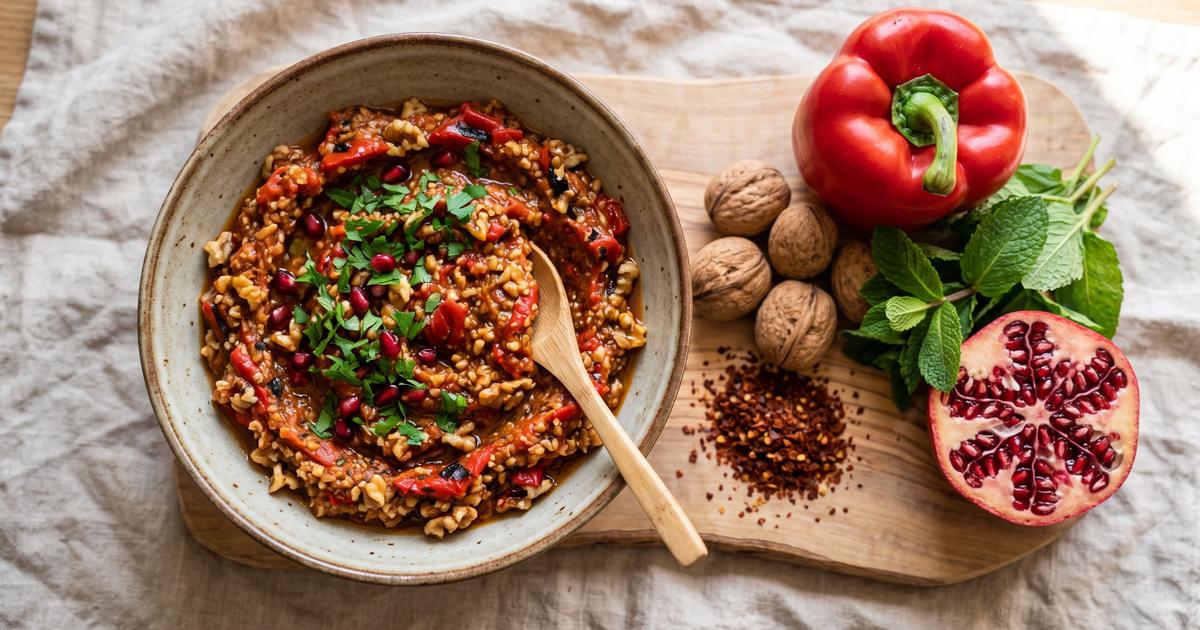
Muhammara comes from Aleppo, built on roasted red peppers and walnuts and made unmistakable by pomegranate molasses, which is sour and faintly sweet at once. The usual recipe binds it with breadcrumbs and loosens it with oil; here toasted walnuts supply the richness on their own, and a little soaked bulgur gives the body, so the dip stays whole-food from start to finish. Char the peppers hard, because the blackened skin is the source of the smoke that defines it. Serve it at room temperature with warm flatbread or raw vegetables, or spread it thick under roasted vegetables.
Ingredients
- 3 wholes Bell peppers, red, roasted and peeled
- 1 cup Walnuts, toasted
- 3 tbsp Bulgur, soaked in hot water 15 minutes and drained
- 2 tbsp Pomegranate molasses
- 1 tsp Cumin seed, toasted and ground
- 2 tsp Aleppo pepper, salt-free
- 1 tbsp Lemon juice, fresh
Method
- Char the peppers whole over a flame or under the broiler, turning until the skins are blackened all over, about 15 minutes. Seal them in a bowl for 10 minutes, then rub off the skins and pull out the seeds. The char is where the smoke and sweetness come from, so blacken them fully.
- Toast the walnuts in a dry pan until they smell rich and their oils come up, 4 to 5 minutes. That released nut oil is what lets the dip turn creamy with nothing poured in.
- Soak the bulgur in hot water until it softens, then drain it well. It stands in for the breadcrumbs that traditionally give muhammara its body, keeping the grain whole instead of refined.
- Pulse the peppers, walnuts, bulgur, pomegranate molasses, cumin, Aleppo pepper, and lemon juice to a coarse, spreadable paste. Stop while it still has texture. Muhammara is meant to be a little rough, not a smooth puree.
- Let it rest for an hour before serving so the flavors settle and bloom. Use salt-free Aleppo pepper, since the flakes are often sold pre-salted, and taste for more pomegranate molasses to sharpen it instead of reaching for salt.
Nutrition
Estimated per serving: 155 calories, 4 g protein, 3 g fiber, 15 mg sodium. Computed from USDA FoodData Central reference values for the main ingredients. This is an approximation, not a laboratory measurement. How these are computed.
Cost per serving is estimated from US national-average retail prices for cheap staple forms, using BLS dried-bean prices and USDA produce prices. Prices vary by store and season, so treat it as a guide, not a receipt. How this is computed.