Baba Ganoush
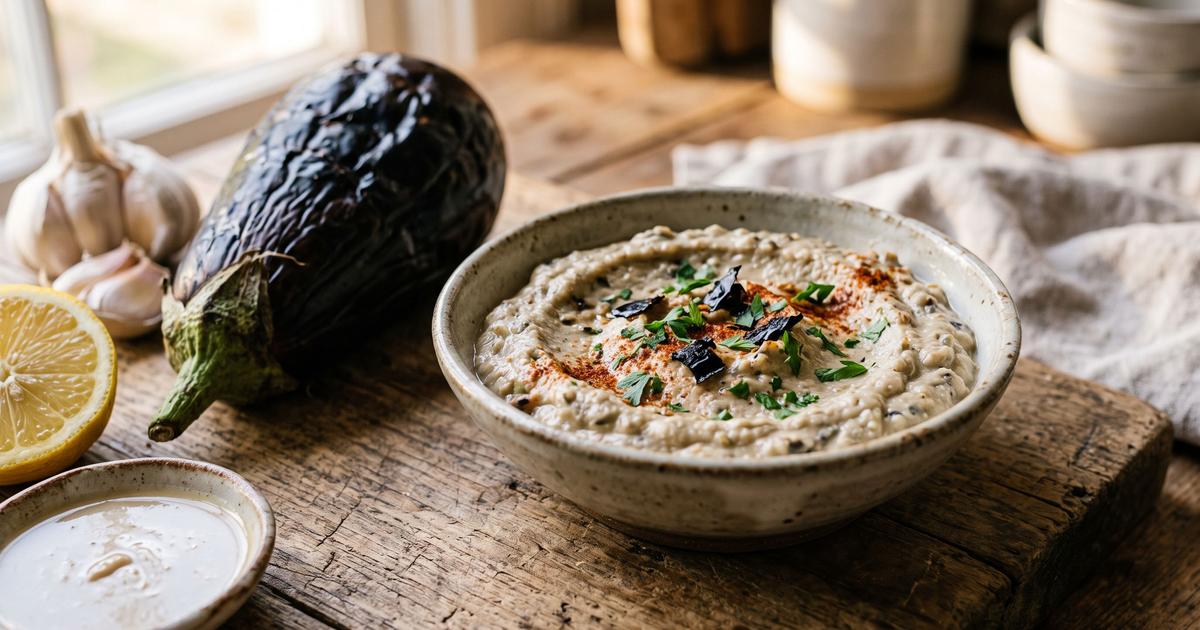
The soul of baba ganoush is smoke, and smoke comes from burning the eggplant's skin black over a live flame. Skip that and you have a bland puree; do it right and the whole dip tastes like a wood fire. After charring, two steps keep it from going watery: steam the eggplants so they finish cooking, then drain the flesh so the bitter liquid runs off before you build the dip. Tahini makes it rich and lemon makes it bright, which is why it needs neither oil nor salt to taste like the real thing. Serve it with warm whole-grain flatbread or raw vegetables, or spread it thick under a grain bowl.
Ingredients
- 2 wholes Eggplant, about 2 lb total
- 1/4 cup Tahini
- 2 cloves Garlic, grated
- 3 tbsp Lemon juice, fresh
- 1/2 tsp Cumin seed, toasted and ground
- 2 tbsp Flat-leaf parsley, chopped, to finish
Method
- Char the whole eggplants directly over a gas flame, under a broiler, or on a grill, turning until the skin is blackened and blistered all over and the flesh has collapsed, 15 to 20 minutes. This char is the flavor of the dish. Baba ganoush without a blackened skin is just eggplant paste; the smoke from burning the skin is what sets it apart.
- Put the charred eggplants in a bowl and cover, or seal them in a bag, for 10 minutes. The trapped steam loosens the skin and finishes cooking the centers.
- Peel off and discard the burnt skin. Set the soft flesh in a colander for 10 minutes to drain off the bitter juice; a wet eggplant makes a watery dip.
- Chop the drained flesh, then stir (do not blend, for texture) with the tahini, grated garlic, lemon juice, and cumin. Mashing by hand keeps it rustic and a little chunky, the traditional texture; a blender turns it into a smooth puree if you prefer.
- Taste and adjust with more lemon. The tahini brings richness and the acid brings brightness, so it needs no oil and no salt to taste complete. Top with the chopped parsley.
Nutrition
Estimated per serving: 110 calories, 3 g protein, 5 g fiber, 15 mg sodium. Computed from USDA FoodData Central reference values for the main ingredients. This is an approximation, not a laboratory measurement. How these are computed.
Cost per serving is estimated from US national-average retail prices for cheap staple forms, using BLS dried-bean prices and USDA produce prices. Prices vary by store and season, so treat it as a guide, not a receipt. How this is computed.