Mango-Chili Paletas
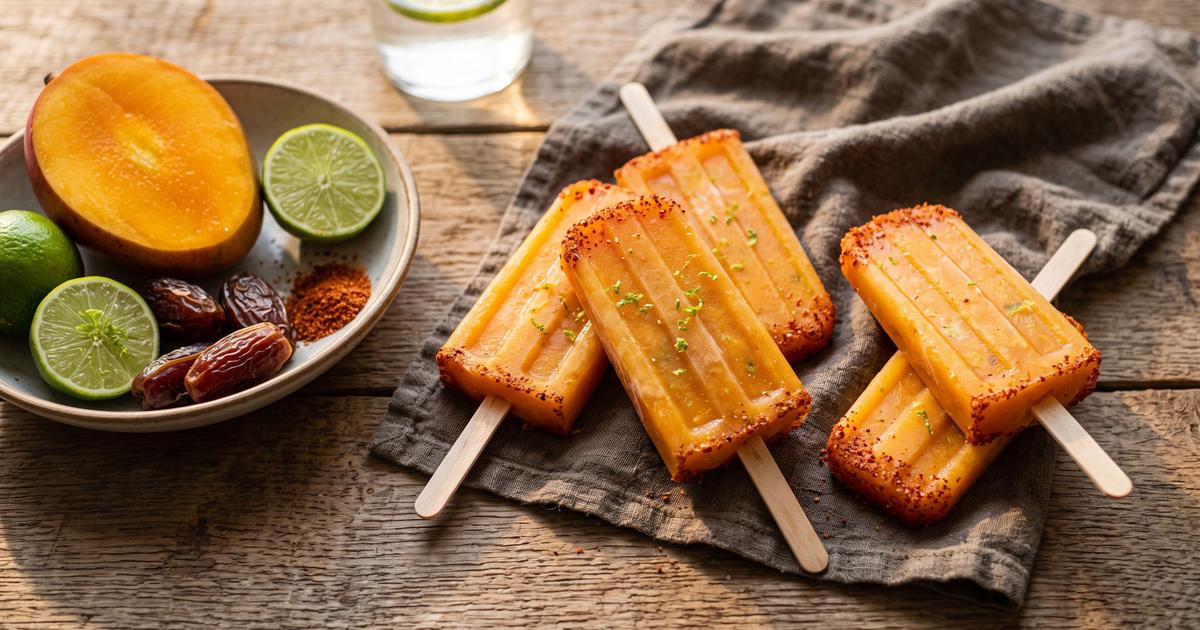
Paletas are the fruit ice pops sold from painted carts and neighborhood paleterias across Mexico, denser and more intensely fruity than a supermarket popsicle because they are made from real blended fruit rather than syrup. Mango is the classic, and it needs almost nothing: blended with lime and a few soaked dates for sweetness, it freezes into a pop that tastes like the fruit itself. The finishing move is the chili, a pinch of pure ground chile and cayenne swirled through, which echoes the chili-lime salt that a street vendor would dust over a cup of fresh mango. Frozen mango keeps this a year-round treat and skips the peeling. Freezing dulls both sweet and sour, so blend the base a little bolder than tastes right at room temperature.
Ingredients
- 3 cups Frozen mango
- 4 Medjool dates, pitted, soaked 10 minutes in hot water
- 3 tbsp Lime juice, fresh
- 1/4 tsp pure chile powder
- 1 pinch Cayenne
Method
- Soak the pitted dates in just-boiled water for 10 minutes to soften, then drain. Softened dates blend into a smooth sweetness with no gritty flecks, and they are the only sweetener here, standing in for the sugar or condensed milk a paleteria pop is usually built on.
- Blend the frozen mango, soaked dates, lime juice, and half a cup (120 ml) water until completely smooth and pourable, adding a splash more water only if the blender stalls. It should taste a touch sweeter and more tart than you want the frozen pop to be, since freezing mutes both.
- Blend in half the pure chile and the cayenne. The chile is what makes it a Mexican paleta rather than a plain fruit pop: the same chili-lime edge of a tajin-dusted mango from a street cart, only blended through.
- Pour into ice-pop molds, tapping them on the counter to knock out air bubbles, and dust the remaining pure chile into each one, swirling with a skewer so the heat runs in streaks. Set the sticks and freeze until solid, at least 5 hours or overnight.
- To unmold, run the molds under warm tap water for a few seconds until the pops slide free. No molds needed: freeze the puree in small paper cups, pushing a wooden stick into each once it is half-frozen and firm enough to hold it upright.
Nutrition
Estimated per serving: 110 calories, 2 g protein, 3 g fiber, 5 mg sodium. Computed from USDA FoodData Central reference values for the main ingredients. This is an approximation, not a laboratory measurement. How these are computed.
Cost per serving is estimated from US national-average retail prices for cheap staple forms, using BLS dried-bean prices and USDA produce prices. Prices vary by store and season, so treat it as a guide, not a receipt. How this is computed.