Kinilaw na Kabute, Filipino Mushroom Ceviche
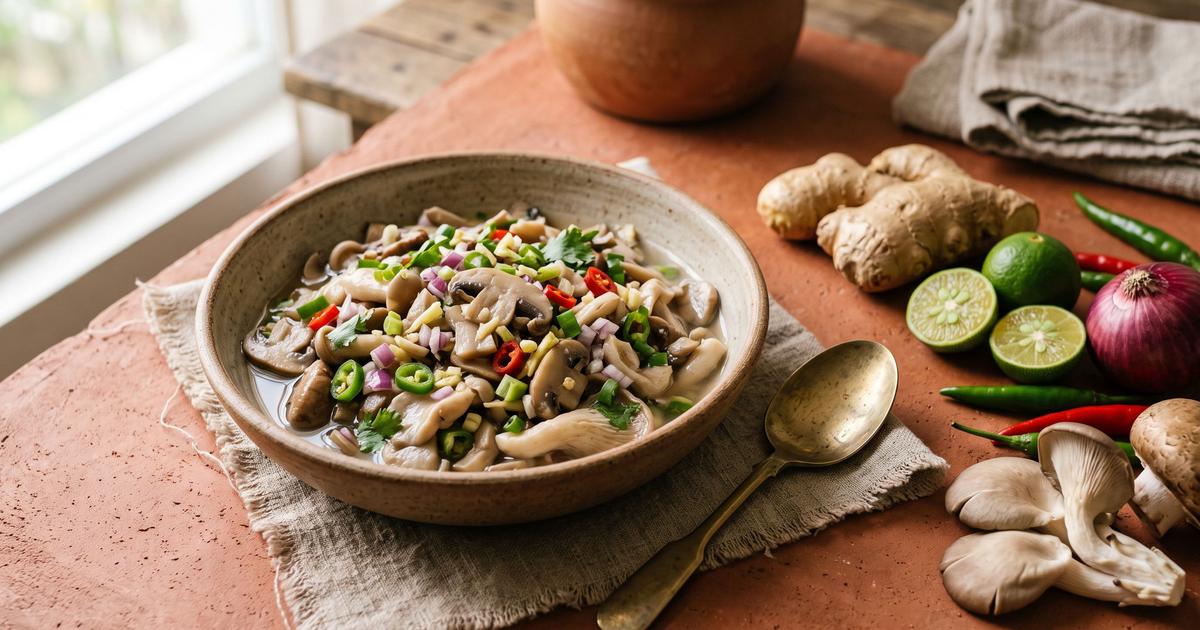
Kinilaw is one of the oldest ways of preparing food in the Philippines, older than the arrival of frying: fresh fish or shellfish is firmed and flavored by nothing but vinegar, souring fruit, and aromatics. Turning that method onto mushrooms keeps the whole idea intact, since a firm mushroom takes the acid much the way a piece of fish does, tightening and turning savory. Cane or coconut vinegar and calamansi would be the traditional acids, and rice vinegar with lime stands in cleanly for both. Serve it very cold, as a first course or a light lunch on a hot day.
Ingredients
- 8 oz Cremini mushrooms, blanched, cooled, and sliced
- 1/3 cup unseasoned rice vinegar
- 2 tbsp Lime juice
- 1 tbsp Ginger, peeled and julienned
- 1/2 Red onions, sliced paper-thin
- 1 Fresno, sliced thin
- 1 Fresh tomatoe, seeded and diced
- 1/2 Cucumber, seeded and diced
- 2 Scallions, sliced
- 2 tbsp Cilantro, chopped
Method
- Drop the mushrooms into boiling water for 60 seconds, drain, and cool them. Kinilaw cooks in acid rather than heat, and a quick blanch makes cultivated mushrooms tender and safe to eat while the vinegar does the rest.
- Toss the mushrooms with the vinegar, lime juice, and ginger. Let them sit 15 minutes, tossing once, until they firm up and turn glossy. This is the cure: the acid tightens the mushrooms the way it would tighten fish in the classic dish.
- Drain off most of the liquid so the salad is not soupy, leaving just enough to coat.
- Fold in the onion, chile, tomato, and cucumber. The onion loses its rawness in the leftover acid, and the tomato and cucumber add sweetness and crunch that balance the sour.
- Top with scallion and cilantro and serve cold. A splash of fish sauce and salt would season a traditional kinilaw, and here the vinegar, lime, ginger, and chile carry it, sharp and clean.
Nutrition
Estimated per serving: 70 calories, 4 g protein, 3 g fiber, 25 mg sodium. Computed from USDA FoodData Central reference values for the main ingredients. This is an approximation, not a laboratory measurement. How these are computed.
Cost per serving is estimated from US national-average retail prices for cheap staple forms, using BLS dried-bean prices and USDA produce prices. Prices vary by store and season, so treat it as a guide, not a receipt. How this is computed.