Ensaladang Sitaw, Filipino Long Bean and Tomato Salad
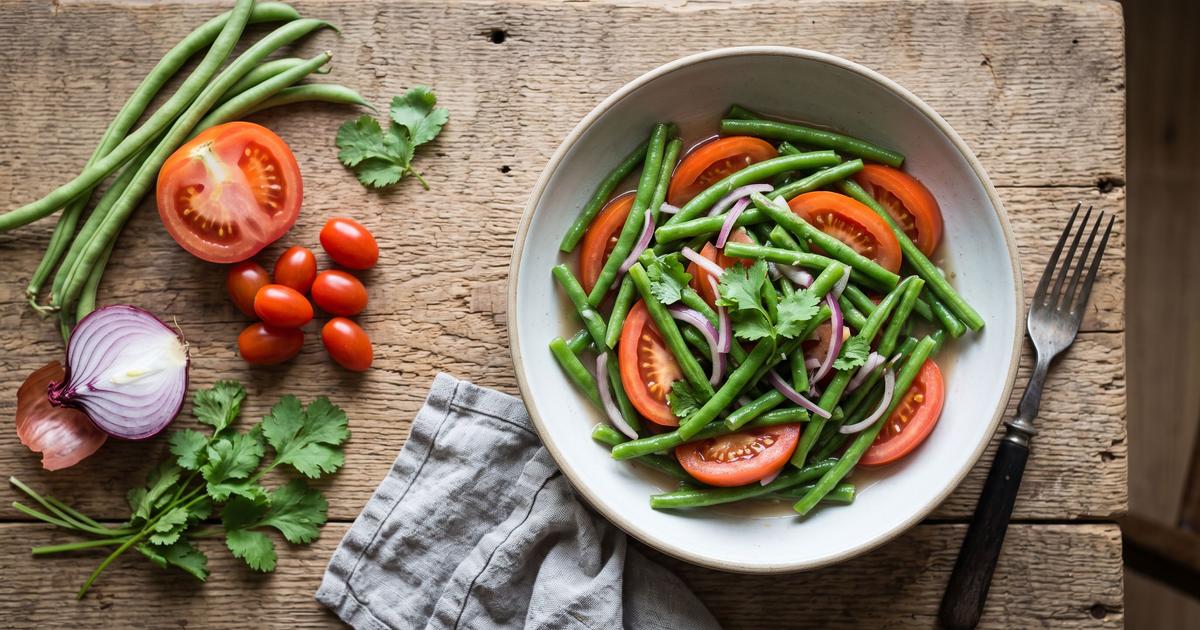
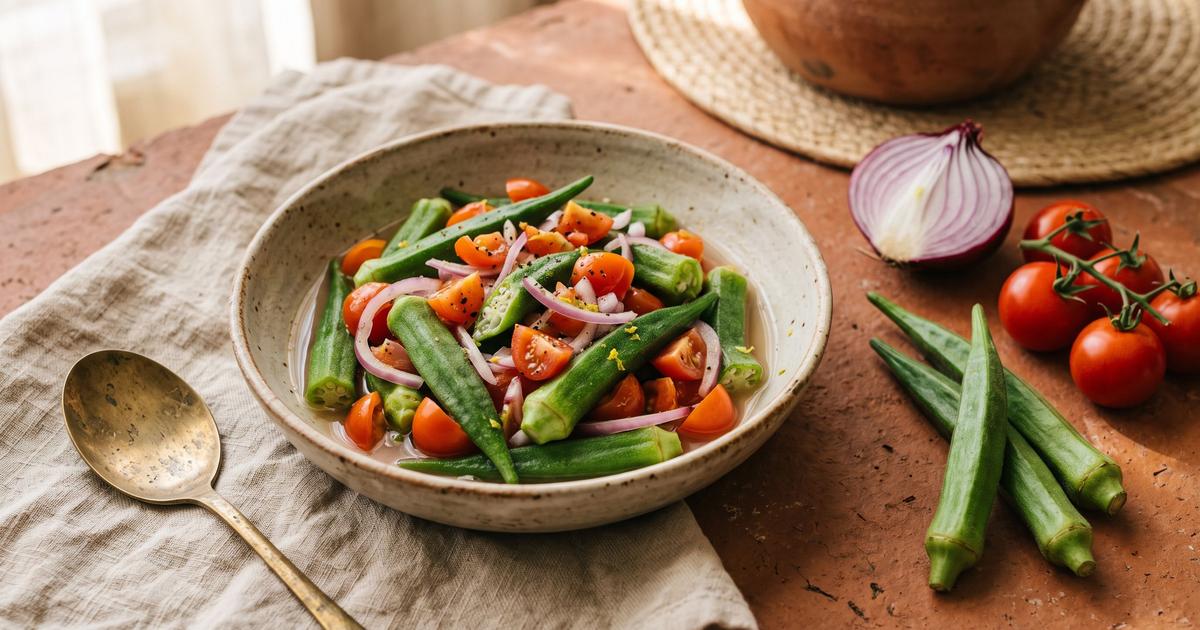
Ensaladang sitaw is a Filipino side salad of long beans and tomato, the kind of sharp, vinegary plate that sits beside grilled or fried food to cut its richness. Sitaw, the yardlong bean, is snappier and starchier than a green bean, and a fast blanch is all it needs to turn bright and tender-crisp. Ripe tomato and thin red onion round it out, and cane vinegar, the everyday Filipino acid, ties it together; apple cider vinegar stands in cleanly. The version served in many homes finishes with salted shrimp paste, but the salad holds up on acid alone, letting the tomato and vinegar carry the seasoning. Make it just before the meal so the beans keep their snap.
Ingredients
- 3 cups Long beans, cut into 2-inch (5 cm) lengths
- 2 Fresh tomatoes, cut into wedges
- 1/2 Red onions, thinly sliced
- 2 tbsp Apple cider vinegar
- 1/4 tsp Black peppercorns, coarsely ground
Method
- Blanch the long beans in boiling water for 2 to 3 minutes, then plunge them into ice water. The quick blanch sets their green and cooks off the raw starch while leaving them snappy; the ice bath stops them before they go soft.
- Soak the sliced red onion in cold water for 10 minutes, then drain. Soaking pulls out the harsh sulfur bite so the onion reads sweet and sharp rather than aggressive against the beans.
- Toss the drained beans, tomato wedges, and onion with the vinegar and pepper. The tomatoes give up their juice and, with the vinegar, become the dressing; with no salt, the acid does the seasoning.
- Let it sit 5 minutes before serving so the flavors marry and the tomato juice loosens into the vinegar.
Nutrition
Estimated per serving: 70 calories, 3 g protein, 4 g fiber, 20 mg sodium. Computed from USDA FoodData Central reference values for the main ingredients. This is an approximation, not a laboratory measurement. How these are computed.
Cost per serving is estimated from US national-average retail prices for cheap staple forms, using BLS dried-bean prices and USDA produce prices. Prices vary by store and season, so treat it as a guide, not a receipt. How this is computed.