Ensaladang Mustasa, Filipino Mustard Green Salad
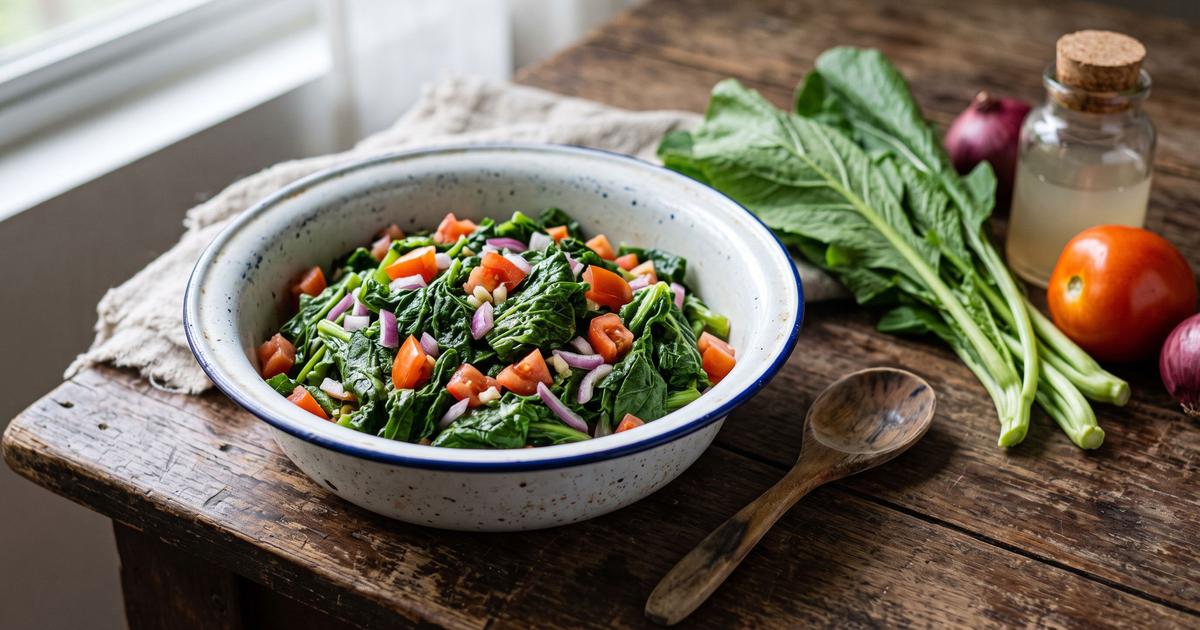
Ensaladang mustasa is the Filipino way with mustard greens, a bracing salad that turns a cheap, aggressively pungent green into a bright side for grilled or fried food. Raw mustard greens are almost too fierce to eat, so a fast blanch tames them into something sharp but friendly and locks in their color. The dressing is barely a dressing: ripe tomato, thin red onion, and cane vinegar, with apple cider vinegar standing in cleanly, letting the acid and the vegetables do all the seasoning with no oil and no salt. Wringing the blanched greens dry is the one step people skip and regret, since it is what keeps the salad from turning watery. Some cooks ferment mustasa into a sour pickle instead; this is the fresh, same-day version, meant to be made just before the meal.
Ingredients
- 6 cups Mustard greens, chopped
- 2 Fresh tomatoes, diced
- 1/2 Red onions, thinly sliced
- 2 tbsp Apple cider vinegar
- 1/4 tsp Black peppercorns, coarsely ground
Method
- Blanch the mustard greens in boiling water for 30 to 45 seconds, just until they wilt and turn deep green, then plunge them into ice water. The quick scald knocks the raw pungency of mustard greens down to a pleasant sharpness and sets their color; any longer and they go army-drab and bitter.
- Drain the greens and squeeze them firmly in your hands to wring out as much water as you can. This step is not optional: wet greens water down the dressing, and squeezing them dry is what lets the vinegar and tomato juice actually season them.
- Soak the sliced red onion in cold water for 10 minutes, then drain. Soaking pulls out the harsh sulfur bite so the onion reads sweet and sharp against the greens rather than overpowering them.
- Toss the squeezed greens with the tomato, drained onion, vinegar, and cracked pepper. Let it sit 5 minutes so the tomato gives up its juice and, with the vinegar, becomes the dressing; with no salt, the acid carries the seasoning.
Nutrition
Estimated per serving: 45 calories, 3 g protein, 3 g fiber, 25 mg sodium. Computed from USDA FoodData Central reference values for the main ingredients. This is an approximation, not a laboratory measurement. How these are computed.
Cost per serving is estimated from US national-average retail prices for cheap staple forms, using BLS dried-bean prices and USDA produce prices. Prices vary by store and season, so treat it as a guide, not a receipt. How this is computed.