Ensaladang Okra, Filipino Okra and Tomato Salad
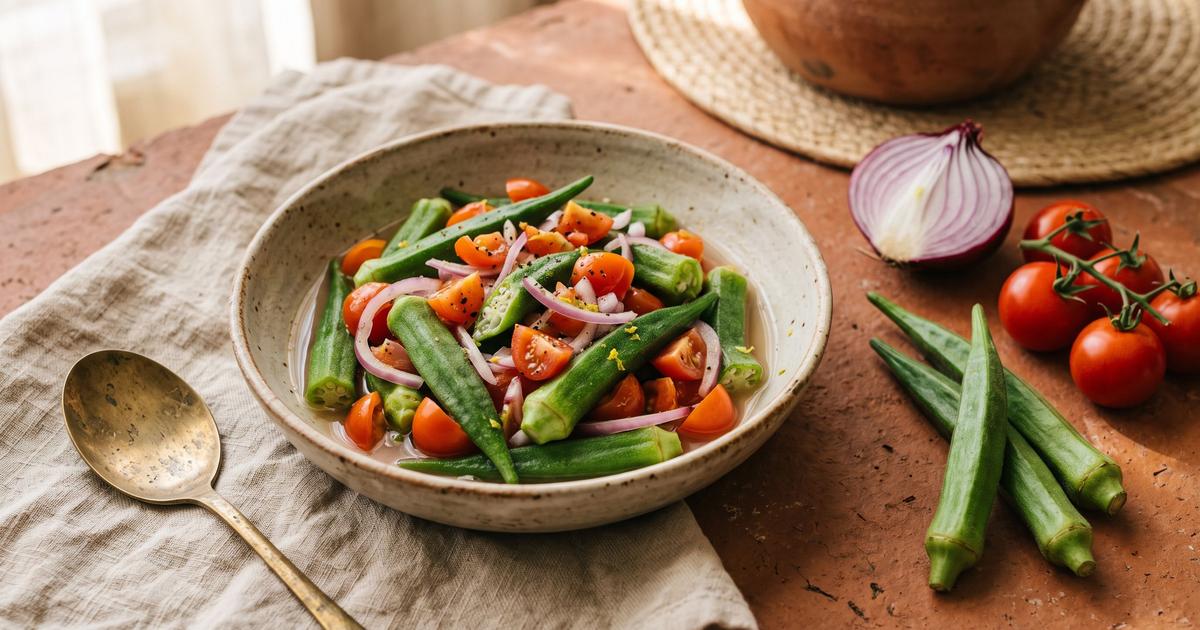
Ensaladang okra is a Visayan and Tagalog side, blanched okra dressed simply with tomato, onion, and vinegar, meant to cut through a heavier main of rice and stew. It is usually served with a spoonful of bagoong, the salty fermented shrimp paste, on the side; leaving that off keeps the plate plant-based and low in sodium, and the sharp cane vinegar and ripe tomato more than fill the gap. The one technique that matters is blanching the okra whole and briefly, then cooling it before slicing, which sidesteps the sliminess entirely. No oil, no sugar, no coconut, just crisp vegetables and acid. It is best the hour it is made, while the okra still has snap.
Ingredients
- 3/4 lb Okra, whole, stems trimmed
- 2 wholes Fresh tomatoes, cut into wedges
- 1/2 whole Red onions, thinly sliced
- 2 tbsp Apple cider vinegar
- 1 whole Thai bird chile, thinly sliced
- 1/4 tsp Black peppercorns, freshly ground
Method
- Bring a pot of water to a boil and cook the okra whole for 3 to 4 minutes, until just tender and still bright green. Blanching whole, with the stem end intact, keeps water out of the pods so they never turn slimy, the failure that puts people off okra.
- Drain the okra and spread it out to cool, then slice each pod on the diagonal. Cooling before you cut lets the pieces firm up and keeps the salad from weeping, and the diagonal cut shows off the pods' star cross-section.
- While the okra cools, soak the sliced red onion in cold water for 5 minutes and drain. This quick soak pulls out the raw, harsh bite so the onion stays crisp and sweet against the okra rather than overpowering it.
- Toss the okra, tomato wedges, drained onion, and chile with the vinegar and black pepper. Cane vinegar, or the apple cider vinegar standing in for it, is the seasoning here; the salted shrimp paste of the traditional plate is left out, and the tomato's own juice and the vinegar carry the salt-free dressing.
Nutrition
Estimated per serving: 55 calories, 3 g protein, 4 g fiber, 12 mg sodium. Computed from USDA FoodData Central reference values for the main ingredients. This is an approximation, not a laboratory measurement. How these are computed.
Cost per serving is estimated from US national-average retail prices for cheap staple forms, using BLS dried-bean prices and USDA produce prices. Prices vary by store and season, so treat it as a guide, not a receipt. How this is computed.