Kayısı Tatlısı, Turkish Stuffed Apricots
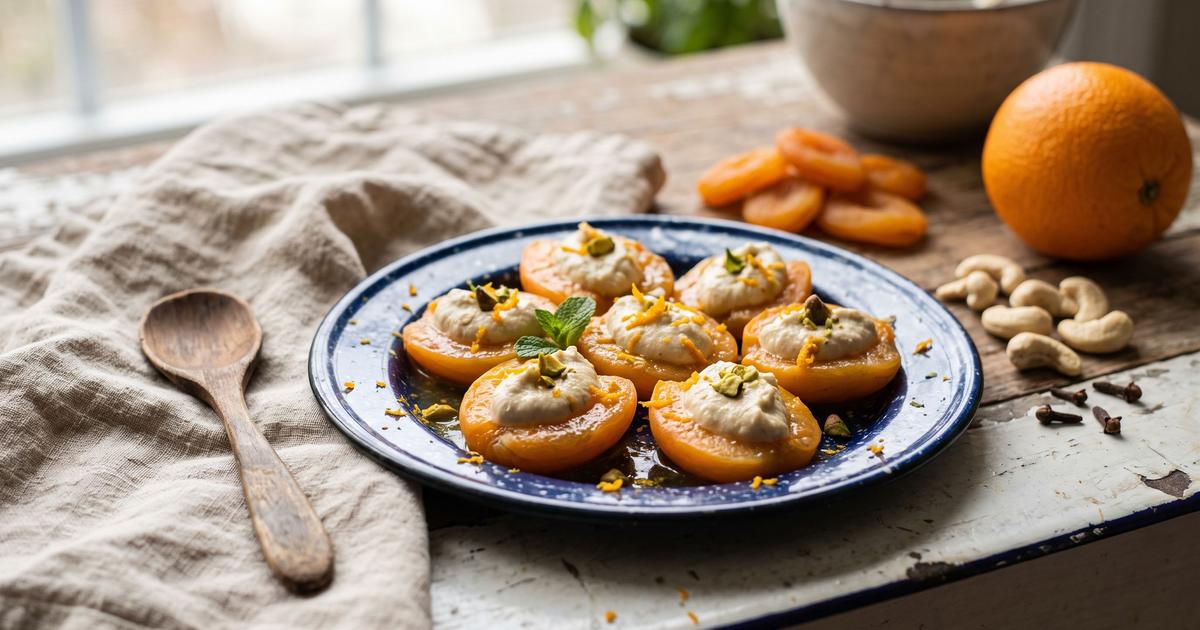
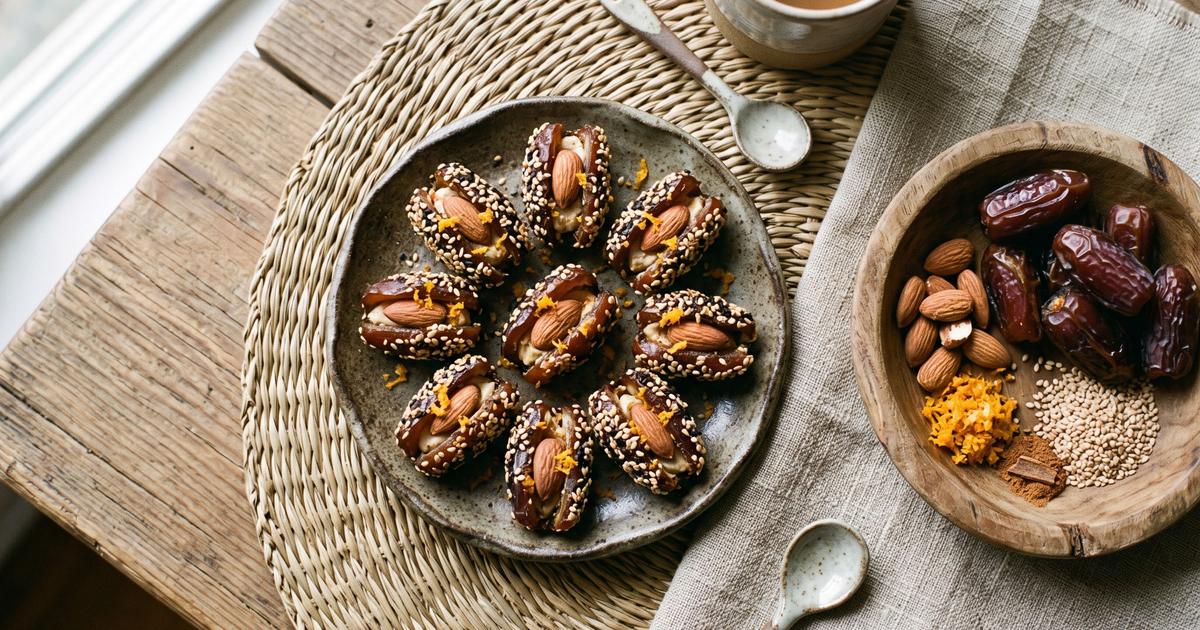
Kayısı tatlısı is a Turkish dessert of dried apricots swollen in syrup and stuffed with kaymak, the thick clotted cream of the eastern provinces, usually finished with ground pistachio. Rebuilt without the sugar syrup or the dairy, it holds together on the strength of the fruit itself: apricots have plenty of their own sweetness once poached soft, and soaked cashews blend into a cream stiff enough to pipe. Orange juice and cardamom keep it bright. Make them a few hours ahead so they chill through, and serve two or three to a plate.
Ingredients
- 18 wholes Dried apricots, unsulfured
- 1 whole Oranges, juiced
- 2 wholes Medjool dates, pitted
- 1/2 cup Raw cashews, soaked 2 hours
- 2 pods Green cardamom, seeds ground
- 2 tbsp Almonds, finely ground
- 1 tbsp Sesame seeds, toasted
Method
- Blend the dates with a splash of water into a paste, then simmer the apricots in the orange juice, the date paste, and 1 cup (240 ml) water for about 15 minutes, until plump and tender. The fruit sweetens the poaching liquid itself, which is why no sugar syrup is needed.
- Lift the apricots out and let them cool. Gently open each one along its natural seam into a pocket, keeping it hinged at one side.
- Drain the cashews and blend them with a few tablespoons of the poaching liquid and the ground cardamom until completely smooth and thick. This cashew cream stands in for the kaymak, the clotted cream traditionally piped inside, so keep it stiff enough to hold its shape.
- Spoon or pipe the cream into each apricot pocket.
- Dust with the ground almonds and toasted sesame and chill. The cardamom and citrus keep the sweet from tasting flat, the job the sugar and cream usually share.
Nutrition
Estimated per serving: 200 calories, 5 g protein, 5 g fiber, 15 mg sodium. Computed from USDA FoodData Central reference values for the main ingredients. This is an approximation, not a laboratory measurement. How these are computed.
Cost per serving is estimated from US national-average retail prices for cheap staple forms, using BLS dried-bean prices and USDA produce prices. Prices vary by store and season, so treat it as a guide, not a receipt. How this is computed.