Incir Uyutmasi, Turkish Fig Pudding
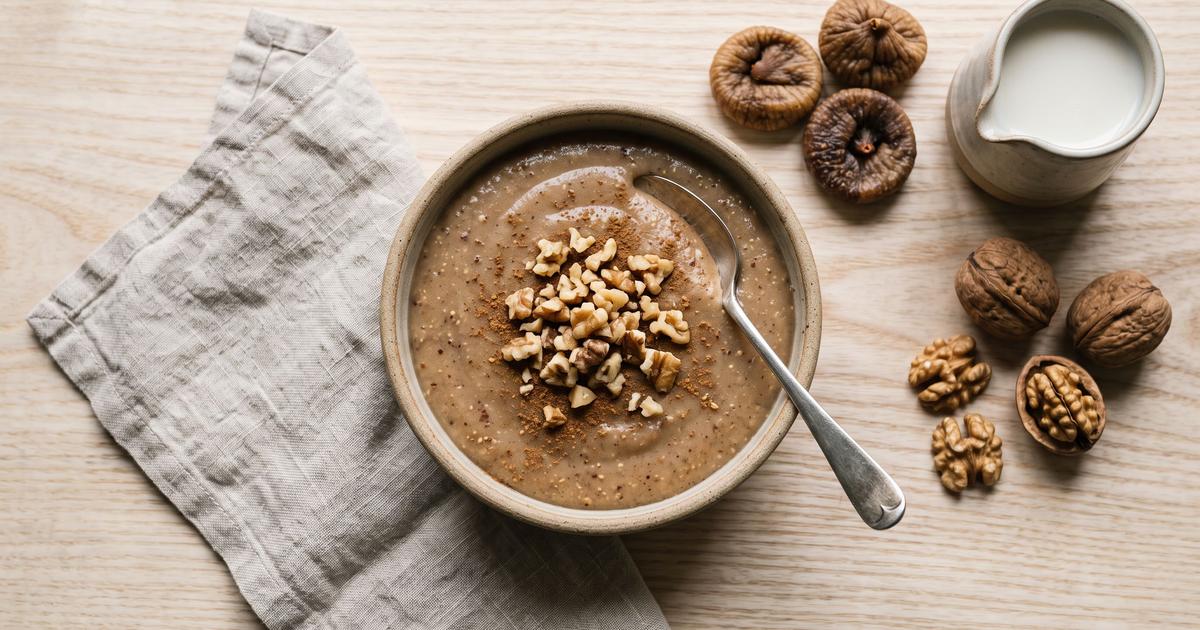
Incir uyutmasi is an Aegean Turkish dessert with a lovely trick behind it: warm milk poured over dried figs and left to sleep in the cold, where the figs quietly thicken it into a set pudding. There is no sugar, because the figs are sweet enough, and no gelatin or starch, because the fig's own seeds and fiber do the setting. Soy milk stands in for the dairy and brings enough protein to make it more than a sweet, while cinnamon warms it and toasted walnuts finish it with crunch. The only real work is remembering to make it the night before. Serve it cold.
Ingredients
- 8 wholes Dried figs, stems removed
- 2 cups Unsweetened soy milk
- 1/4 tsp cassia cinnamon, ground
- 1/4 cup Walnuts, toasted and chopped
Method
- Warm the soy milk in a pot until steaming but not boiling. Heat matters because it softens the figs fully and helps their soluble fiber loosen into the milk, which is the mechanism that sets the pudding later; boiling is not needed and can make the soy milk grainy.
- Roughly chop the figs, drop about six of them into a blender with the warm milk and cinnamon, and blend until thick and flecked with seeds. The blended figs do three jobs at once: they sweeten with no sugar, they thicken the milk, and their tiny seeds and natural pectin are what let the pudding firm up on its own without gelatin or starch.
- Chop the remaining two figs small and stir them through by hand. This keeps some whole pieces of fig in the finished pudding, so each spoonful has chew against the smooth base.
- Divide among four cups or glasses and refrigerate for at least 6 hours, ideally overnight. Uyutma means letting it sleep, and that long rest in the cold is not optional; it is when the fig sets the milk from a drink into a soft, spoonable pudding.
- Before serving, scatter the toasted walnuts over the top. Toast them first so their fat tastes deep and their crunch stays crisp against the pudding; they are the one added fat and a small handful is plenty.
Nutrition
Estimated per serving: 200 calories, 7 g protein, 6 g fiber, 50 mg sodium. Computed from USDA FoodData Central reference values for the main ingredients. This is an approximation, not a laboratory measurement. How these are computed.
Cost per serving is estimated from US national-average retail prices for cheap staple forms, using BLS dried-bean prices and USDA produce prices. Prices vary by store and season, so treat it as a guide, not a receipt. How this is computed.