Hu Pi Qing Jiao, Hunan Tiger-Skin Peppers
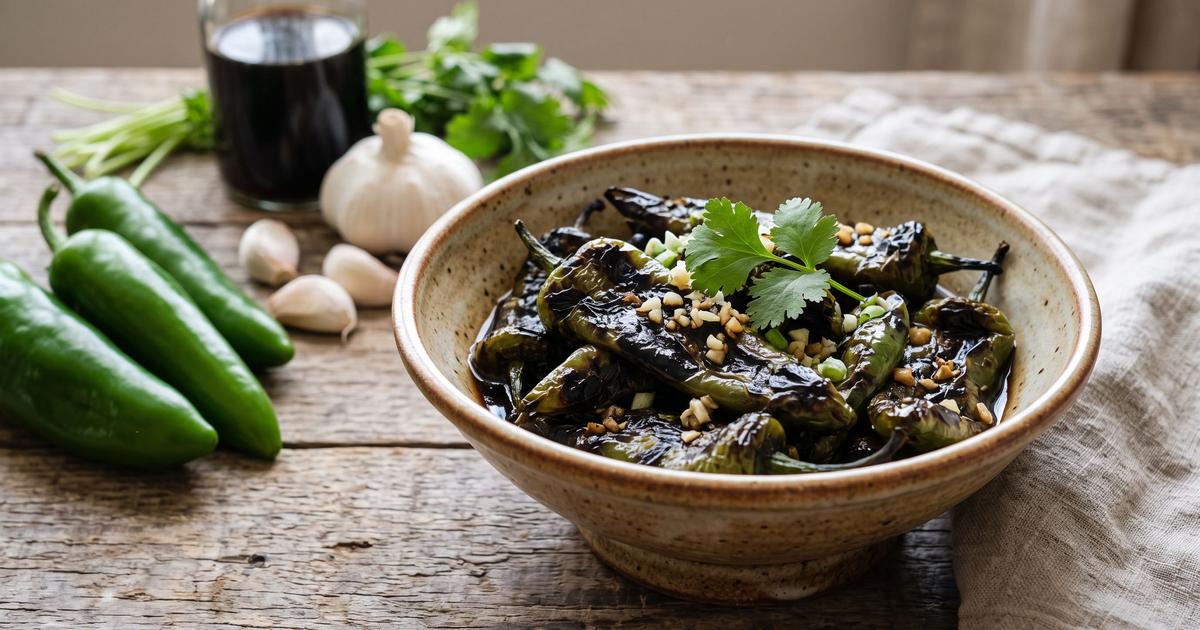
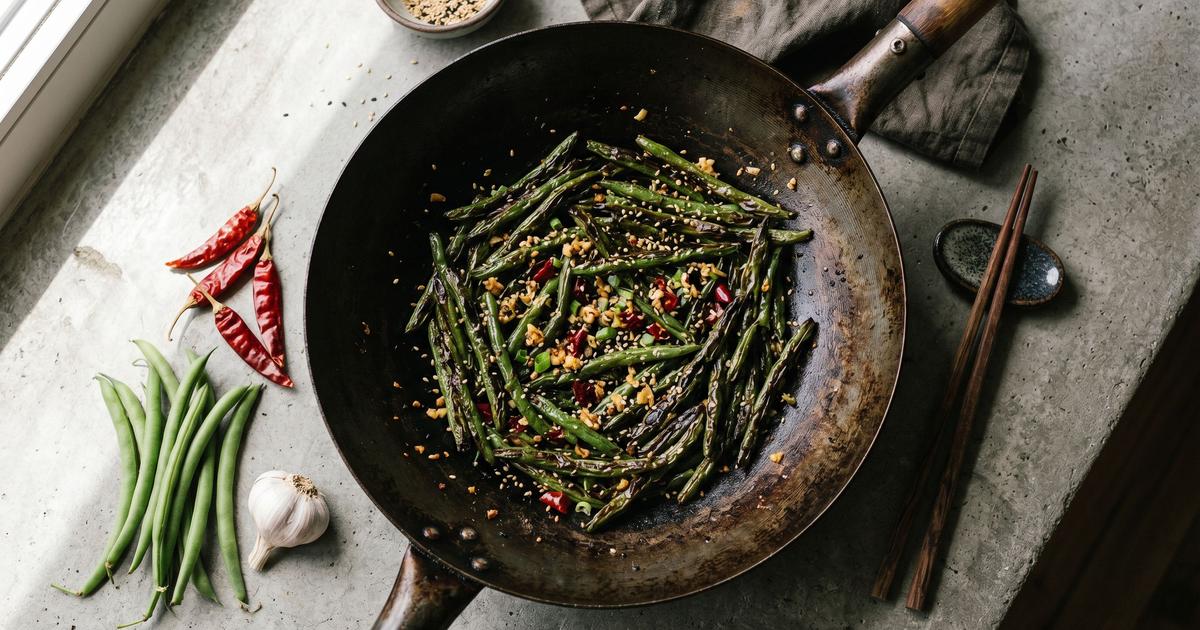
Tiger-skin peppers are a Hunan home-cooking staple, named for the mottled char that forms when mild green peppers are pressed against a hot dry pan until their skin blisters and wrinkles. The traditional version fries them, but the peppers blister just as well in a dry pan, and the flavor comes from the sauce anyway: black vinegar for malty sourness, raw garlic for bite, and a mashed date standing in for the pinch of sugar that rounds it off. Anaheim peppers are close to the long, thin-walled Chinese frying peppers and stay mild. A measured tablespoon of tamari carries the salt for the whole dish.
Ingredients
- 1 lb Anaheim, about 450 g, left whole or halved lengthwise, seeds removed
- 4 cloves Garlic, smashed and minced
- 1 tbsp Chinese black vinegar
- 1 tbsp Low-sodium tamari
- 1 piece Medjool dates, pitted, mashed with 1 tbsp (15 ml) hot water into a paste
- 1 tsp Sesame seeds, toasted, optional
Method
- Set a heavy dry pan over high heat and lay the peppers flat, pressing them down with a spatula until the skin blisters and chars in patches, about 8 minutes total, turning to catch every side. Charring the skin in a dry pan is what gives the dish its name, hu pi, tiger skin, and it builds smoky flavor with no oil in the pan.
- While the peppers blister, stir the vinegar, tamari, date paste, and garlic together in a small bowl. Mixing the sauce off the heat keeps the garlic sharp and raw, the pungent bite Hunan cooks want against the sweet blistered pepper.
- Pour the sauce into the hot pan and toss for 1 minute until it bubbles down and clings to the peppers. The blistered skin has loosened and drinks the sauce in, so a fast toss coats each piece rather than leaving a puddle.
- Off the heat, scatter with sesame. Serve warm or at room temperature. The tamari is measured and essential here, glazing the whole batch from a single tablespoon.
Nutrition
Estimated per serving: 60 calories, 2 g protein, 3 g fiber, 180 mg sodium. Computed from USDA FoodData Central reference values for the main ingredients. This is an approximation, not a laboratory measurement. How these are computed.
Cost per serving is estimated from US national-average retail prices for cheap staple forms, using BLS dried-bean prices and USDA produce prices. Prices vary by store and season, so treat it as a guide, not a receipt. How this is computed.