Halim, Persian Wheat and Cinnamon Breakfast
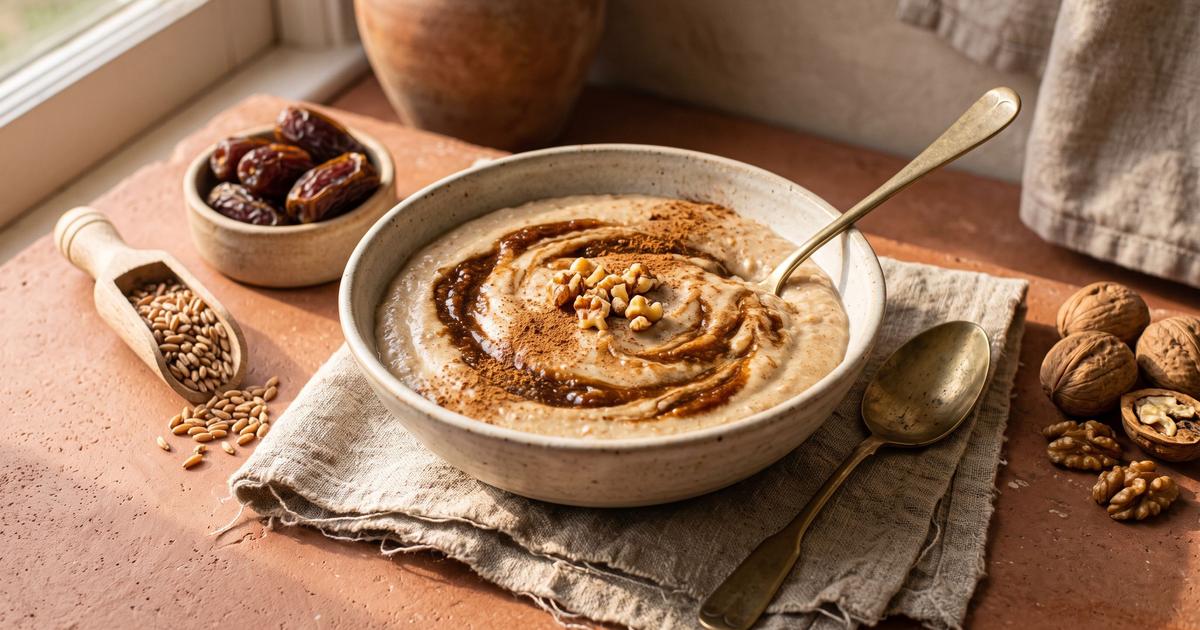
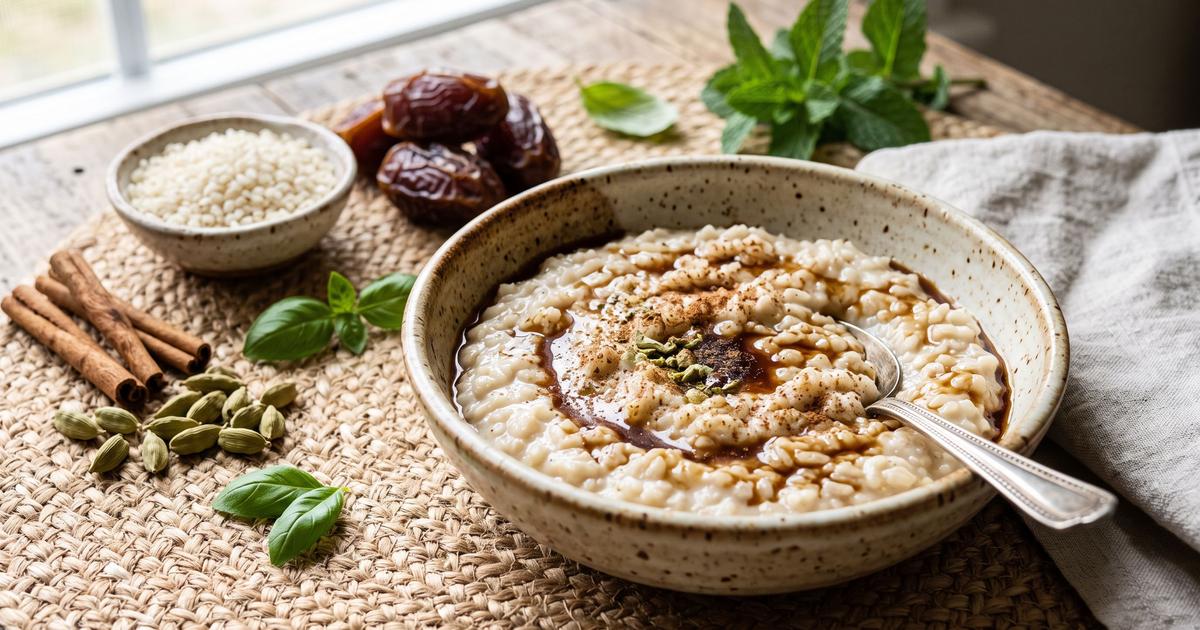
Halim is the wheat porridge Iranians eat on cold mornings, traditionally slow-cooked with shredded meat and served sweet, dusted with cinnamon and sugar. This is the plainer, older idea underneath it: whole wheat cooked down until it can be whipped into a thick cream, then sweetened at the table. Farro, an ancient wheat, stands in for the whole berries and needs only long simmering and a good mash to reach the right texture. Dates blended into a treacle replace the sugar, and cinnamon and toasted nuts finish it. Make a big pot; it reheats through the week with a splash of water.
Ingredients
- 1 cup Farro, rinsed
- 1/4 cup Rolled oats
- 1/2 tsp cassia cinnamon, ground
- 4 wholes Medjool dates, pitted
- 2 tbsp Sesame seeds, toasted
- 2 tbsp Almonds, slivered
Method
- Simmer the farro in 5 cups (1.2 L) water for about 50 minutes, until the grains are very soft and starting to burst. Halim is not a pilaf, so cook it well past tender, to the point where the wheat wants to fall apart.
- Stir in the rolled oats for the last 10 minutes. Their starch dissolves into the water and turns the pot creamy, doing the job cream or butter would do in a richer version.
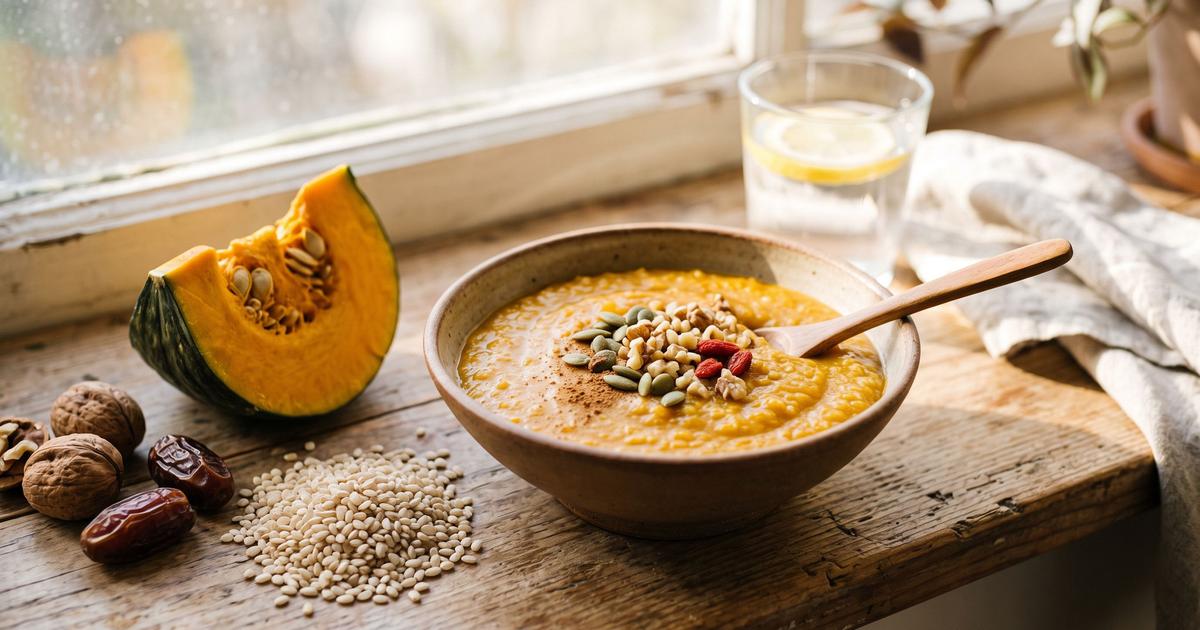
- Mash the hot farro hard against the side of the pot with a spoon, or pulse part of it, until it becomes a smooth, thick porridge with no separate grains left. That whipped, almost pourable texture is what makes it halim rather than oatmeal.
- Blend the dates with a few tablespoons of hot water into a loose, dark treacle, then swirl it over each bowl. This is the only sweetener in the dish, so let it pool on top where each spoonful catches it.
- Dust with cinnamon and scatter toasted sesame and slivered almonds. Loosen with a splash of hot water or plant milk if it thickens too much on standing.
Nutrition
Estimated per serving: 290 calories, 9 g protein, 8 g fiber, 15 mg sodium. Computed from USDA FoodData Central reference values for the main ingredients. This is an approximation, not a laboratory measurement. How these are computed.
Cost per serving is estimated from US national-average retail prices for cheap staple forms, using BLS dried-bean prices and USDA produce prices. Prices vary by store and season, so treat it as a guide, not a receipt. How this is computed.