Blåbärssoppa, Swedish Blueberry Soup
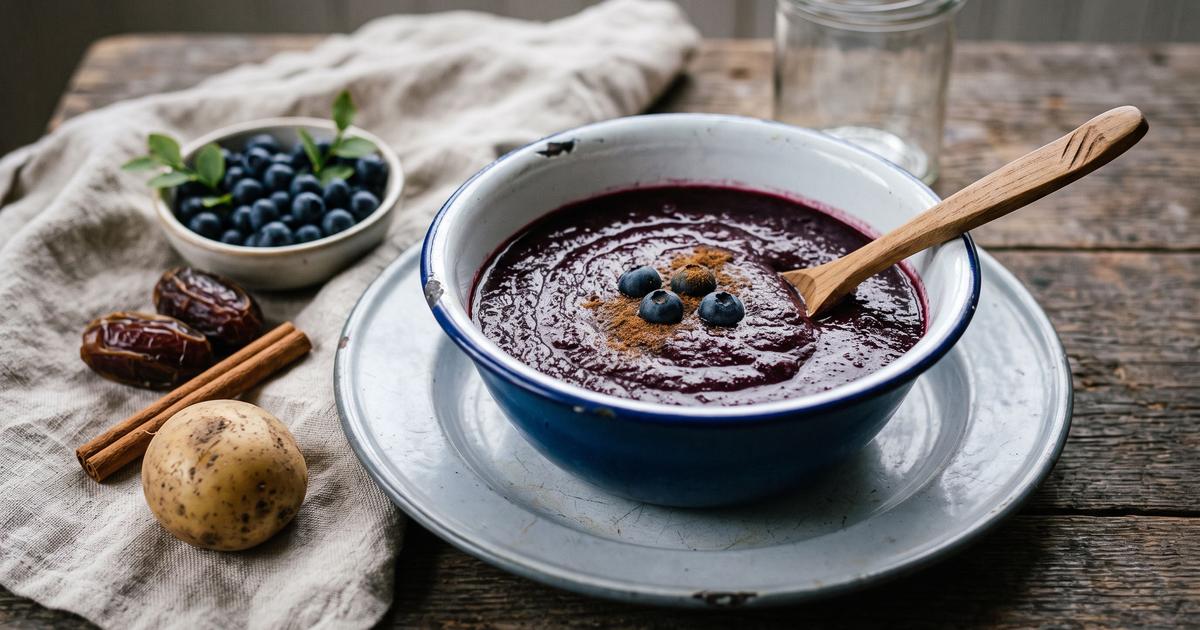
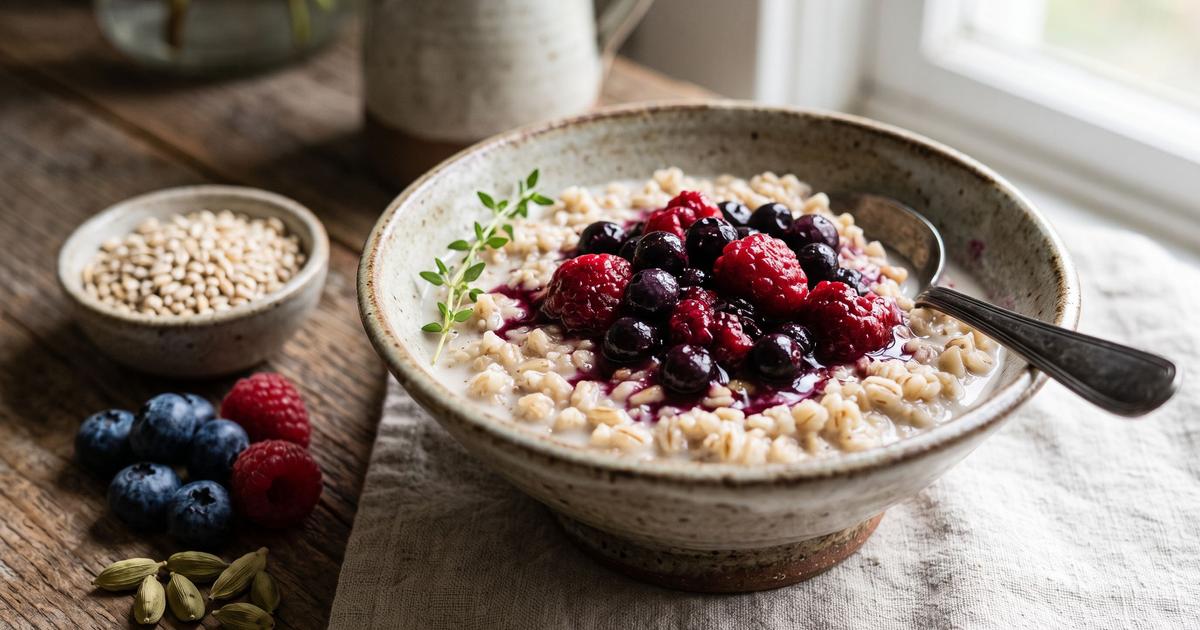
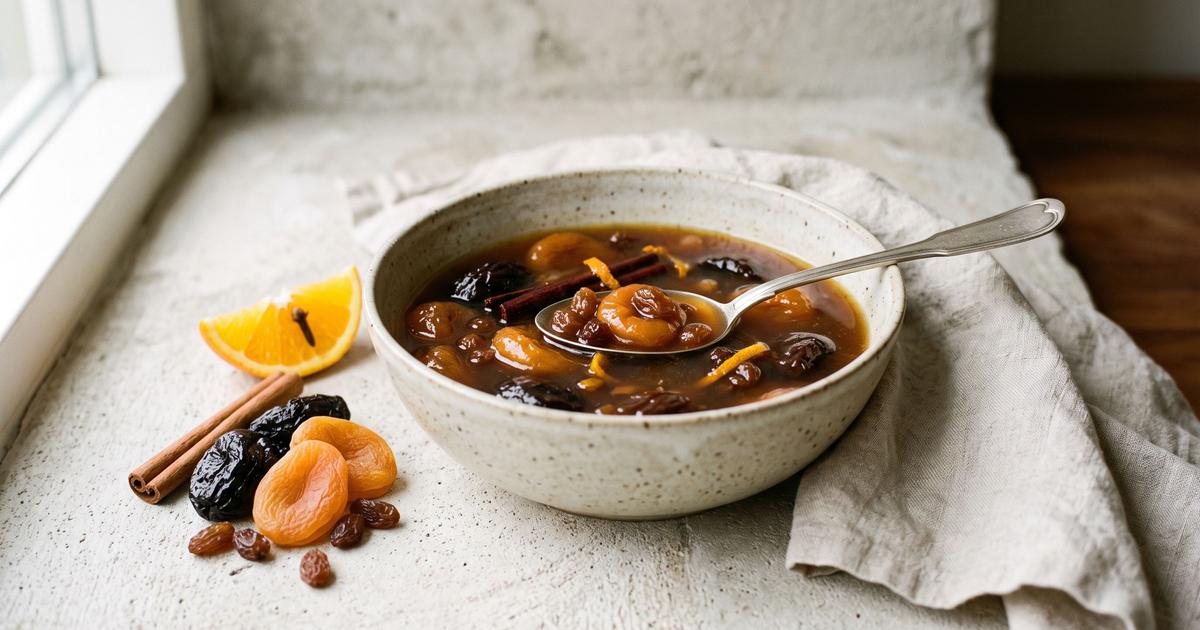
Blåbärssoppa is a warm, sweet blueberry soup that Swedes drink as much as eat, famously handed out along the Vasaloppet cross-country ski race as quick, warming fuel. It sits somewhere between a breakfast, a snack, and a drink. Wild Swedish bilberries are the real thing, but any blueberry or mixed dark berry makes a fine bowl. The character comes from three moves: dates blended in for sweetness with the fiber intact, a whole cinnamon stick for warmth, and potato starch, the classic Nordic thickener, stirred in off the boil so the soup stays glossy and clear rather than turning to paste. It keeps for days and thickens as it sits, so make a batch and warm a mug at a time.
Ingredients
- 4 cups Frozen mixed berries, blueberries if available
- 1 stick cassia cinnamon
- 4 wholes Medjool dates, pitted
- 1 1/2 tbsp Potato starch
- 1 tbsp Lemon juice
Method
- Blend the dates with a cup of water into a smooth paste. This is the only sweetener, and blending them first means they melt evenly into the soup rather than sinking as lumps, sweetening it the way a Swedish cook would once have used sugar or syrup.
- Simmer the berries, date paste, cinnamon stick, and 3 more cups (710 ml) water in a saucepan for about 10 minutes, until the fruit has broken down. The cinnamon stick, rather than ground, gives a clean, warming background without clouding the soup.
- Slurry the potato starch with a few tablespoons of cold water, pull the pan off the heat, and stir it in, then return to a very gentle heat just until it thickens to a pourable, silky body. Potato starch is the traditional Nordic thickener and gives a clear, glossy soup, but it thins out again if boiled hard, so keep it below a rolling boil.
- Stir in the lemon juice and fish out the cinnamon stick. The acid lifts the deep berry flavor and keeps the sweetness in check. Serve it warm in mugs as the Swedes do on cold mornings, or chill it and drink it cold.
Nutrition
Estimated per serving: 150 calories, 2 g protein, 5 g fiber, 5 mg sodium. Computed from USDA FoodData Central reference values for the main ingredients. This is an approximation, not a laboratory measurement. How these are computed.
Cost per serving is estimated from US national-average retail prices for cheap staple forms, using BLS dried-bean prices and USDA produce prices. Prices vary by store and season, so treat it as a guide, not a receipt. How this is computed.