Æblekage, Danish Apple and Oat Trifle
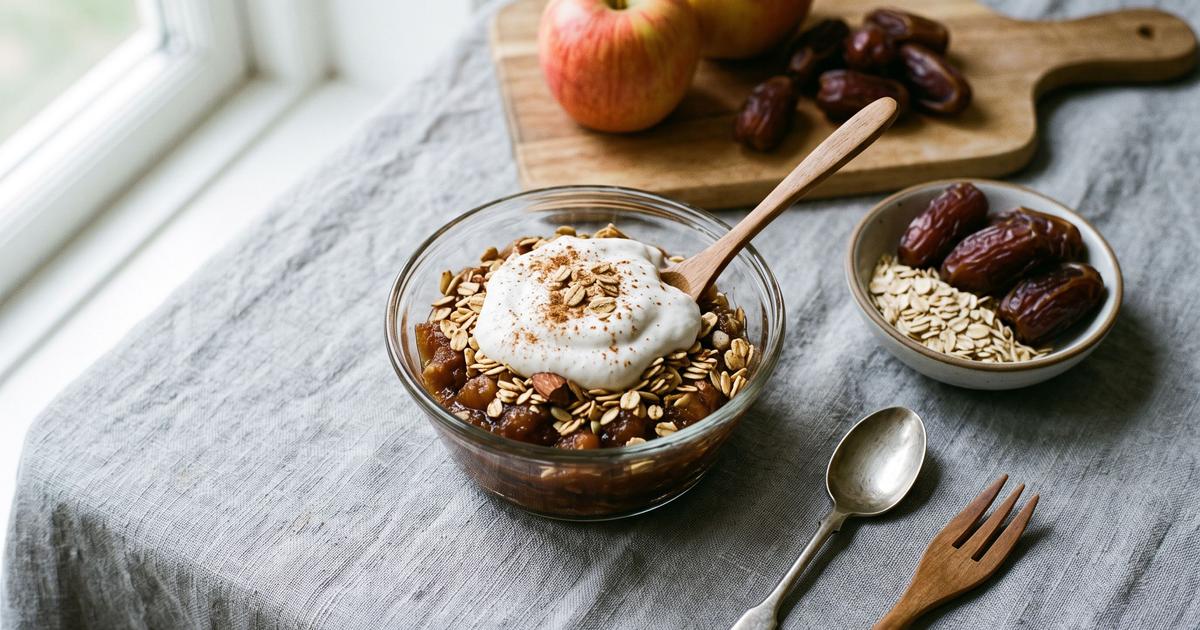
Æblekage is called a cake in Danish but it is really a cold trifle, built in a glass from three plain parts: apple sauce, a toasted crumb, and a spoon of cream. The traditional crumb is breadcrumbs fried in butter and sugar, which toasted oats replace with the same crunch and none of the fat, and the apple is sweetened with dates rather than spooned sugar. That is the whole trick. Cook the apples down but leave them chunky, toast the oats and walnuts dry until they smell like the inside of a bakery, and let everything cool completely before you layer it. Warm layers turn to mush. A little cashew cream on top stands in for the whipped cream. Assemble it a few hours ahead and keep it cold.
Ingredients
- 4 wholes Apples, peeled, chopped
- 3 wholes Medjool dates, chopped
- 1 tbsp Lemon juice
- 1/2 tsp cassia cinnamon, ground
- 1 cup Rolled oats
- 3 tbsp Walnuts, chopped
- 1/2 cup Cashew cream
Method
- Cook the apples with the dates, lemon juice, cinnamon, and 3 tbsp water (45 ml) over medium heat, covered, until they slump into a chunky sauce, about 12 minutes. The dates melt in as the sweetener, and the lemon keeps the apple pale and bright instead of dull and brown. Leave some texture; this is apple sauce, not puree.
- Toast the oats and walnuts together in a dry pan over medium heat, stirring, until they smell nutty and turn a shade darker, about 5 minutes. In the old recipe these are buttered breadcrumbs fried crisp; toasted oats give the same crunch and toasty depth with nothing but the pan's heat.
- Cool both parts. The layers must go together cold or the crumb goes soft and the cream slides, and the contrast of cool crisp against cool soft is the entire pleasure of the dish.
- In glasses, spoon in apple, then oats, then apple again, and finish with the cashew cream and a last pinch of toasted oats. Chill for at least 15 minutes before eating so it sets into distinct layers.
Nutrition
Estimated per serving: 220 calories, 5 g protein, 6 g fiber, 20 mg sodium. Computed from USDA FoodData Central reference values for the main ingredients. This is an approximation, not a laboratory measurement. How these are computed.
Cost per serving is estimated from US national-average retail prices for cheap staple forms, using BLS dried-bean prices and USDA produce prices. Prices vary by store and season, so treat it as a guide, not a receipt. How this is computed.