Frijoles Rancheros, Tex-Mex Ranch-Style Beans
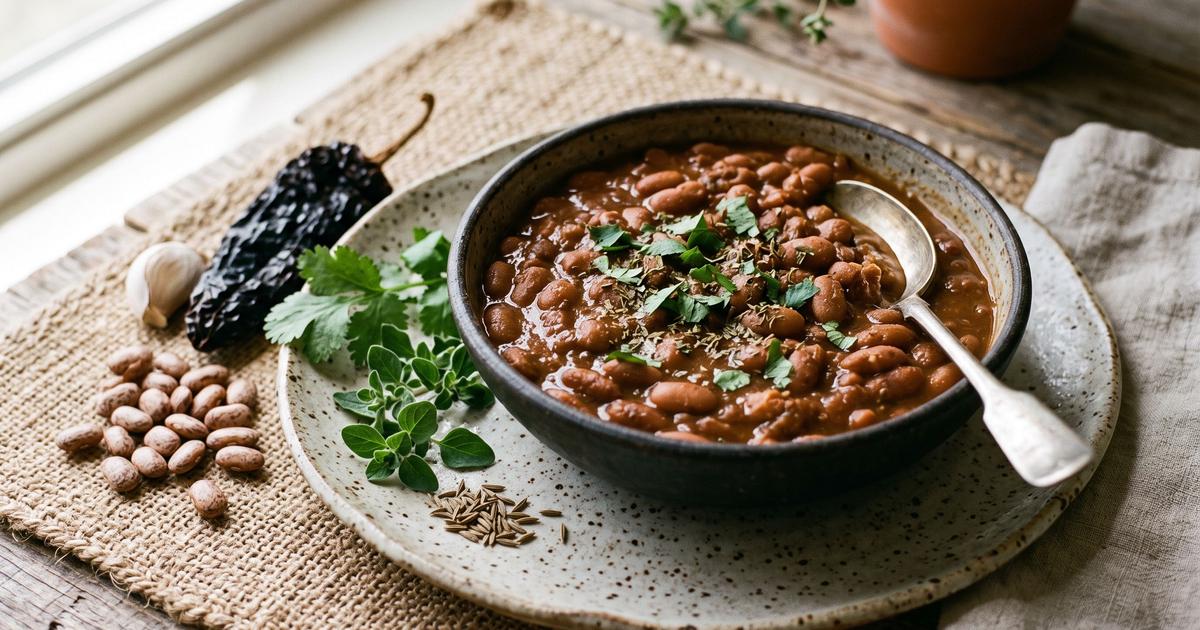
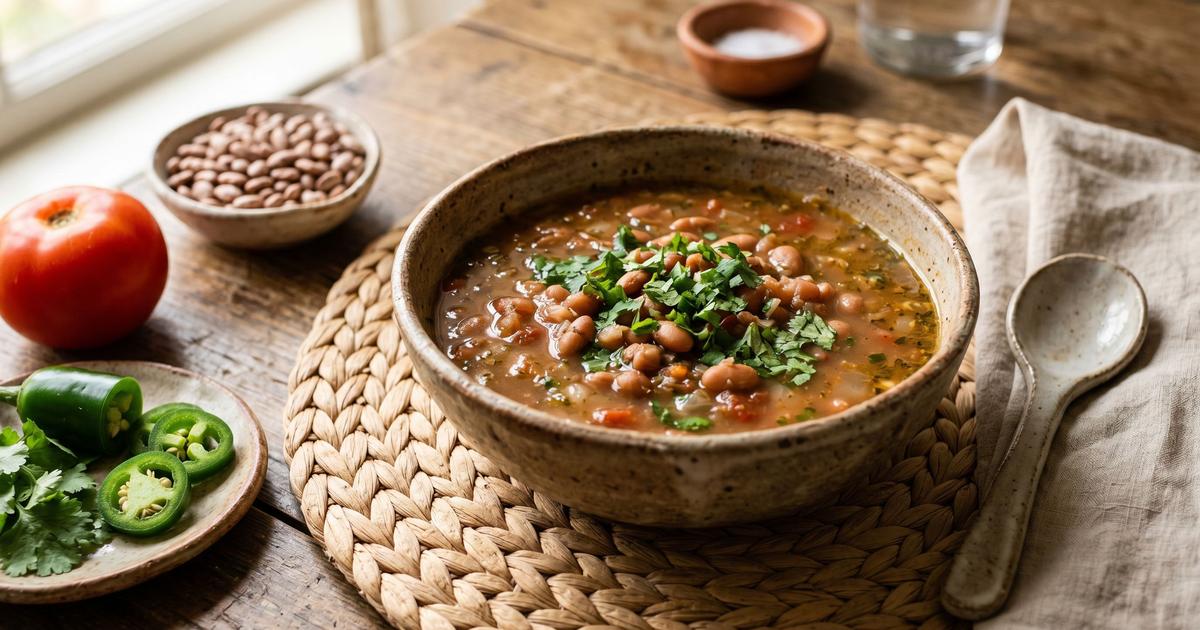
Ranch-style beans, frijoles rancheros, are the Tex-Mex counter to a plain pot of beans: pintos stewed down in a dark, spiced tomato and chile gravy until they taste like a bowl of chili's better half. The version most Texans know comes from a can, heavy on salt and sometimes lard. Built from scratch it costs almost nothing and lets you control both. The backbone is dried ancho, the sweet dried poblano, toasted and blended into a puree that gives the pot its color and raisin-dark depth, rounded out with toasted cumin and Mexican oregano. Cooking your own pintos from dried keeps them firm enough to hold in the sauce. No salt goes in: toasted tomato paste, the chiles, and a final splash of vinegar carry it instead.
Ingredients
- 3 cups Pinto beans, cooked from dried and drained, or no-salt-added canned, rinsed
- 2 Anchos, stemmed and seeded
- 1 cup Canned crushed tomatoes, no-salt-added
- 1 tbsp Tomato paste
- 1 Yellow onion, diced
- 3 cloves Garlic, minced
- 1 Jalapeño, sliced
- 1 tsp Cumin seed, toasted and ground
- 1 tsp Dried oregano
- 1 Bay leave
- 1 tsp Red wine vinegar
Method
- Toast the anchos in a dry pan for about 30 seconds a side, until they smell like raisins and cocoa, then soak them in hot water for 15 minutes. Blend them smooth with half a cup (120 ml) of the soaking water. Toasting wakes the chile's oils and the soak softens it enough to puree.
- Sweat the onion, garlic, and jalapeno in 3 tablespoons (45 ml) water until soft. Add the tomato paste and cook it against the pan until it turns brick red, about 2 minutes, which trades its raw tin flavor for something deep and savory.
- Stir in the ancho puree, cumin, oregano, crushed tomatoes, bay, and 1 cup (240 ml) water. Simmer 10 minutes so the chile and spice marry into a gravy rather than sitting on top.
- Add the beans and simmer 15 minutes. Mash about a cup of them against the pot and stir back in, which thickens the sauce with bean starch instead of flour.
- Finish with the vinegar off the heat. A teaspoon of acid lifts the whole pot of chile and does the seasoning in place of salt.
Nutrition
Estimated per serving: 200 calories, 11 g protein, 12 g fiber, 45 mg sodium. Computed from USDA FoodData Central reference values for the main ingredients. This is an approximation, not a laboratory measurement. How these are computed.
Cost per serving is estimated from US national-average retail prices for cheap staple forms, using BLS dried-bean prices and USDA produce prices. Prices vary by store and season, so treat it as a guide, not a receipt. How this is computed.