Fagioli all'Uccelletto, Tuscan Beans in Sage and Tomato
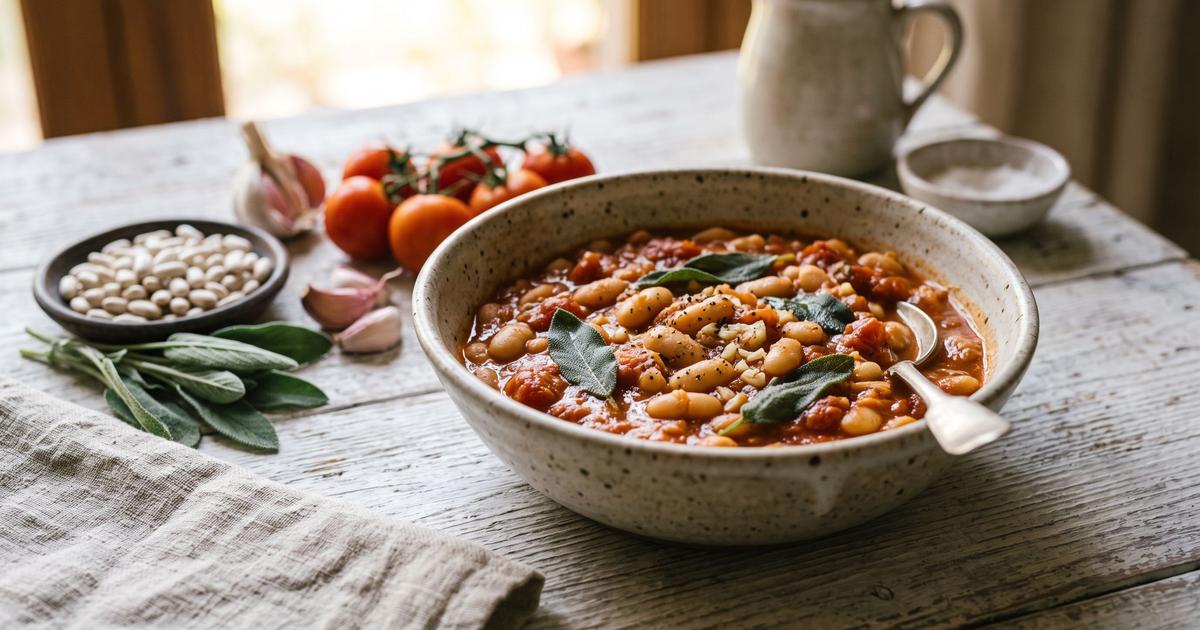
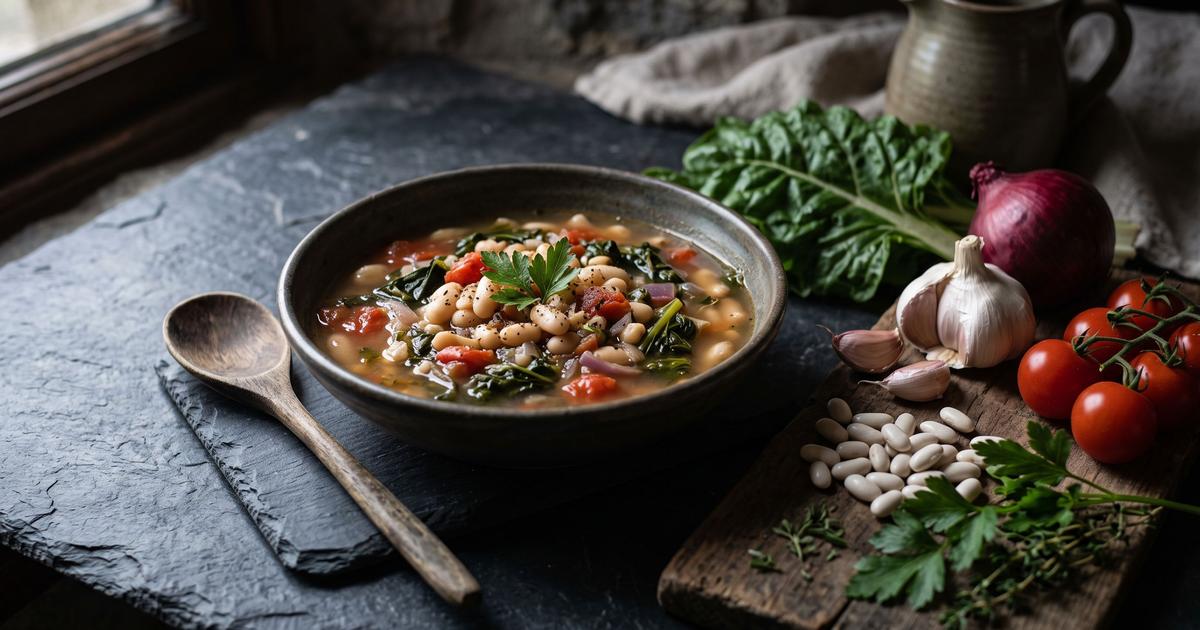
Fagioli all'uccelletto is Florence in a pan: white beans stewed with tomato, garlic, and sage until they turn thick and savory. The odd name, cooked in the manner of little birds, points to the sage and garlic that once seasoned game and now season the beans instead. It is the classic contorno beside a Tuscan table, and it happens to need no oil at all, since the beans give up their own starch to build the sauce. Use cannellini for their silk, crush a few against the pan to thicken it, and toast the tomato paste until it darkens for the deepest flavor. Spoon it over polenta, pile it on whole-grain toast, or eat it straight from the bowl.
Ingredients
- 3 cups Cannellini beans, cooked, drained, liquid reserved
- 1 1/2 cups Canned whole peeled tomatoes, crushed by hand
- 1 tbsp Tomato paste
- 3 cloves Garlic, smashed
- 8 leafs Sage
- 1 pinch Red pepper flakes
- 1/2 tsp Black peppercorns, ground
Method
- Warm the smashed garlic and whole sage leaves in a dry pan with 2 tablespoons water over medium heat until fragrant, about 2 minutes. The name means cooked bird style, a nod to the sage and garlic once used for small game; steeping them in water pulls that aroma into the dish in place of the oil they were fried in.
- Add the tomato paste and let it darken for a minute, then stir in the hand-crushed tomatoes. Cooking the paste briefly turns it from sour to sweet and deep, the shortcut to a sauce that tastes long-simmered.
- Tip in the beans with a splash of their cooking liquid and simmer gently for 15 minutes, stirring now and then. Canned beans work, but beans you cooked yourself keep the sodium near zero and stay creamier.
- Crush a few beans against the side of the pan as they cook. Those mashed beans release their starch and thicken the sauce so it clings, doing the job flour or oil would in another kitchen.
- Finish with black pepper and a pinch of chile. The beans are the whole point, so let the pan rest a few minutes off the heat to let them drink up the sauce before serving.
Nutrition
Estimated per serving: 190 calories, 11 g protein, 9 g fiber, 50 mg sodium. Computed from USDA FoodData Central reference values for the main ingredients. This is an approximation, not a laboratory measurement. How these are computed.
Cost per serving is estimated from US national-average retail prices for cheap staple forms, using BLS dried-bean prices and USDA produce prices. Prices vary by store and season, so treat it as a guide, not a receipt. How this is computed.