Doce de Abóbora e Amêndoa, Algarve Pumpkin and Almond Jam
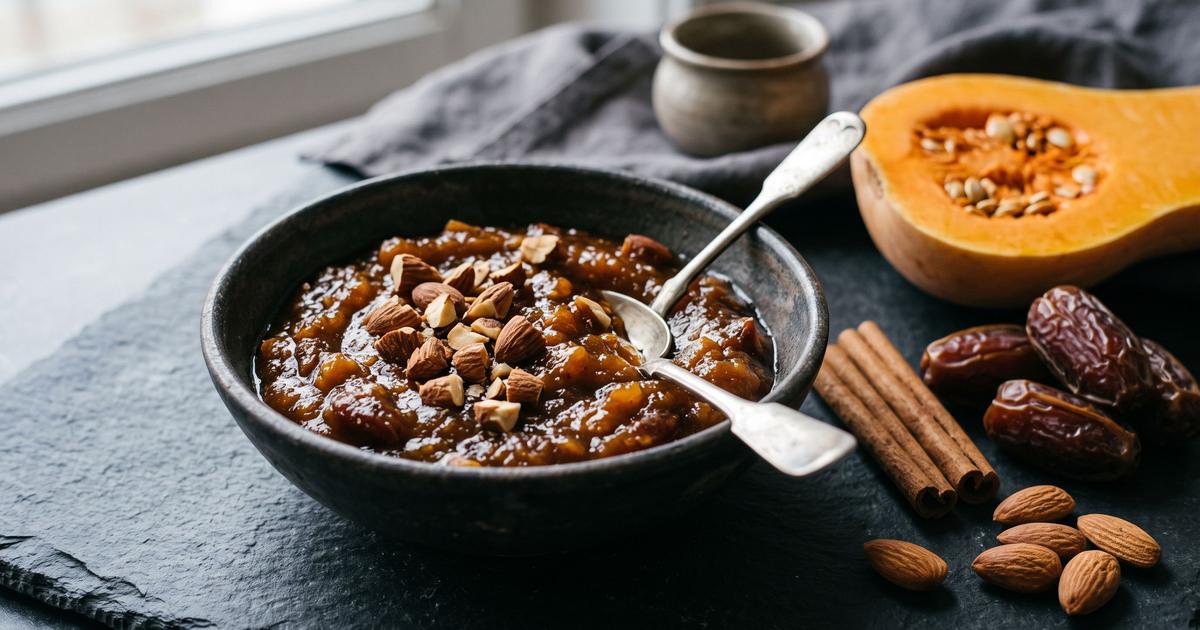
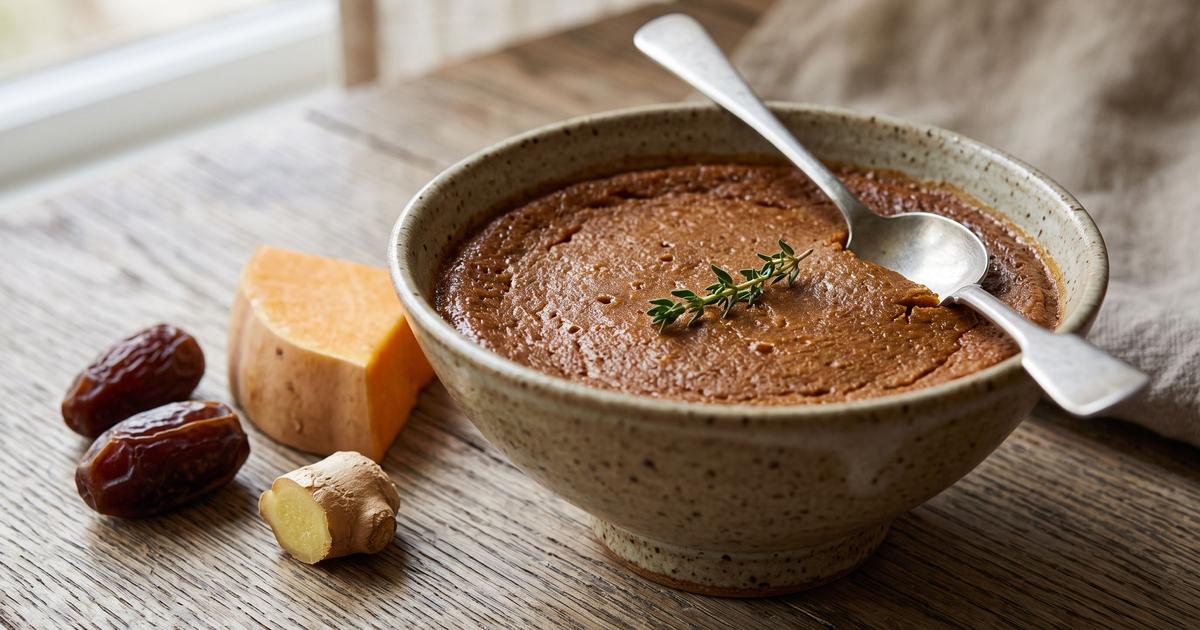
Along the Algarve, squash and almonds both grow easily, and the two meet in a dense, spoonable preserve that turns up at the end of a meal or on morning bread. The traditional jar is built on a great deal of sugar, but ripe squash and dates are sweet enough on their own once you cook the water out of them and let the sugars concentrate. Butternut breaks down into a smooth amber base with nothing but a fork, cinnamon and lemon zest keep it from being one-note, and a squeeze of juice at the end lifts it. Toasted almonds go in last so they stay crisp. This is a sweet with fiber, fruit, and a little whole-food fat attached, not empty sugar, though it is still concentrated and meant for small servings.
Ingredients
- 2 lb Butternut squash, peeled and cubed
- 8 wholes Medjool dates, pitted
- 1/2 cup Almonds, toasted and chopped
- 1 tsp Ceylon cinnamon, ground
- 1 whole Lemons, zest and juice
Method
- Steam or simmer the squash cubes in a covered pot with a shallow inch of water until they are completely tender and falling apart, about 20 minutes. You want them soft enough to crush with a spoon so the jam turns smooth without a machine.
- While the squash cooks, blend the dates with 0.25 cup (60 ml) hot water into a smooth paste. Dates are the entire sweetener here: cooked down with the squash they read as caramel, which is what a jar of this usually gets from a pound of sugar.
- Drain off any standing water, then mash the squash in the pot and stir in the date paste, cinnamon, and lemon zest. Cook uncovered over medium-low heat, stirring often so it does not catch, until it thickens to a jam that holds a line when you drag a spoon across the pan, about 20 minutes.
- Stir in the lemon juice and the toasted almonds off the heat. The acid keeps the sweetness from going flat, and the almonds are folded in at the very end so they stay crunchy against the soft jam rather than softening into it.
- Spoon into a clean jar and cool. It keeps a week in the fridge, thickening as it sits. Serve it in small amounts on oatmeal, spread on whole-grain toast, or alongside a plate of fruit.
Nutrition
Estimated per serving: 120 calories, 3 g protein, 3 g fiber, 5 mg sodium. Computed from USDA FoodData Central reference values for the main ingredients. This is an approximation, not a laboratory measurement. How these are computed.
Cost per serving is estimated from US national-average retail prices for cheap staple forms, using BLS dried-bean prices and USDA produce prices. Prices vary by store and season, so treat it as a guide, not a receipt. How this is computed.