Cuban Black Bean Soup
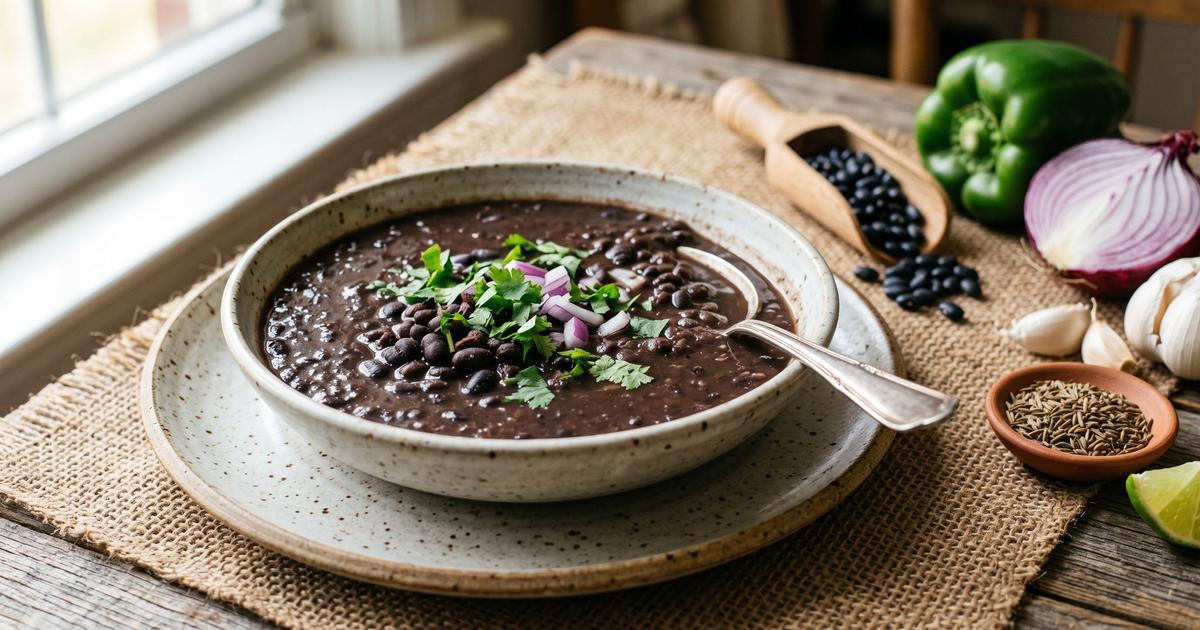
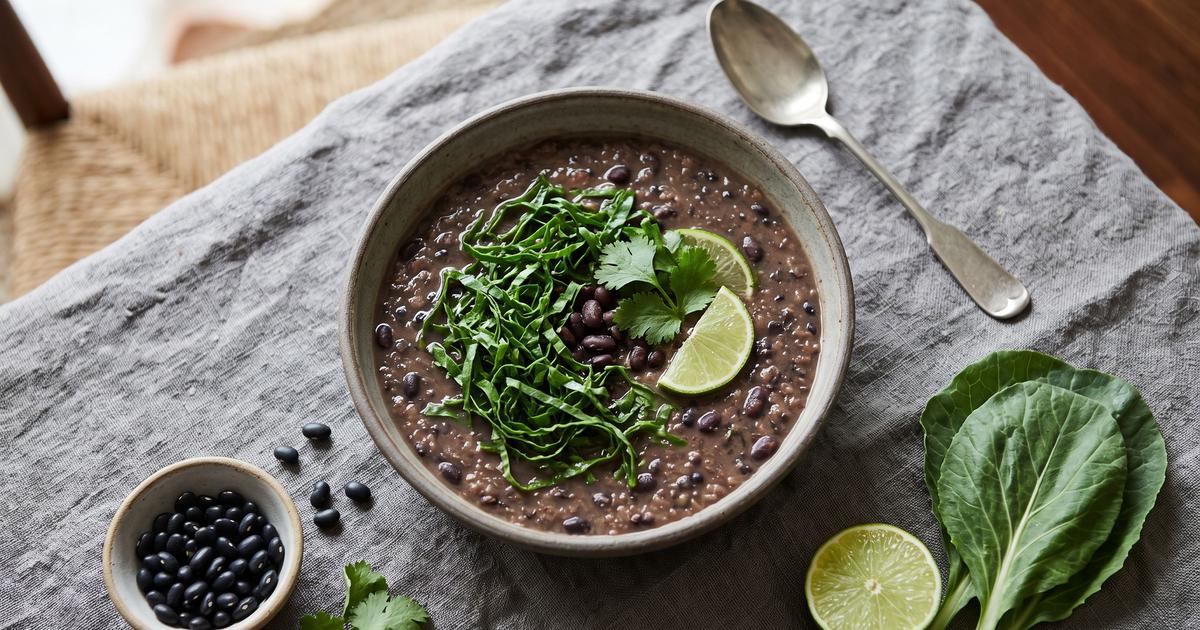
This is the everyday black bean soup of Cuban home kitchens, frijoles negros loosened into a spoonable pot. The flavor rests on two moves. First, a sofrito of green pepper, onion, garlic, and cumin, cooked slow and soft, gives the beans their savory base. Second, blending a couple of cups of the finished beans and stirring them back in thickens the whole pot without any dairy or roux. Bay leaves go in with the beans from the start, and a good splash of red wine vinegar goes in at the end, where its acid brightens everything and makes the absence of salt a non-issue. It freezes well and tastes better the next day, so cook the full pot.
Ingredients
- 1 1/2 cups Black beans, dried, soaked overnight
- 1 Bell pepper, green, diced
- 1 Yellow onion, diced
- 5 cloves Garlic, minced
- 1 1/2 tsp Cumin seed, toasted and ground
- 1 tsp Dried oregano
- 2 Bay leaves
- 2 tbsp Red wine vinegar
- 1/4 cup Red onions, finely diced, to finish
- 1/4 cup Cilantro, chopped, to finish
Method
- Drain the soaked beans and put them in a pot with the bay leaves and one of the minced garlic cloves. Cover with water by 2 inches (5 cm), bring to a boil, then drop to a low simmer, partly covered, for 60 to 75 minutes, until the beans are soft all the way through. Top up the water as needed to keep them submerged.
- While the beans cook, sweat the onion and green pepper in a separate pan with a splash of water until soft, about 8 minutes. Add the rest of the garlic, the cumin, and the oregano and cook one more minute. This sofrito is the flavor base of the soup, so give it time to soften properly.
- Stir the sofrito into the pot of tender beans and simmer together for 10 minutes so the flavors marry.
- Ladle about 2 cups of the soup into a blender, puree it smooth, and stir it back in. Blending part of the pot gives the soup a thick, glossy body with no cream and no flour.
- Take the pot off the heat and stir in the red wine vinegar. The acid at the very end lifts the whole soup and does the job salt would otherwise do. Fish out the bay leaves.
- Serve topped with raw red onion and cilantro. A scoop of brown rice in the bowl turns it into a full meal.
Nutrition
Estimated per serving: 230 calories, 13 g protein, 14 g fiber, 40 mg sodium. Computed from USDA FoodData Central reference values for the main ingredients. This is an approximation, not a laboratory measurement. How these are computed.
Cost per serving is estimated from US national-average retail prices for cheap staple forms, using BLS dried-bean prices and USDA produce prices. Prices vary by store and season, so treat it as a guide, not a receipt. How this is computed.