Crunchy Cabbage and Chickpea Bowl with Cashew Dressing
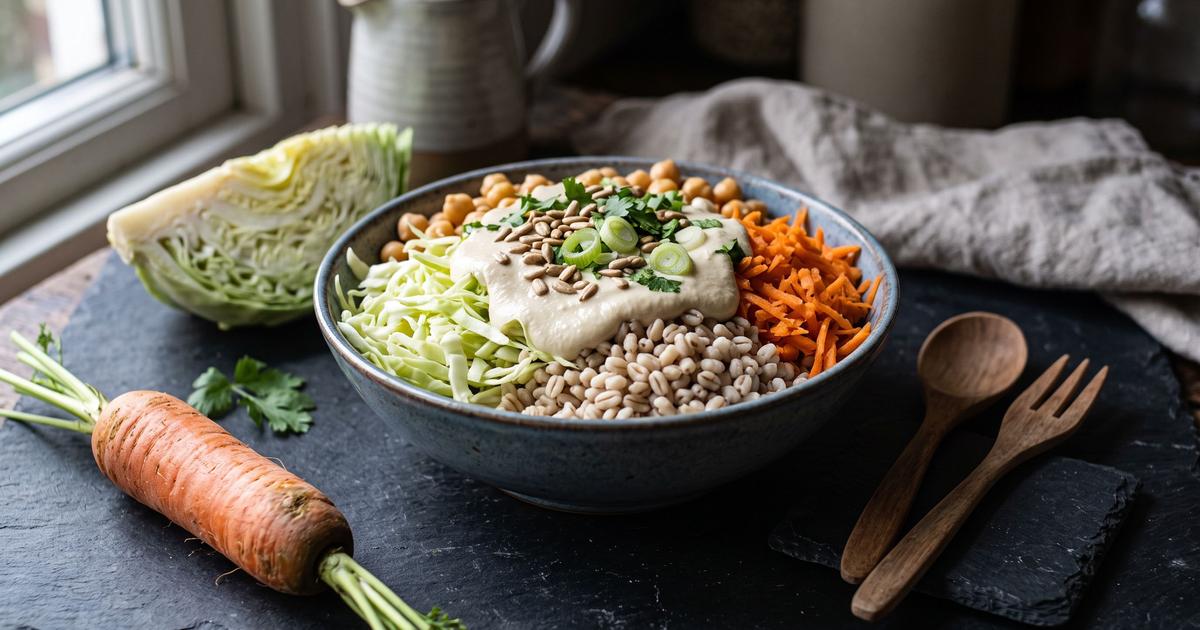
The problem with a raw cabbage bowl is that cabbage repels most dressings. Its leaves are waxy, and a thin vinaigrette runs straight off into the bottom of the bowl. A cashew dressing has enough body to cling, which is why this combination works when an oil and vinegar version does not.
Hulled barley is the other deliberate choice. It is one of the cheapest whole grains in the store and one of the few that stays distinctly chewy after it cools, so the bowl holds its texture in a lunch container for three days. Pearled barley has had its bran polished off and turns soft, which is a different dish.
Nothing here needs salt because three separate things are doing that job: the lemon and vinegar in the dressing, the mustard, and the toasted sunflower seeds. Toasting matters more than it sounds like it should. Raw seeds add crunch and nothing else, while toasted ones release aromatic compounds that read as savory depth.
Assembled, this keeps well, but store the dressing separately if you are packing it ahead. Cabbage sheds water overnight and will thin the dressing in the container.
Ingredients
- 1 cup Hulled barley
- 1 1/2 cups Chickpeas, cooked, or one 15-oz can, drained and rinsed
- 1 lb green cabbage, cored and shredded thin
- 2 Carrots, coarsely grated
- 3 Scallions, thinly sliced on the bias
- 1/4 cup Cilantro, chopped
- 3/8 cup Raw cashews
- 3 tbsp Lemon juice, divided
- 1/2 tbsp Apple cider vinegar
- 1 tbsp Nutritional yeast
- 1/2 tsp Dijon mustard
- 1 clove Garlic, peeled
- 1/4 tsp Black peppercorns, freshly ground
- 2 tbsp Sunflower seeds, toasted
Method
- Rinse the barley and bring it to a boil in a pot with 3 cups (720 ml) water. Drop to a simmer, cover, and cook 45 to 50 minutes, until the grains are chewy but no longer chalky at the center. Hulled barley keeps its bran, so it takes longer than the pearled kind and stays firm enough not to go mushy under a dressing. Drain any standing water and spread it on a plate to cool.
- While the barley cooks, cover the cashews with boiling water and leave them 10 minutes, then drain.
- Blend the drained cashews with 2 tablespoons of the lemon juice, the vinegar, nutritional yeast, dijon, garlic, pepper, and 1/4 cup (60 ml) fresh water. Run it a full 2 minutes until it ribbons off a spoon. Stopping early leaves it grainy: the emulsion forms only once the cashew fat is broken fine enough to suspend.
- Shred the cabbage as thin as you can manage. Thickness is the whole texture of this bowl, and a thin shred takes dressing where a thick one just sits in it. Pile it into a large bowl with the grated carrot and the remaining tablespoon of lemon juice, and toss with your hands for a minute. The acid softens the cabbage slightly without turning it limp.
- Toast the sunflower seeds in a dry skillet over medium heat, shaking often, 3 to 4 minutes, until they smell nutty and a few turn golden. Tip them straight out of the pan; they keep cooking in residual heat.
- Warm the chickpeas briefly in the empty barley pot with a splash of water, just enough to take the fridge chill off. Warm chickpeas absorb dressing; cold ones repel it.
- Divide the cooled barley among four bowls. Top with the cabbage and carrot, then the chickpeas. Spoon the dressing over, scatter the scallions, cilantro, and sunflower seeds, and toss each bowl at the table.
Nutrition
Estimated per serving: 460 calories, 17 g protein, 19 g fiber, 90 mg sodium. Computed from USDA FoodData Central reference values for the main ingredients. This is an approximation, not a laboratory measurement. How these are computed.
Cost per serving is estimated from US national-average retail prices for cheap staple forms, using BLS dried-bean prices and USDA produce prices. Prices vary by store and season, so treat it as a guide, not a receipt. How this is computed.