Carottes Vichy, French Glazed Carrots
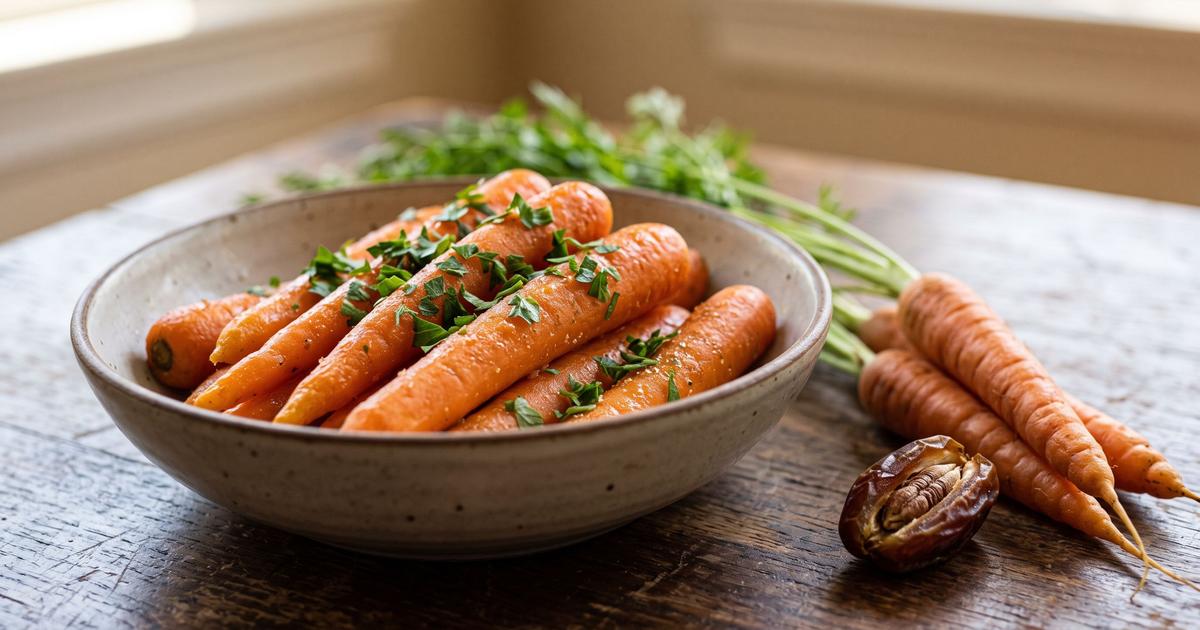
The traditional dish is named for the mineral water of Vichy, in which the carrots were once simmered, then finished with butter and a pinch of sugar until they turned glassy. The carrots do not need either. Sliced thin and cooked in just enough water in a wide pan, they concentrate their own sweetness as the liquid boils away, and a single minced date pushes the glaze the rest of the way there. There is no oil, no butter, and no added sugar, only carrots, water, one date, and parsley. It is about as cheap as a cooked vegetable gets.
Ingredients
- 1 1/2 lb Carrots (cooking), cut into 1/4 inch coins
- 1 whole Medjool dates, pitted and minced to a paste
- 2 tbsp Flat-leaf parsley, chopped
- 1 tsp Lemon juice
- 1/4 tsp Black peppercorns, freshly ground
Method
- Lay the carrot coins in a wide pan in as close to a single layer as you can manage, add the minced date, and pour in water until it just reaches the top of the carrots, about 1 cup (240 ml). A wide pan matters: the carrots need room to sit in the liquid, not pile up and steam unevenly.
- Bring to a brisk simmer, uncovered, and let the water cook down. As it reduces it turns to a shining syrup around the carrots, thickened by the date and by the carrots' own sugar, which is the glaze that classic Carottes Vichy get from butter and sugar.
- Shake the pan now and then near the end, when the liquid is nearly gone, so the carrots roll and coat themselves without catching. Stop while there is still a glossy film in the pan and the carrots are tender but not collapsing, about 20 minutes total.
- Off the heat, add the lemon juice, the black pepper, and the parsley, and toss. The drop of acid keeps the sweetness from going flat and takes the place of the salt this dish does without.
Nutrition
Estimated per serving: 90 calories, 2 g protein, 4 g fiber, 55 mg sodium. Computed from USDA FoodData Central reference values for the main ingredients. This is an approximation, not a laboratory measurement. How these are computed.
Cost per serving is estimated from US national-average retail prices for cheap staple forms, using BLS dried-bean prices and USDA produce prices. Prices vary by store and season, so treat it as a guide, not a receipt. How this is computed.