Tamarind Balls, Caribbean Date-Sweetened
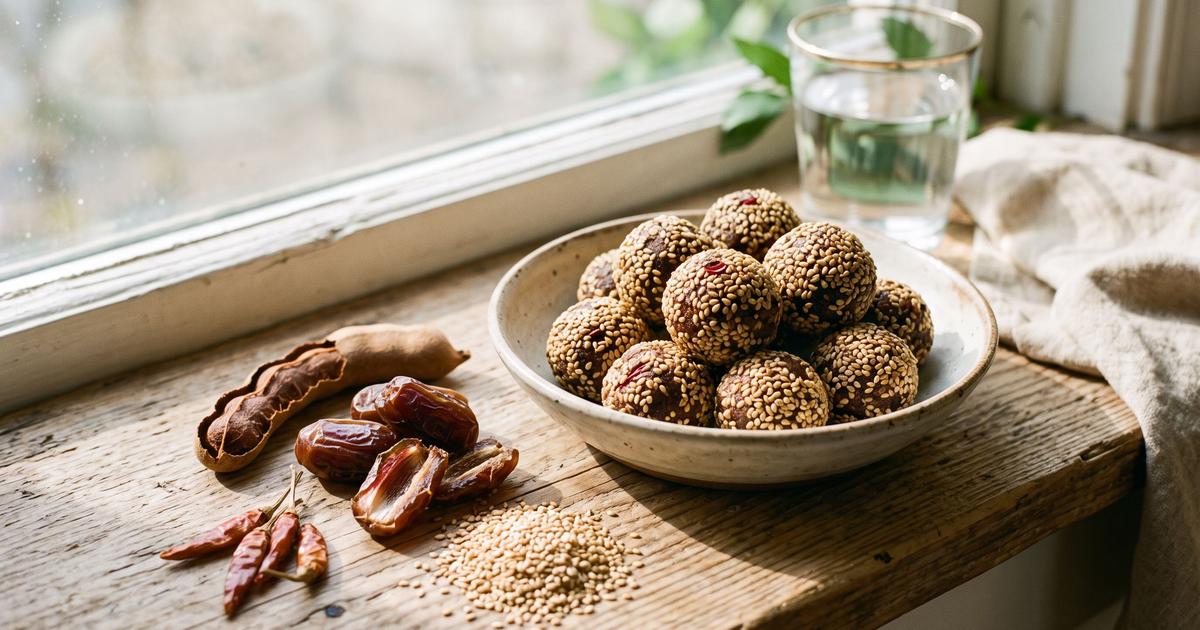
Tamarind balls are a Caribbean sweet-shop and roadside staple, usually tamarind pulp rolled with so much sugar that they crackle. Tamarind on its own is intensely sour, and that sourness is the appeal, so the job is to balance it without a bowl of sugar. Dates do it: pounded into a paste, they bring the sweetness and the chew and bind the sticky tamarind into a workable dough. A pinch of pure chile is traditional, the hot note behind the sour and sweet. Instead of a final roll in sugar, the balls go into toasted sesame seeds for crunch. They keep for weeks and travel well, which is what they were always made to do.
Ingredients
- 1/2 cup Tamarind paste, unsweetened
- 12 Medjool dates, pitted
- 1/4 tsp pure chile powder
- 1/4 tsp ground ginger
- 3 tbsp Sesame seeds, toasted
Method
- Check that your tamarind paste is the plain, unsweetened kind. Many jars carry added sugar, which this recipe does not need.
- Pound or blend the pitted dates into a stiff, sticky paste. If the food processor struggles, warm the dates briefly so they soften and come together.
- Work the tamarind paste, pure chile, and ground ginger into the dates until you have a firm, uniform dough. Tamarind is wet and sour, dates are sweet and binding, so the two balance into the sweet-sour-hot flavor sugar-rolled tamarind balls are known for. If the dough is too soft to roll, work in a few more dates.
- Pinch off pieces and roll into small balls about an inch (2.5 cm) across.
- Roll each ball in the toasted sesame seeds, which give the crunch and coating a dredge of sugar usually would. Chill 30 minutes to firm up. They keep for a couple of weeks in a tin.
Nutrition
Estimated per serving: 110 calories, 2 g protein, 3 g fiber, 10 mg sodium. Computed from USDA FoodData Central reference values for the main ingredients. This is an approximation, not a laboratory measurement. How these are computed.
Cost per serving is estimated from US national-average retail prices for cheap staple forms, using BLS dried-bean prices and USDA produce prices. Prices vary by store and season, so treat it as a guide, not a receipt. How this is computed.